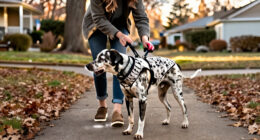
To spot early stress in dogs, watch for body language cues like tense muscles, pinned-back ears, a tucked tail, and avoidance of eye contact. Notice if they start panting, drooling, yawning excessively, or lip licking, as these can also be signs of discomfort. Stiffening or freezing behavior, rapid breathing, or disruptive actions like barking and chewing may also signal anxiety. Recognizing these subtle signs early helps you respond appropriately and keep your dog calm—there’s more to learn that can help you better care for your furry friend.

Get pet supplies delivered free with Prime
- Fast, free delivery on millions of items
- Prime Video, Amazon Music and more included
- Member-only deals all year
Key Takeaways
- Observe tense muscles, pinned ears, or tucked tail as early indicators of stress.
- Watch for avoidance behaviors like avoiding eye contact and excessive yawning.
- Note rapid breathing, drooling, or lip licking signaling nervousness or discomfort.
- Detect freezing or stiffening behaviors that show anxiety or fear.
- Recognize disruptive behaviors such as barking or destructive chewing as signs of stress.

Stress in dogs can often go unnoticed until it leads to more serious health or behavioral issues. As a responsible pet owner, it’s essential that you learn to recognize the early signs of stress, so you can intervene before things escalate. One of the most effective ways to do this is by paying close attention to your dog’s body language. Dogs communicate their feelings through subtle cues, like tense muscles, pinned-back ears, or a tucked tail. When you observe these signs, it’s a clear indication that your dog is feeling overwhelmed or anxious. Recognizing these signals quickly allows you to take proactive steps, such as using calming techniques, to help your dog feel more at ease.
Early signs of dog stress include tense muscles, pinned ears, and a tucked tail—stay alert to keep your pet calm.
Understanding dog body language is fundamental because it provides you with real-time insight into your pet’s emotional state. For example, if your dog is avoiding eye contact, yawning excessively, or licking their lips, these could be signs of stress. Some dogs may also freeze or stiffen when they’re anxious, while others might exhibit rapid panting or drooling. By consistently observing these cues, you can catch stress early on, rather than waiting until your dog exhibits more disruptive behaviors like barking excessively, destructive chewing, or aggression. The key is to stay attentive and responsive, ensuring your dog feels safe and supported.
Once you’ve identified signs of stress, applying calming techniques can make a significant difference. Simple strategies like providing a quiet, comfortable space where your dog can retreat to help them decompress are often effective. Gentle petting, paired with soothing voice commands, can also help ease tension. Additionally, incorporating calming aids such as pheromone diffusers or calming treats can support your dog’s relaxation. Sometimes, structured activities like short, slow walks or gentle play can distract and soothe an anxious dog. The goal is to create a sense of security and control for your pet, reducing their stress levels before they become overwhelmed.
Ultimately, managing your dog’s stress starts with awareness. By learning to read their body language and applying calming techniques early, you prevent stress from developing into more severe health or behavioral problems. Your attentive care and understanding can turn stressful moments into opportunities for reassurance and bonding. Remember, every dog is unique, so it’s important to personalize your approach based on your dog’s specific needs and responses. With patience and consistency, you can help your dog navigate stressful situations more comfortably, keeping them happy and healthy for years to come.
As an affiliate, we earn on qualifying purchases.
Frequently Asked Questions
How Can I Differentiate Stress From Normal Dog Behavior?
You can differentiate stress from normal dog behavior by paying close attention to body language and behavioral cues. When a dog is stressed, you might notice tense muscles, pinned-back ears, or a tucked tail. They may also lick their lips, yawn excessively, or avoid eye contact. Normal behavior involves relaxed posture and playful or calm actions. Recognizing these cues helps you respond appropriately and reduce your dog’s stress.
Are Certain Breeds More Prone to Stress?
Like a knight in shining armor, certain breeds are more prone to stress due to their breed tendencies and stress susceptibility. For example, herding dogs and terriers often react more intensely to environmental changes, making them more vulnerable. You should stay attentive to these breed-specific traits and provide a calm environment, so your dog can better handle stressors. Understanding this helps prevent stress from escalating into more serious issues.
What Are Immediate Steps to Take When My Dog Shows Stress Signs?
When your dog shows stress signs, act quickly by using dog calming techniques like gentle petting, speaking softly, or providing a quiet space. You can also try stress prevention strategies such as maintaining a routine and avoiding stressful triggers. Stay calm yourself, as your demeanor influences your dog’s response. These immediate steps help soothe your dog and reduce their stress, promoting a sense of safety and security.
Can Diet Influence a Dog’s Stress Levels?
Did you know that proper nutrition can reduce a dog’s stress levels by up to 30%? Yes, diet influences your dog’s mood and overall well-being. You should focus on balanced feeding schedules and consider nutritional supplements like omega-3 fatty acids, which promote calmness. Avoid abrupt diet changes, as they can increase stress. A consistent, nutritious diet helps your dog feel secure and relaxed.
How Long Does It Typically Take to Reduce a Stressed Dog’s Anxiety?
It typically takes a few days to a few weeks to see noticeable results in a dog’s anxiety reduction through calming techniques. You should focus on consistent dog calming strategies, like gentle reassurance and creating a safe environment. Keep in mind, every dog responds differently, so patience is key. Regularly monitor your dog’s behavior, and if anxiety persists, consider consulting a veterinarian or professional trainer for tailored support.
As an affiliate, we earn on qualifying purchases.
Conclusion
By recognizing these early signs of stress, you can prevent your dog from feeling overwhelmed or anxious. Ignoring these signals is like missing a flashing warning light on a runway — disaster could be just around the corner. Stay attentive, observe their behavior closely, and act promptly. Your quick response might just be the difference between a happy, relaxed pup and a stressed-out mess. Keep your furry friend’s well-being a top priority, and they’ll thank you with unconditional love.
As an affiliate, we earn on qualifying purchases.
As an affiliate, we earn on qualifying purchases.
Fall Picks
fall essentials
As an affiliate, we earn on qualifying purchases.