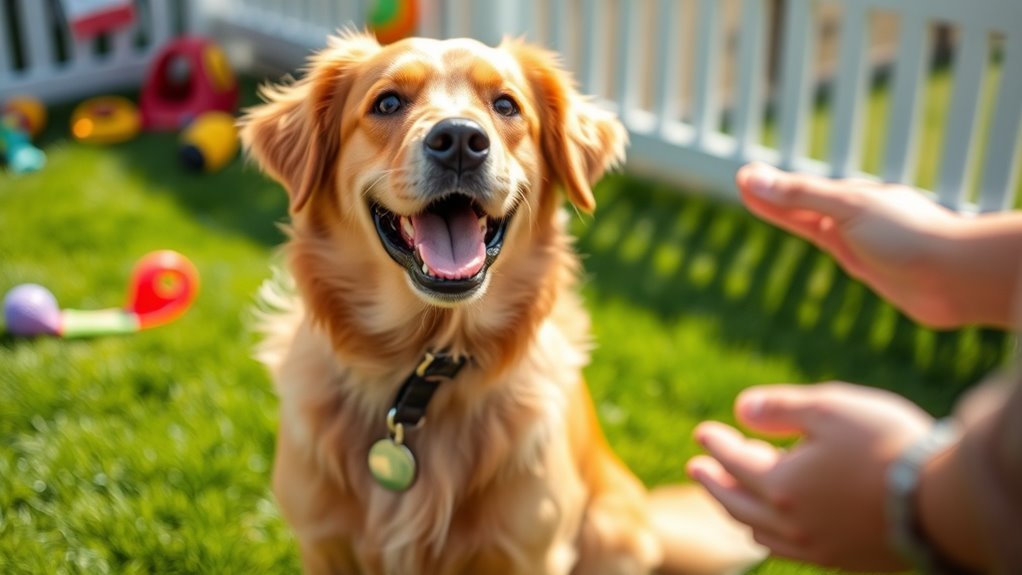

To guarantee your dog is well-behaved and safe, focus on key commands like “sit,” “stay,” “come,” and “leave it.” These commands build trust, improve communication, and help prevent accidents. Use positive reinforcement, patience, and consistency to teach these skills effectively. Reinforcing them regularly in different settings makes your pup more reliable. Want to learn more about mastering these commands and other effective training techniques? Keep exploring to strengthen your bond even further.

Get pet supplies delivered free with Prime
- Fast, free delivery on millions of items
- Prime Video, Amazon Music and more included
- Member-only deals all year
Key Takeaways
- Basic commands like “sit,” “stay,” “come,” “leave it,” and “heel” form the foundation of effective training.
- Consistent practice and positive reinforcement help dogs reliably respond to essential commands.
- Using commands daily enhances safety, impulse control, and strengthens the bond between dog and owner.
- Proper training techniques foster trust, clear communication, and a well-behaved, balanced pet.
- Mastering these commands supports behavior modification and promotes a harmonious living environment.
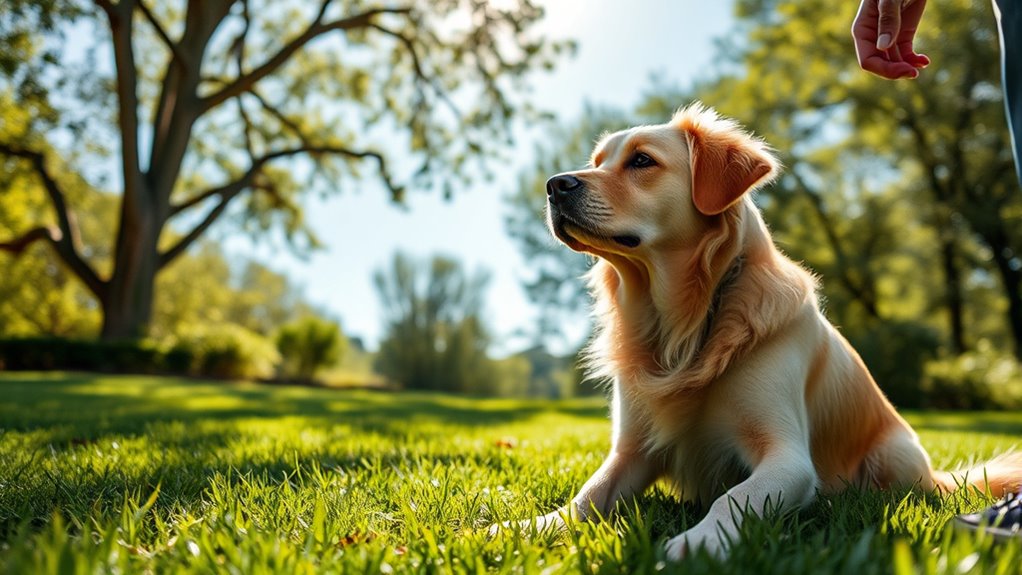
Training your dog with essential commands creates a safer and more enjoyable relationship for both of you. When you focus on effective training techniques, you set the stage for clear communication and mutual understanding. These techniques help your dog learn what’s expected and build trust, making everyday interactions smoother. Incorporating behavior modification strategies into your training can also help correct problematic behaviors early on, preventing issues from escalating. Consistency is key; by reinforcing commands regularly, your dog quickly understands what’s acceptable and what’s not. Remember, patience and positive reinforcement go hand-in-hand, encouraging your dog to respond enthusiastically and confidently.
Consistent training builds trust, understanding, and a safer, happier bond with your dog.
Start with simple commands like “sit” and “stay.” These provide a foundation for more advanced training and help your dog learn self-control. Use treats, praise, and gentle corrections to reinforce these behaviors. When teaching “sit,” hold a treat above your dog’s nose and move it slightly back toward their tail. This naturally encourages them to lower themselves to the ground. Once they sit, immediately reward them and say the command clearly. Repetition and consistency will make this command a second nature for your dog. For “stay,” ask your dog to sit, then open your hand in front of them and say “stay.” Step back slowly and wait a few seconds before returning to reward. Over time, increase the duration and distance to strengthen their understanding.
Incorporating these commands into daily routines also enhances behavior modification. For example, using “leave it” can prevent your dog from grabbing something unsafe. To teach this, hold a treat in each hand, show one to your dog, and say “leave it.” When they resist and look away, reward with the treat from the other hand. This command is invaluable for safety and impulse control. Likewise, “come” is essential for recall, especially in outdoor environments. Call your dog’s name followed by “come” and reward them generously when they respond promptly. Practice regularly in different settings to build reliability.
Effective training involves patience, consistency, and positive reinforcement. By mastering these basic commands, you not only improve your dog’s behavior but also strengthen your bond. Proper training techniques and behavior modification principles ensure your dog feels secure and understands what you expect. This creates a trusting environment where commands become second nature, reducing frustration and enhancing safety. Additionally, understanding the importance of consistent practice helps to reinforce learned behaviors and prevent setbacks. Ultimately, these commands are the building blocks for a well-behaved, happy dog and a harmonious life together.
As an affiliate, we earn on qualifying purchases.
Frequently Asked Questions
How Long Does It Usually Take to Train a Dog in Basic Commands?
Training your dog in basic commands typically takes about 4 to 8 weeks, but it varies based on the dog’s age, breed, and temperament. The key is consistent training sessions and patience. With regular practice and positive reinforcement, your dog can master commands faster. Remember, a steady training timeline and daily practice help reinforce learned behaviors, making your pup more obedient and responsive over time.
Can Puppies Learn Commands as Effectively as Adult Dogs?
Puppies can learn commands just as effectively as adult dogs when you tailor your training to their puppy maturity and age-specific needs. Since puppies are more receptive to new experiences, starting early helps establish good habits. Be patient, consistent, and use positive reinforcement. Keep training sessions short and fun, making sure your puppy remains engaged. With the right approach, your puppy will master commands quickly and build a strong foundation for future learning.
What Are Common Mistakes to Avoid During Dog Training?
Ever wondered if you’re making training harder than it needs to be? Avoid common mistakes like rushing puppy socialization or skipping consistent leash training techniques. Keep training sessions short, positive, and patient. Don’t punish mistakes or get frustrated; instead, celebrate progress. Are you reinforcing good behavior? If not, your dog might get confused or anxious. Staying calm and consistent helps your pup learn faster and builds trust.
How Do I Motivate My Dog to Learn New Commands?
To motivate your dog to learn new commands, use positive reinforcement consistently. Reward your dog with treats, praise, or play whenever they try or succeed in a new task. Keep training sessions short and fun, and always be patient. Your dog will stay engaged and enthusiastic to learn when they see that good behavior leads to positive outcomes. Consistency and positive reinforcement are key to fostering motivation and successful learning.
Are There Commands That Are Unsafe or Unnecessary to Teach?
You should avoid teaching your dog dangerous commands that could put them or others at risk, like commands that encourage aggressive behavior. Unnecessary commands, such as overly complex tricks, aren’t essential for safety or good behavior and can confuse your dog. Focus on safety and practicality, only teaching commands that promote good manners and safety, ensuring your dog’s training is positive and beneficial for everyday life.
As an affiliate, we earn on qualifying purchases.
Conclusion
Mastering these commands transforms your dog into a superhero, capable of maneuvering any situation with confidence. With consistent practice, you’ll unlock a bond so strong, it’s like having a loyal sidekick by your side in every adventure. Think of your dog as a four-legged superstar, ready to conquer the world—or at least your neighborhood—without a single misstep. Keep training, stay patient, and watch your pup become the absolute legend they’re meant to be!
As an affiliate, we earn on qualifying purchases.
As an affiliate, we earn on qualifying purchases.
Halloween Picks
halloween
As an affiliate, we earn on qualifying purchases.