

During shedding season, you can manage your pet’s excess fur by grooming regularly with tools suited to their coat type, preventing mats and shedding everywhere. Proper nutrition with omega fatty acids supports healthy hair growth, while gentle shampoos help soothe skin. Keep an eye out for allergies or skin irritations that may increase shedding, and consult a vet if needed. Staying proactive with these tips will help your pet stay comfortable and your home cleaner—learn more for tailored solutions.
Key Takeaways
- Regularly brush your pet to remove loose fur and prevent matting during shedding seasons.
- Use grooming tools suited to your pet’s coat type for effective hair removal.
- Maintain a high-quality diet rich in omega fatty acids to support healthy coat growth.
- Schedule routine baths with gentle, hypoallergenic shampoos to soothe skin and reduce shedding.
- Manage seasonal allergies with veterinary guidance to decrease skin irritation and excessive hair loss.
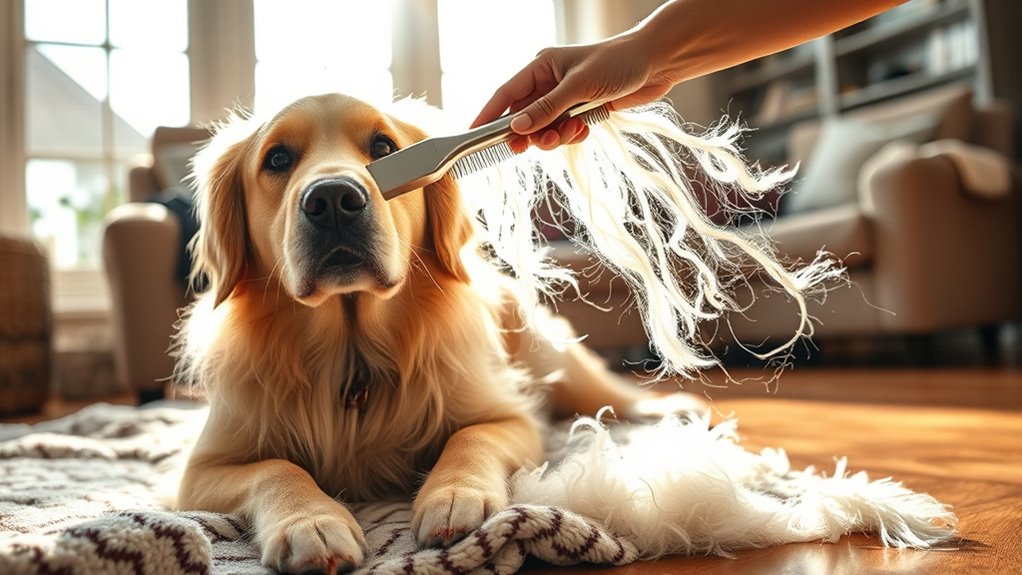
Have you ever wondered why your pet seems to leave fur all over the house during certain times of the year? It’s a common experience, especially as seasons change. This shedding cycle is natural, but it can also be influenced by factors like dog grooming habits and seasonal allergies. Understanding these elements can help you manage shedding more effectively and keep your home cleaner.
During shedding season, your dog’s body responds to changing daylight and temperatures by shedding old hair to make way for new growth. This process is most noticeable in spring and fall when the coat thickens or thins out. Regular dog grooming becomes essential during these times. Brushing your pet daily helps remove loose fur before it ends up everywhere. Not only does this keep your home tidier, but it also prevents matting and skin issues that can occur when dead hair gets tangled. Using the right grooming tools tailored to your dog’s coat type can make a significant difference, making the process quicker and more comfortable for your pet.
Regular grooming during shedding helps keep your home clean and your pet comfortable.
Seasonal allergies also play a role in increased shedding. Just like humans, dogs can develop allergies to pollen, mold, or dust that are more prevalent during certain times of the year. These allergies often cause skin irritation, leading to excessive scratching and hair loss. If you notice your dog scratching more than usual or losing patches of fur, it might be connected to seasonal allergies. Consulting your vet is a good step, as they can recommend allergy testing or treatments to reduce discomfort. Managing allergies can help minimize shedding caused by skin inflammation and irritation.
In addition to grooming and allergies, maintaining a healthy diet supports a shiny, healthy coat. Providing high-quality food rich in omega fatty acids can improve your dog’s skin and fur, reducing the amount of hair shed. Regular bathing with gentle, hypoallergenic shampoos can also help remove loose hair and soothe irritated skin. Just be careful not to over-bathe, as this can strip natural oils and cause more dryness and shedding.
Frequently Asked Questions
How Can I Tell if My Pet’s Shedding Is Normal?
You can tell if your pet’s shedding is normal by observing their fur density and seasonal changes. If they shed more during certain times of the year, like spring or fall, that’s typical. Keep an eye on excessive bald spots, patches, or thinning fur, which might signal a health issue. Regular grooming and monitoring your pet’s fur can help you spot normal seasonal shedding versus abnormal hair loss.
Are There Specific Diets That Reduce Shedding?
Did you know that proper nutrition can reduce shedding by up to 30%? You should consider incorporating pet supplements rich in omega-3 and omega-6 fatty acids, which promote a healthy, shiny coat. Dietary changes, like high-quality protein sources, also help manage shedding. These adjustments support your pet’s skin and fur health, making shedding less noticeable. Always consult your vet before making significant dietary changes or adding supplements.
What Grooming Tools Are Best for Managing Shedding?
To manage loose fur effectively, choose grooming tools suited for your pet’s coat type. A slicker brush is excellent for removing loose fur and preventing matting, while a shedding blade can help with heavy shedding. Combining a de-shedding tool with regular grooming sessions is key. Proper Grooming tool selection not only reduces loose fur around your home but also keeps your pet comfortable and healthy during shedding season.
How Often Should I Bathe My Pet During Shedding Season?
You should bathe your pet every 4 to 6 weeks during shedding season, aligning with their seasonal grooming needs and shedding timeline. Regular baths help loosen and remove excess hair, reducing the amount shed around your home. If your pet sheds heavily, consider more frequent baths, but avoid over-bathing, which can dry out their skin. Always use a gentle, pet-specific shampoo to keep their coat healthy and manageable.
When Should I Consult a Vet About Excessive Shedding?
You should consult a vet if your pet’s shedding feels excessive, like a winter storm of fur. Watch for allergy symptoms such as sneezing, itching, or skin infections that don’t heal. When shedding seems abnormal despite regular grooming, it’s time to seek professional advice. Ignoring these signs can lead to discomfort or health issues, so don’t hesitate to obtain expert help to ensure your pet stays healthy and comfortable.
Conclusion
As shedding season winds down, remember that every cloud has a silver lining. Though your furry friend might leave a trail of fur behind, it’s a sign of healthy hair growth and renewal. Stay patient and consistent with grooming, and soon enough, things will settle back into balance. Sometimes, you’ve just gotta roll with the punches and trust that better days are ahead. After all, this too shall pass, leaving you both ready for brighter days.