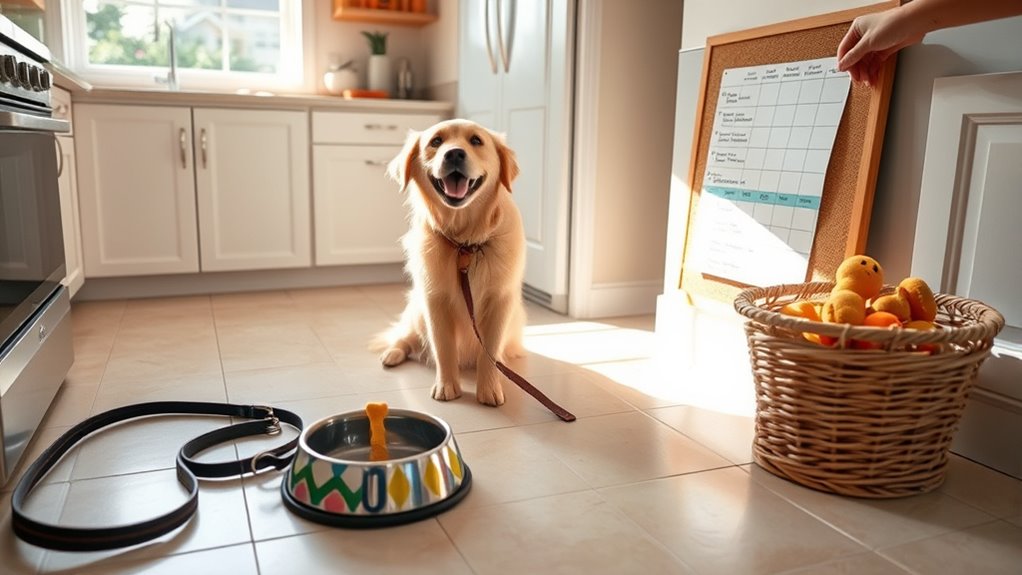

To build a daily routine for your dog, set consistent times for feeding, walks, play, and training each day. Dogs thrive on predictability, which helps them feel secure and reduces behavioral issues. Incorporate regular exercise that matches their breed and energy level, and stick to a reliable schedule. This routine not only promotes good health and habits but also strengthens your bond. Keep going to discover more tips for creating a balanced daily plan for your furry friend.
Key Takeaways
- Establish consistent feeding times to regulate digestion and monitor health.
- Schedule daily walks, play, and training at set times to support physical and mental well-being.
- Create a predictable routine combining feeding and exercise to foster security and reduce stress.
- Adjust routines for special occasions or weather, maintaining overall consistency for stability.
- Stick to a daily schedule to promote emotional stability, reinforce good habits, and simplify daily management.
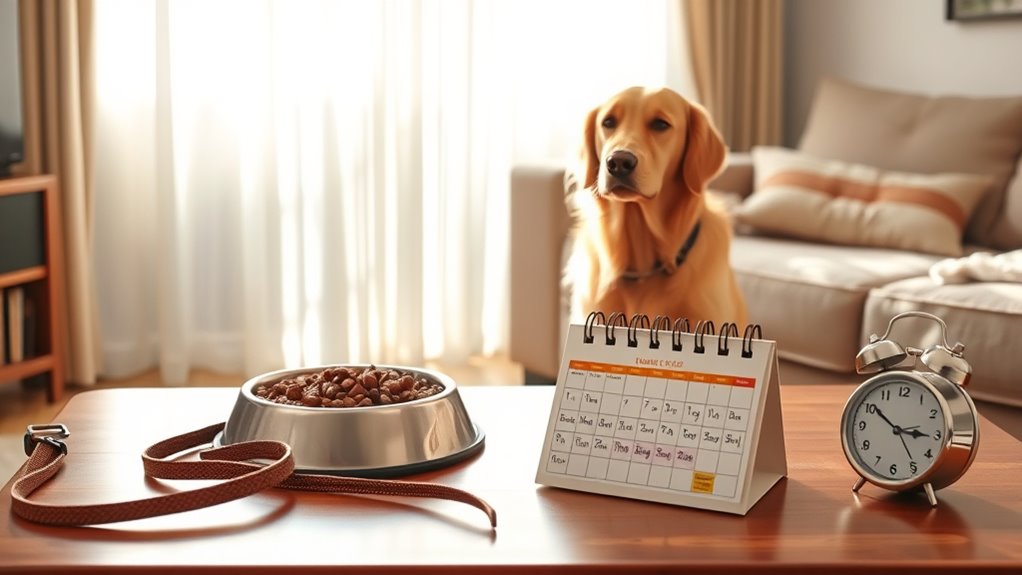
Creating a consistent daily routine for your dog is essential for their well-being and happiness. Dogs thrive on predictability, and establishing a clear schedule helps them feel secure and know what to expect each day. One of the most important elements of this routine is your dog’s feeding schedule. By feeding your dog at the same times each day, you help regulate their digestion and prevent issues like overeating or digestive discomfort. Decide on specific times—perhaps morning and evening—and stick to them consistently. This consistency makes it easier to monitor your dog’s appetite and health, and it can also aid in house training. When your dog knows exactly when to expect food, they’re less likely to beg or develop bad habits around mealtime. Plus, a predictable feeding schedule can help you manage your own day better, ensuring that feeding doesn’t get overlooked amidst other responsibilities. Maintaining a consistent routine is also beneficial for your dog’s overall behavior and emotional stability.
In addition to meal times, an exercise plan is *vital* for your dog’s physical and mental health. Incorporate daily walks, playtime, and training sessions into your routine. Regular exercise helps prevent obesity, reduces anxiety, and keeps your dog mentally engaged. For a healthy exercise plan, consider your dog’s breed, age, and energy level. High-energy breeds may require more vigorous activity, such as runs or extended play sessions, while older or less active dogs might do well with shorter, gentler walks. Consistency is key here too; aim for a set time each day for walks and play. This predictability helps your dog anticipate activity and reduces behavioral issues stemming from pent-up energy. It also strengthens your bond, as your dog learns to associate specific times with positive activities. Make sure to include mental stimulation, like puzzle toys or training exercises, to keep their mind sharp.
Balancing your dog’s feeding schedule with an exercise plan creates a harmonious daily routine that benefits both of you. When your dog knows they’ll be fed, exercised, and loved at specific times, they feel more secure and less anxious. It also makes your life easier, providing structure and reducing stress around feeding and activity. Remember, consistency doesn’t mean rigidity—allow some flexibility for special occasions or weather changes—but maintaining a general schedule helps your dog develop healthy habits. Over time, this routine will become second nature, leading to a happier, healthier, and more well-behaved dog. Building these habits now sets the foundation for a balanced, fulfilling life for your furry friend.
Frequently Asked Questions
How Do I Adjust the Routine for a New Puppy?
To adjust your routine for a new puppy, start by establishing consistent puppy feeding times and include crate training sessions to help with housebreaking. Gradually introduce changes, keeping activities predictable so your pup feels secure. Increase playtime and potty breaks as needed, and be patient while they adapt. Remember, consistency and positive reinforcement make the adjustment smoother, helping your puppy settle into their new daily routine comfortably.
What if My Dog Refuses to Follow the Schedule?
If your dog refuses to follow the schedule, stay patient and use positive reinforcement to motivate them. Consistency strategies, like rewarding good behavior and sticking to the routine, help your dog understand expectations. Give treats or praise when they comply, and avoid punishment. Over time, this approach builds trust and encourages your dog to follow the schedule willingly, making the routine easier for both of you.
How Can I Incorporate Training Into the Daily Routine?
You need to kill two birds with one stone by integrating training into your daily routine. Use positive reinforcement and consistent commands during walks, meal times, and play sessions, making training feel natural and fun. This approach helps your dog learn faster and builds trust. Remember, patience is key—staying steady and encouraging good behavior will turn training into a seamless part of your daily life.
What Are Signs My Dog’s Routine Needs Changing?
If you notice behavior changes like increased barking, lethargy, or loss of interest in activities, it’s time to reassess your dog’s routine. Health concerns such as changes in appetite or bathroom habits also signal a need for adjustment. Pay close attention to your dog’s reactions and energy levels, and don’t hesitate to consult your vet if you suspect health issues. A routine that fits your dog keeps them healthy and happy.
How Do I Balance My Work Schedule With My Dog’s Needs?
Did you know dogs thrive on routine, reducing stress and improving behavior? To balance your work schedule with your dog’s needs, plan regular breaks for walks and play. Incorporate socialization opportunities and guarantee a healthy diet to keep your dog happy and balanced. Consistency helps, so stick to set times for meals, exercise, and rest. This way, your dog feels secure, and you stay productive.
Conclusion
Now that you’ve crafted the perfect daily routine, your dog will finally know what’s coming next—except, of course, for those rogue squirrel chases and mysterious midnight howls. Remember, consistency is key, but don’t be surprised if your four-legged friend still manages to keep things exciting—like hiding your sock collection or demanding breakfast at sunrise. So enjoy the chaos, embrace the mess, and revel in the fact that, at least, you’re now a routine-creating genius… or so you think.