
Many owners often notice too late when their dog’s prey drive is escalating, usually after the dog becomes fixated on small animals or starts chasing suddenly. You might miss subtle signs like tense body language or narrowed eyes until your dog’s chasing behavior becomes uncontrollable or dangerous. Ignoring these early cues can lead to risky situations during walks or yard play. Stay with us to discover how to recognize and address these signs before they escalate.

Get pet supplies delivered free — and shop member deals
- Fast, free delivery on millions of items
- Access to Prime Big Deal Days deals on October 6–7
- Prime Video, Amazon Music and more included
Key Takeaways
- Owners often miss subtle behavioral cues like narrowed eyes or body tension indicating prey drive activation.
- Early signs such as fixation on small animals or quick chasing are frequently overlooked by owners.
- Many owners ignore initial triggers, leading to escalation of chasing behaviors and potential safety risks.
- Lack of consistent training and redirection can cause prey drive signs to go unnoticed until problematic behaviors develop.
- Recognizing subtle signs early prevents dangerous encounters and improves impulse control over time.
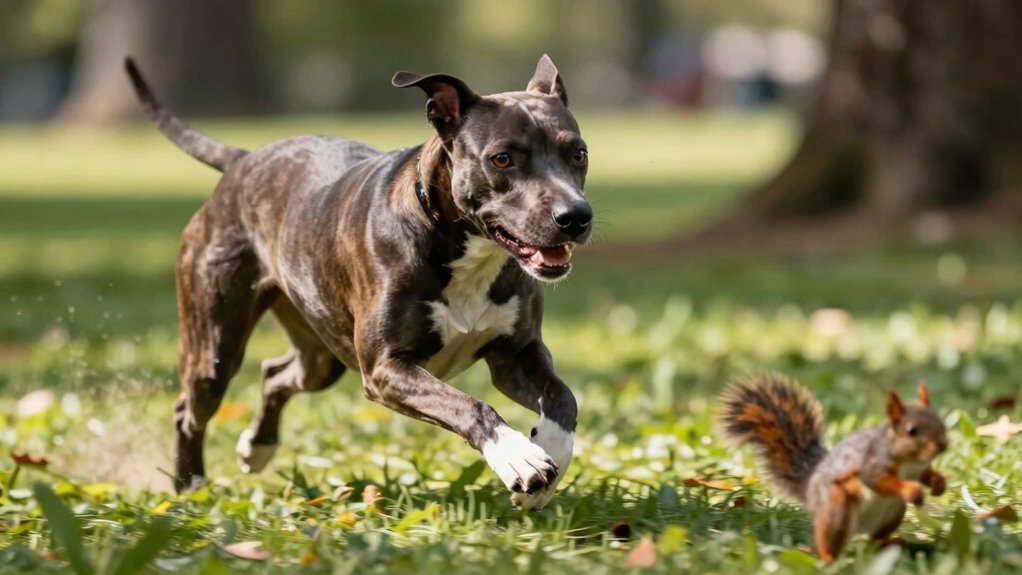
Many dog owners overlook early warning signs of high prey drive until it’s too late, often facing unexpected behavior or safety risks. You might notice your dog fixating on small animals or rapidly chasing after moving objects, but dismiss these as typical energetic behavior. However, these are often behavioral triggers that signal a strong prey instinct, and recognizing them early can make a significant difference in managing your dog’s impulses. When prey drive is high, your dog’s natural instincts can override commands, leading to dangerous situations if not addressed promptly. Recognizing these signs early is crucial for implementing effective training techniques that help control prey drive behaviors. Understanding how to implement effective training techniques is key to controlling a dog with heightened prey drive. You need to be proactive, using consistent, positive reinforcement to teach your dog impulse control. For example, teaching commands like “leave it” or “come” can help redirect their focus when they’re fixated on prey. These techniques work best when practiced regularly in different environments, gradually increasing distractions to build your dog’s self-control. It’s important to remember that patience and persistence are essential; these behaviors won’t change overnight. Behavioral triggers are often subtle at first but can escalate quickly if left unchecked. A sudden movement, a small animal darting across your yard, or even the sight of a squirrel can trigger a chase. When your dog reacts strongly to these triggers, it’s a signal that their prey drive is taking over. Instead of punishing these reactions, focus on redirecting your dog’s attention before the behavior becomes problematic. For instance, use a treat or a toy to shift their focus back to you, reinforcing calm behavior. Consistently managing these triggers and rewarding appropriate responses will help your dog associate calmness with positive outcomes. Being aware of these signs allows you to intervene early and prevent situations from escalating. If you notice your dog’s eyes narrowing or their body tensing whenever they see a small animal, take immediate action with training techniques that emphasize distraction and control. Over time, your dog can learn to ignore behavioral triggers that once caused them to chase or become overly excited. Remember, high prey drive isn’t inherently bad; it’s how you handle it that determines whether your dog becomes a safe, controlled companion or a risk on walks or in the yard. Ignoring these early warning signs can lead to dangerous encounters or difficulty managing your dog’s behavior later on. By staying alert to behavioral triggers and applying consistent training techniques, you help your dog develop better impulse control. The sooner you recognize and address high prey drive, the better equipped you’ll be to keep your dog safe and well-behaved, ensuring both of you enjoy more relaxed walks and peaceful moments together. Recognizing behavioral triggers early enables you to establish a foundation of trust and safety with your dog. Additionally, understanding the prey drive concept helps owners better anticipate their dog’s reactions and tailor their training approach effectively. Being proactive in identifying early signs of prey drive is essential for preventing escalation and ensuring a harmonious relationship.
As an affiliate, we earn on qualifying purchases.
Frequently Asked Questions
Can Prey Drive Vary Between Different Dog Breeds?
Yes, prey drive can vary between different dog breeds due to breed-specific traits and genetic influences. Some breeds, like terriers and retrievers, naturally have higher prey drives because they’ve been bred for hunting or retrieving. You might notice these differences early on, especially if your dog shows a strong instinct to chase or hunt. Understanding your dog’s breed traits helps you manage their prey drive effectively and guarantees better training and safety.
How Early Can Prey Drive Signs Be Detected?
Prey drive signs can be noticed as early as a few weeks old, like tiny sparks igniting curiosity. Look for prey drive indicators such as chasing moving objects or sudden bursts of energy during play. Early detection methods include observing your puppy’s reactions to moving stimuli and engaging in controlled play sessions. Recognizing these signs early helps you channel your dog’s instincts positively, ensuring a balanced and happy relationship.
Are There Training Methods to Reduce Prey Drive?
Yes, you can use training methods to reduce prey drive by challenging your dog’s instincts and managing impulses. Focus on positive reinforcement techniques, redirect their attention to appropriate behaviors, and gradually expose them to prey-like stimuli in controlled settings. Consistent training helps your dog learn self-control and reduces overly reactive prey instincts. Patience and persistence are key, and working with a professional trainer can also improve results.
Can Prey Drive Lead to Aggressive Behavior?
Prey drive can be a ticking time bomb, ready to ignite into aggressive behavior if not managed. When driven by high prey motivation, your dog might see smaller animals as targets, escalating to aggression. Behavioral modification techniques are essential to redirect this energy safely. You must act early, using consistent training to control and channel prey drive, preventing it from turning into dangerous aggression that could threaten both your dog and others.
What Are the Risks of Ignoring Prey Drive Signs?
Ignoring prey drive signs risks escalating aggressive behaviors, potentially leading to dangerous situations. Genetic factors influence a dog’s prey drive, but environmental influences like training and socialization also shape responses. If you overlook early warning signs, you might miss opportunities to redirect your dog’s instincts positively. This can result in chasing, biting, or other problematic behaviors becoming ingrained, making management harder and increasing safety risks for both your dog and others.
dog impulse control training toys
As an affiliate, we earn on qualifying purchases.
As an affiliate, we earn on qualifying purchases.
Conclusion
By recognizing the prey drive signs early, you hold the key to guiding your dog through the tangled woods of instinct. Ignoring these signals is like walking blindfolded into a forest, where hidden dangers lurk behind every tree. But when you pay attention, you become the lighthouse guiding your dog safely home, turning their wild, restless energy into a trusted companion. With awareness, you transform chaos into harmony, lighting the path forward together.
As an affiliate, we earn on qualifying purchases.
As an affiliate, we earn on qualifying purchases.
Evergreen bestsellers Picks
bestsellers
As an affiliate, we earn on qualifying purchases.