
Muzzle training for vet visits helps keep your dog safe, calm, and manageable during stressful situations. Start by introducing the muzzle gradually using positive reinforcement, making sure it fits well and feels comfortable. Use treats and gentle praise to build trust, and increase the duration slowly over time. Creating a relaxed environment and practicing in different settings can make visits smoother. If you’re interested, you’ll discover tips to make the process easier and less stressful for both of you.
Key Takeaways
- Introduce the muzzle gradually with positive reinforcement to build trust and reduce fear during vet visits.
- Select a comfortable, well-fitting, breathable muzzle to ensure safety and ease of use.
- Use calming textures and familiar items to create a soothing environment for your dog during training.
- Practice short, positive muzzle sessions at home before veterinary appointments to increase acceptance.
- Maintain a calm, controlled environment at the vet, rewarding calm behavior to minimize stress and promote cooperation.
Understanding the Benefits of Muzzle Training

Understanding the benefits of muzzle training is essential for guaranteeing your dog’s safety and comfort during vet visits. Proper training helps with behavior modification, making your dog more comfortable around unfamiliar people and environments. This reduces stress for both of you and minimizes the risk of aggressive reactions. Muzzle training also enhances emergency preparedness; if your dog ever becomes frightened or agitated, a well-fitted muzzle can prevent bites and injuries. It encourages trust and calmness, enabling smoother vet visits and handling. By introducing a muzzle gradually and positively, you create a sense of security for your pet. This proactive step assures your dog feels safe, which benefits everyone involved and makes vet visits less stressful and more manageable. Additionally, understanding ethical training methods ensures that the process remains humane and effective. Incorporating positive reinforcement techniques during muzzle training promotes cooperation and reduces fear, making the experience more pleasant for your dog. Moreover, consistent desensitization exercises can help your dog develop a more relaxed attitude toward the muzzle and vet visits overall. Engaging in gradual desensitization can also help prevent fear-based reactions, further easing the process.
Selecting the Right Muzzle for Your Pet

Choosing the right muzzle starts with considering the material options and how well it fits your pet. You want a muzzle that provides safety without sacrificing comfort during vet visits. By focusing on these points, you’ll find a muzzle that keeps your pet secure and relaxed. Additionally, understanding affairs – cheating husband secrets can help pet owners be more aware of emotional stressors that may affect their pets’ behavior during visits. Recognizing emotional attachment to belongings can also help you better understand your pet’s reactions and needs during stressful situations. Being aware of pet behavior cues can further assist in selecting a muzzle that minimizes discomfort and anxiety.
Material Options and Fit
Selecting the right muzzle involves considering both the material and how well it fits your pet. The material impacts durability and comfort, so choose one that withstands biting and chewing. Material durability is crucial for ensuring the muzzle will last through multiple uses and resist wear. Fit customization is vital to guarantee the muzzle isn’t too tight or loose, preventing discomfort or escape. Using a vetted product ensures that the muzzle meets safety and quality standards. Here are key points to weigh: 1. Material durability: Opt for sturdy materials like leather or nylon for long-lasting use. 2. Breathability: Look for options with ventilation to keep your pet comfortable. 3. Adjustability: Ensure the muzzle can be customized for a snug yet comfortable fit. 4. Material flexibility: Soft materials like silicone mold easily to your pet’s snout for better fit and comfort. Choosing the right material and fit helps your pet stay comfortable and secure during vet visits.
Safety and Comfort
To guarantee your pet’s safety and comfort during vet visits, it’s crucial to select a muzzle that fits properly and feels comfortable for your animal. A well-chosen muzzle can help manage aggressive behavior and prevent injury to your pet and staff. Look for a muzzle that allows your pet to breathe, pant, and drink comfortably. Proper fit ensures the muzzle stays secure without causing pain or discomfort. Consider the material—softer options can increase comfort, especially for extended wear. Use the table below to compare key features:
| Feature | Importance |
|---|---|
| Proper Fit | Prevents slipping and injury |
| Breathability | Keeps your pet comfortable |
| Material | Affects comfort and safety |
| Ease of Use | Simplifies training and fitting |
| Managing Aggressive Behavior | Ensures safety during visits |
Choosing the right muzzle promotes safety and eases vet visits for everyone. Additionally, selecting a comfortable material can significantly improve your pet’s experience during visits. Ensuring the muzzle has proper breathability is essential for pet comfort, especially during longer appointments. Regularly checking the fit can also prevent discomfort or injury, ensuring your pet remains comfortable and safe throughout the visit.
Step-by-Step Guide to Introducing the Muzzle
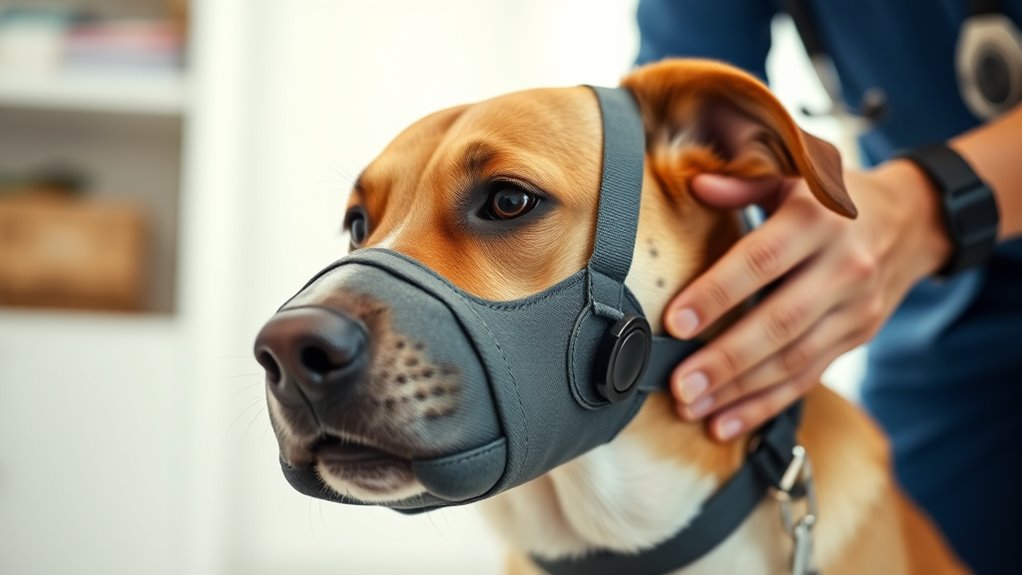
Introducing a muzzle gradually and positively is essential for a smooth vet visit experience. You want your dog to associate the muzzle with comfort and safety, reinforcing good behavior modification and leash training. Start by letting your dog sniff and explore the muzzle, rewarding calm behavior. Next, gently place the muzzle near their face, offering treats, and gradually increase contact time. Follow these steps:
- Introduce the muzzle in a calm environment, pairing it with treats.
- Let your dog sniff and lick the muzzle to build familiarity.
- Gently place the muzzle on their snout for a few seconds, offering praise.
- Gradually increase the duration, always rewarding calm behavior.
- Utilize necessary cookies to ensure a smooth and secure training process, as they enable basic site features that support your learning. Consistent, positive exposure helps your dog accept the muzzle without fear, much like recognizing angel numbers as signs of positive change in life. Providing a comfortable environment can also help reduce anxiety during the process. Incorporating a diversification strategy can further enhance your training approach by introducing new techniques and maintaining your dog’s interest.
Positive Reinforcement Techniques During Training
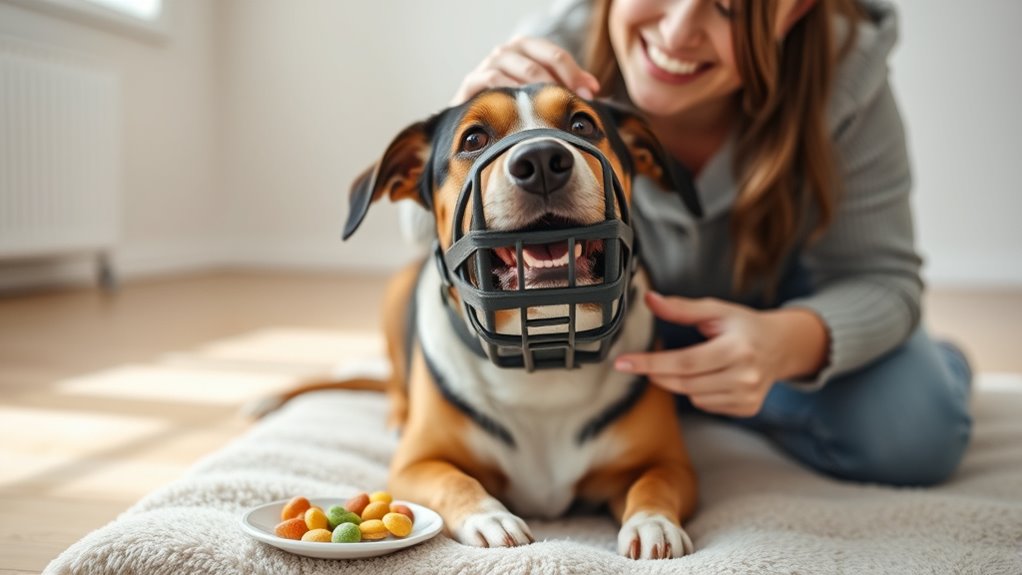
Using positive reinforcement techniques during training can substantially improve your dog’s willingness to accept the muzzle and other new experiences. When your dog exhibits calm behavior or approaches the muzzle voluntarily, immediately reward them with treats, praise, or petting. This method reinforces good dog behavior and helps your dog associate the muzzle with positive outcomes. Incorporating positive reinforcement training can further enhance your dog’s comfort and compliance. Keep training sessions short and consistent, gradually introducing the muzzle in a non-threatening way. Use a calm voice and gentle touch to build trust. Avoid punishment or force, as these can increase fear or resistance. By consistently rewarding your dog’s calm and cooperative behavior, you create a positive learning environment that encourages acceptance. Regular positive reinforcement has been shown to improve dog behavior over time, making vet visits less stressful. Understanding the importance of trust-building techniques can help your dog feel more secure during veterinary visits. Over time, your dog will associate the muzzle with positive experiences, making vet visits less stressful.
Gradually Increasing Duration and Comfort

Once your dog is comfortable with the muzzle for short periods, you can start gradually increasing the duration to help build their confidence and tolerance. This process relies on treat-based training and gradual exposure to make the experience positive. Here are some steps to follow:
Gradually increase muzzle time with treats and praise to build your dog’s confidence and tolerance.
- Extend muzzle wear by a few seconds, rewarding your dog with treats and praise.
- Increase the time gradually, always watching for signs of discomfort. Incorporating positive reinforcement techniques can enhance this process.
- Practice in different environments to boost comfort and confidence.
- Keep sessions short and frequent, ending on a positive note.
- Incorporate natural materials or textures found in Waldorf toys to make the training environment more engaging and soothing for your dog.
- Understanding retirement planning options in your area can help reduce stress for pet owners planning long-term care for their animals.
- Using appropriate headgear can aid in the training process and help your dog become more accustomed to wearing a muzzle comfortably.
Tips for a Calm and Successful Vet Visit

To guarantee a calm and successful vet visit, preparation is key. Start with clear behavior management strategies to keep your pet relaxed. Use training consistency to reinforce calm behavior before and during the appointment. Practice short, positive visits to the vet to build confidence and reduce anxiety. Bring familiar items like a blanket or toy to comfort your pet. Speak in a soothing voice and avoid sudden movements that might startle them. Reward calm behavior with treats and praise, reinforcing positive associations. Keep your pet on a leash or harness to maintain control. Arrive early to avoid rushing, and communicate with the vet about your pet’s needs. Incorporating stress management techniques can further promote relaxation during the visit. Ensuring proper air quality in your pet’s environment can also reduce overall stress and improve their comfort. With consistent training and a calm approach, your visits will become smoother for both of you.
Frequently Asked Questions
Can All Dog Breeds Safely Wear a Muzzle?
You wonder if all breeds can safely wear a muzzle. While breed suitability varies, most dogs can wear a muzzle if chosen correctly. Consider different muzzle types—basket, soft, or fabric—to find the best fit. Always introduce the muzzle gradually and verify it doesn’t cause discomfort. Proper training helps your dog feel safe, making muzzle use effective and safe across various breeds, including those with strong biting tendencies.
How Often Should I Practice Muzzle Training With My Pet?
Like sharpening a blade, your dog’s muzzle training needs steady, deliberate practice. Follow the frequency guidelines—daily or several times a week—to build comfort and trust. Consistency in training is key; it helps your pet associate the muzzle with positive experiences. Keep sessions short and positive, gradually increasing duration. With patience and regular practice, your dog will become more relaxed, making vet visits safer and less stressful for both of you.
Are There Any Health Risks Associated With Muzzle Use?
You might wonder if using a muzzle causes health risks. Generally, muzzle discomfort can occur if it fits too tight or isn’t used properly, leading to stress. Respiratory concerns are rare but possible if the muzzle restricts breathing or causes overheating, especially in hot weather. Always verify the muzzle fits well, monitor your pet closely, and never leave them unsupervised while wearing it to prevent any health issues.
What Signs Indicate My Dog Is Distressed by the Muzzle?
If your dog shows signs of distress, like excessive panting, whining, or trying to remove the muzzle, it indicates dog anxiety and muzzle discomfort. Watch for trembling, lip licking, or yawning, which can also signal stress. These signs mean your dog isn’t comfortable and may be experiencing muzzle discomfort or anxiety. Always monitor your dog closely, and if you notice these signs, remove the muzzle and try to desensitize your dog gradually.
How Can I Prevent My Dog From Trying to Remove the Muzzle?
To prevent your dog from trying to remove the muzzle, focus on understanding their dog behavior and ensuring muzzle comfort. Gradually introduce the muzzle in positive situations, using treats and praise to create a positive association. Make sure it fits properly and is not too tight. If your dog feels comfortable and relaxed, they’ll be less likely to try removing it. Consistent training and patience help reinforce this behavior.
Conclusion
With muzzle training, you transform vet visits from a source of stress into a manageable experience. Think of it as opening a secret door to your pet’s calmness—once you’ve laid the groundwork, trust and comfort follow. Remember, patience and positive reinforcement are your keys. By making this journey a gentle adventure, you’ll not only protect your pet but also strengthen your bond. After all, isn’t a peaceful visit worth every step?