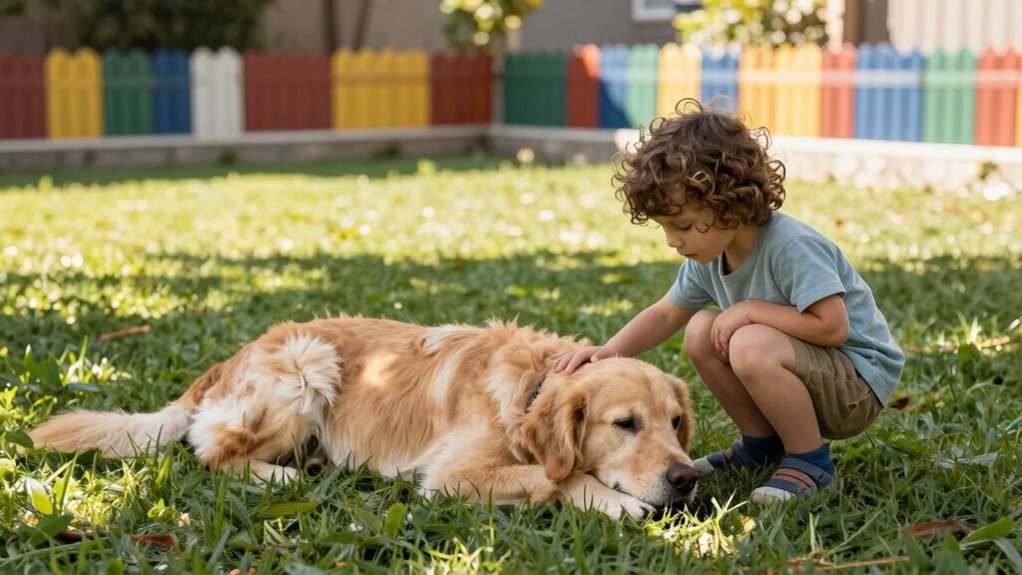

To keep your family safe and foster positive bonds, you need clear boundaries between your child and dog. Teach your child to ask permission before approaching the dog and supervise all interactions. Use consistent rules and safety protocols, like barriers, to create a secure environment. Proper supervision and gentle petting techniques are essential. Setting and enforcing these boundaries helps build trust and respect. If you want to know more about creating a safe, happy home for your pet and family, keep exploring these tips.

Get pet supplies delivered free with Prime
- Fast, free delivery on millions of items
- Prime Video, Amazon Music and more included
- Member-only deals all year
Key Takeaways
- Establish clear boundaries and teach children to ask permission before approaching the dog.
- Use consistent rules and safety protocols to reinforce acceptable behaviors around the dog.
- Always supervise interactions, especially during initial contact, and teach proper petting techniques.
- Incorporate positive reinforcement and routine training to promote respectful and safe behavior.
- Create a safe environment with barriers and clear communication to minimize accidents and foster trust.
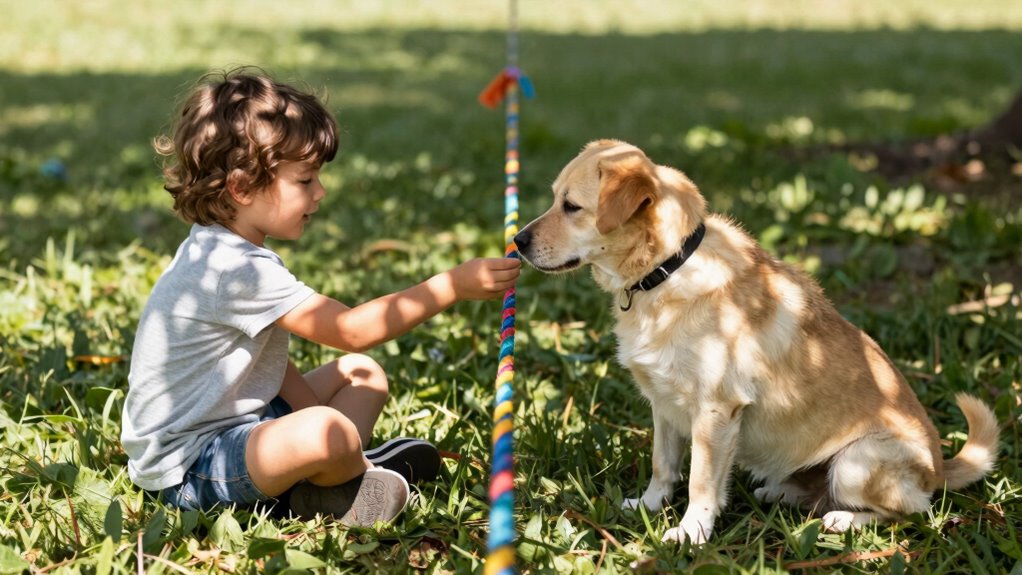
Have you ever wondered how to keep your child safe around dogs? Establishing clear boundaries between your child and your family dog is essential. The Child and Dog Boundary Rule is designed to create a safe environment where both your child and your dog can coexist happily without misunderstandings or accidents. To make this work, you need to focus on training consistency and safety protocols. Consistent training helps your dog understand what behavior is acceptable around children, and clear safety protocols teach your child how to interact safely with the dog.
First, it’s important to set firm boundaries that everyone in the family follows. For example, teach your child to ask permission before approaching or touching the dog. Never allow your child to disturb the dog while it’s eating, sleeping, or resting in its favorite spot. These boundaries help prevent sneaky or accidental situations that could upset the dog or lead to bites. Consistency is key here — if your child is told to stay away from certain areas or to respect the dog’s space, make sure everyone enforces those rules every time. This way, your dog learns what’s expected and feels secure, and your child understands the importance of respecting the dog’s boundaries.
In addition to setting boundaries, develop safety protocols around the house. For example, always supervise interactions between your child and the dog, especially in the beginning. Use barriers like baby gates if needed, to create designated areas for safe interactions. Teach your child proper ways to pet the dog — gentle strokes on the back or side, avoiding the face or tail until they’re older and more experienced. Also, train your dog to respond to basic commands such as “sit,” “stay,” and “leave it,” which can help prevent unexpected behaviors. Developing a safe environment where both your child and your dog can interact comfortably is crucial to reduce the risk of accidents and build trust. Incorporating positive reinforcement techniques during training can further encourage desirable behaviors and foster mutual respect. Creating a predictable environment through consistent routines and clear rules can significantly minimize misunderstandings and potential conflicts, ensuring everyone feels secure. Establishing clear communication and understanding between your child and your dog is an essential part of creating a harmonious household, where everyone’s safety and happiness are prioritized. Additionally, understanding the benefits of indoor air quality improvements can contribute to a healthier environment for your entire family.
Products Worth Considering

Whisker Feeder-Robot Automatic Pet Feeder, White with Smoke-Grey Hopper

Roborock Qrevo S Pro Robot Vacuum and Mop with Multifunctional Dock

Roborock Qrevo Curv S5X Robot Vacuum and Mop
As an affiliate, we earn on qualifying purchases.
Frequently Asked Questions
How Do I Introduce My Child to a New Family Dog?
When introducing your child to a new family dog, prioritize child safety by supervising every interaction. Start with calm, controlled introductions on neutral ground, allowing the dog to sniff and get comfortable. Use positive reinforcement for good behavior, and make sure your child understands basic dog body language. Consistent dog training and supervision help build trust, making the experience safe and enjoyable for both your child and the dog.
What Are Signs My Dog Is Uncomfortable Around Children?
You’ll notice signs like growling, stiff body language, or avoiding eye contact if your dog feels uncomfortable around children. Watch for a tense tail, pinned-back ears, or lip licking, which can indicate stress. Recognizing these signals is essential for toddler safety. If your dog shows discomfort, give them space and supervise interactions closely, ensuring both your child and dog stay safe and comfortable at all times.
How Can I Enforce Boundaries Without Scaring My Child?
You can enforce boundaries without scaring your child by practicing parental communication and maintaining boundary consistency. Clearly explain to your child how to interact with the dog, emphasizing gentle behavior and respecting the dog’s signals. Use calm, positive reinforcement when they follow rules, and be consistent in enforcing boundaries. This approach helps your child understand limits without feeling threatened, fostering a safe environment for both your child and your dog.
What Age Is Appropriate for a Child to Handle a Dog Alone?
You can’t put a child in the driver’s seat of pet safety too early; generally, around age 12, they start handling dog interactions more confidently. Until then, constant child supervision is your best shield. Think of it like a safety net—keeping your child and dog secure. Be patient, teach boundaries, and watch their bond grow. Remember, a little guidance goes a long way in ensuring safe, happy moments together.
How Do I Train My Dog to Respect the Child’s Space?
To train your dog to respect your child’s space, start with boundary training by teaching your dog to understand and respect physical limits. Use clear cues and reward calm behavior. Watch your dog’s body language for signs of discomfort or overexcitement, and redirect as needed. Consistent training helps your dog recognize when to give space, fostering a safe environment where your child feels secure and your dog understands personal boundaries.
Conclusion
By establishing clear boundaries between your child and dog, you’re planting the seeds for a lifelong friendship built on trust and respect. Think of it as laying down the lines of a delicate dance—each step must be understood to keep harmony. When you set these rules early, you’re not just creating safety; you’re nurturing a bond that can weather any storm. Remember, boundaries are the backbone of a love story that lasts a lifetime.