
If your fast eater scarfes down food quickly, using a puzzle feeder that’s too simple or doesn’t match their pace can be frustrating. These puzzles may fail to slow them down or challenge their thinking, leading to boredom or frustration. To avoid this, choose designs with multiple compartments or adjustable difficulty that suit your pet’s eating speed. Keep in mind, there’s more to take into account for effective feeding, and you’ll find helpful tips if you explore further.
Key Takeaways
- Using puzzles with insufficient challenge causes fast eaters to become frustrated and still eat too quickly.
- Selecting overly simple or non-interactive puzzles fails to slow down fast eaters effectively.
- Not gradually increasing difficulty can lead to boredom or frustration for quick eaters.
- Puzzles lacking multiple compartments or adjustable levels don’t engage fast eaters properly.
- Ignoring the pet’s individual eating habits and behavior may result in ineffective puzzle choices.
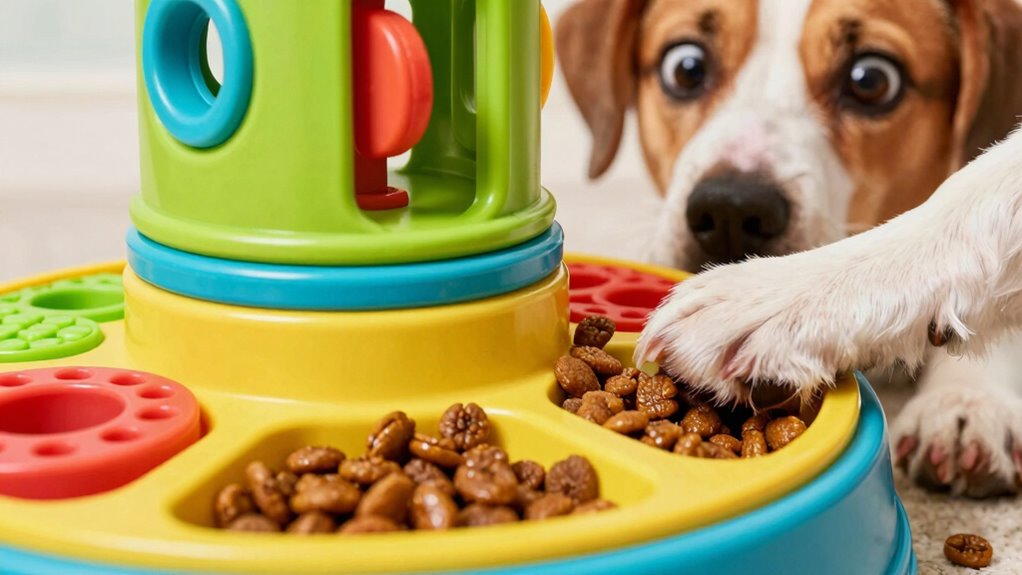
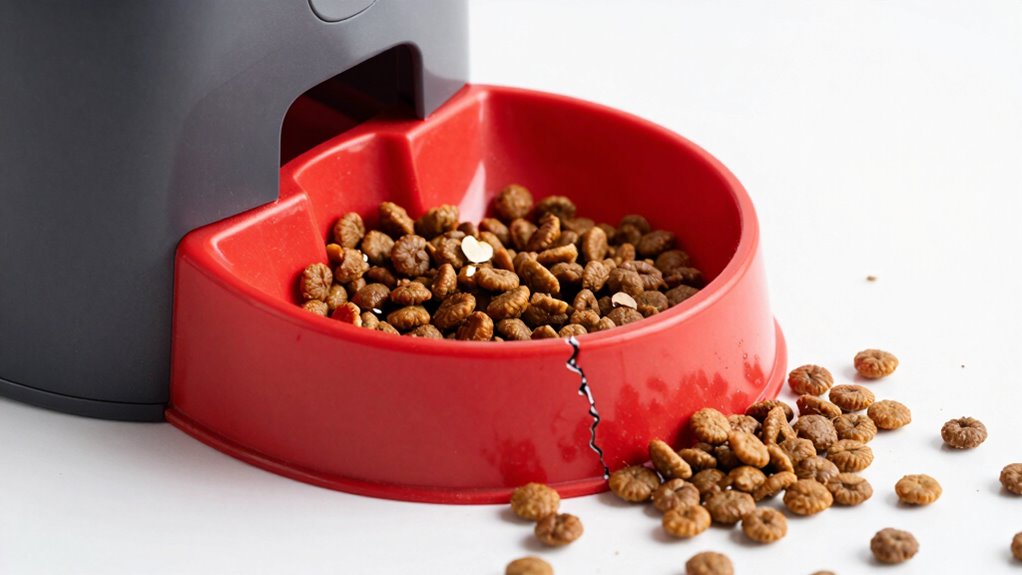
Puzzle feeders can be a fantastic way to keep your pet mentally stimulated and engaged, but many pet owners make common mistakes that can undermine their effectiveness. One of the most frustrating issues arises with fast eaters, where the puzzle seems to backfire rather than slow down mealtime. If your pet scarfes down food in seconds, it’s likely because the puzzle’s design isn’t suited to their eating style or it lacks the right interactive features. Many puzzle feeders have an engaging, interactive design meant to challenge your pet and prolong mealtime, but if they’re too simple or don’t match your pet’s pace, they won’t serve their purpose.
When selecting a puzzle feeder, you need to take into account its interactive design carefully. A good puzzle should encourage your pet to think and work for their food, but if it’s too easy or too straightforward, fast eaters will simply gulp their meal without much effort. Conversely, an overly complex puzzle might frustrate your pet, causing them to give up or become anxious. It’s essential to find a balance that challenges your pet without overwhelming them. For fast eaters, look for puzzles with multiple compartments or adjustable difficulty levels, so you can gradually increase the challenge as they improve. This interactive design not only slows their eating but also keeps their mind active during mealtime. Additionally, understanding your pet’s eating habits can help you choose the most suitable puzzle to meet their needs effectively. Considering your pet’s behavioral tendencies can also guide you in selecting a puzzle that maintains their interest over time. Being aware of boredom as a factor can also help you choose puzzles that prevent your pet from losing interest quickly.
Safety considerations are equally important when choosing a puzzle feeder. You want to regard that the puzzle is made from non-toxic, durable materials that won’t break apart or pose a choking hazard. Inspect the puzzle regularly for wear and tear, especially if your pet is aggressive with toys. For fast eaters, puzzles with small parts or removable pieces might pose safety risks if they’re not securely attached. Always supervise your pet during their first few uses of a new puzzle to ensure they’re handling it safely. Additionally, avoid puzzles with sharp edges or parts that could be swallowed or cause injury. The goal is to slow down your pet’s eating without putting them at risk.
Ultimately, the key to solving the puzzle feeder mistake that frustrates fast eaters is to choose an interactive design tailored to their needs and to give thought to safety considerations. By selecting a puzzle that challenges your pet at the right level and is built from safe materials, you help turn mealtime into a stimulating and safer experience. Remember, patience is key—gradually introduce new puzzles and adjust difficulty settings to help your pet develop better eating habits while enjoying their food in a safe, engaging way.
adjustable puzzle feeder for fast eaters
As an affiliate, we earn on qualifying purchases.
As an affiliate, we earn on qualifying purchases.
Frequently Asked Questions
Can Puzzle Feeders Help Slow Down All Types of Fast Eaters?
Yes, puzzle feeders can help slow down all types of fast eaters. They promote nutritional benefits by encouraging slower eating, which aids digestion and prevents choking. Additionally, puzzle feeders provide mental stimulation, keeping your pet engaged and reducing boredom-related behaviors. By making your pet work for their food, these feeders naturally extend mealtime, fostering healthier eating habits and offering both physical and mental benefits for fast eaters.
Are There Specific Puzzle Feeder Brands Recommended for Certain Dog Breeds?
Did you know that breed-specific feeding challenges can impact your dog’s health? For fast eaters, choosing the right puzzle feeder is key. Recommended puzzle brands like Nina Ottosson or Outward Hound offer models tailored for breeds prone to gulping or overeating. For example, slow feeders for Bulldogs or Boxers help prevent choking and digestion issues. Select a puzzle that matches your breed’s eating style to improve mealtime safety and enjoyment.
How Often Should I Clean and Disinfect My Puzzle Feeder?
You should clean your puzzle feeder after every use to guarantee puzzle cleaning is thorough and hygiene is maintained. Disinfection frequency depends on how often your dog uses it; ideally, disinfect at least once a week. Use warm water and mild soap for puzzle cleaning, and consider a pet-safe disinfectant for deep cleaning. Regular cleaning prevents bacteria buildup and keeps your dog safe and healthy during mealtime.
What Are Signs My Dog Is Frustrated With the Puzzle Feeder?
If your dog shows signs of dog boredom or gets overly fixated during mealtime, they might be frustrated with the puzzle feeder. Look for pawing, chewing, or trying to chew the feeder itself, along with whining or losing interest quickly. These behaviors indicate the puzzle isn’t engaging enough, possibly leading to feeder competition. To fix this, increase challenge levels gradually or switch to a different type of puzzle to keep your dog motivated.
Can Puzzle Feeders Be Used for Cats or Other Pets?
Think of puzzle feeders as a Swiss Army knife—they’re versatile tools for food enrichment. You can absolutely use them for cats and other pets, not just dogs. These interactive toys challenge your pet’s mind and slow down eating, preventing boredom. Just choose the right size and design for your pet’s species and preferences. With puzzle feeders, you turn mealtime into fun, engaging play that stimulates their natural instincts.
multi-compartment pet puzzle feeder
As an affiliate, we earn on qualifying purchases.
As an affiliate, we earn on qualifying purchases.
Conclusion
Don’t let your puzzle feeder turn into a frustrating maze for your speedy eater. When used correctly, it becomes a treasure map guiding your pet to their meal, turning mealtime into a fun adventure rather than a source of stress. Think of it as a puzzle piece that, once fit perfectly, unleashes a world of enrichment and satisfaction. With a little tweak, you’ll transform mealtime chaos into a symphony of happy, stimulated paws.
interactive slow feeder for dogs/cats
As an affiliate, we earn on qualifying purchases.
As an affiliate, we earn on qualifying purchases.
non-toxic durable pet puzzle toy
As an affiliate, we earn on qualifying purchases.
As an affiliate, we earn on qualifying purchases.