
Dogs struggle with fast human movements because their keen senses and natural instincts make quick, unpredictable actions confusing and overwhelming. They react instinctively to rapid motions, which can cause them to miss cues or become anxious. Slow, deliberate signals help them understand better and stay focused. If you keep working on controlled movements and routines, you’ll find they become more confident and responsive over time. Keep exploring to learn how to improve your dog’s responsiveness even further.
Key Takeaways
- Dogs react instinctively to quick movements, which can cause confusion or overwhelm.
- Rapid, jerky motions may obscure visual cues, making it hard for dogs to process commands.
- Unpredictable fast actions increase anxiety and reduce focus during training or agility.
- Sudden movements can disrupt a dog’s anticipation and cause missed cues or mistakes.
- Controlled, deliberate motions help dogs understand and respond more effectively to human signals.
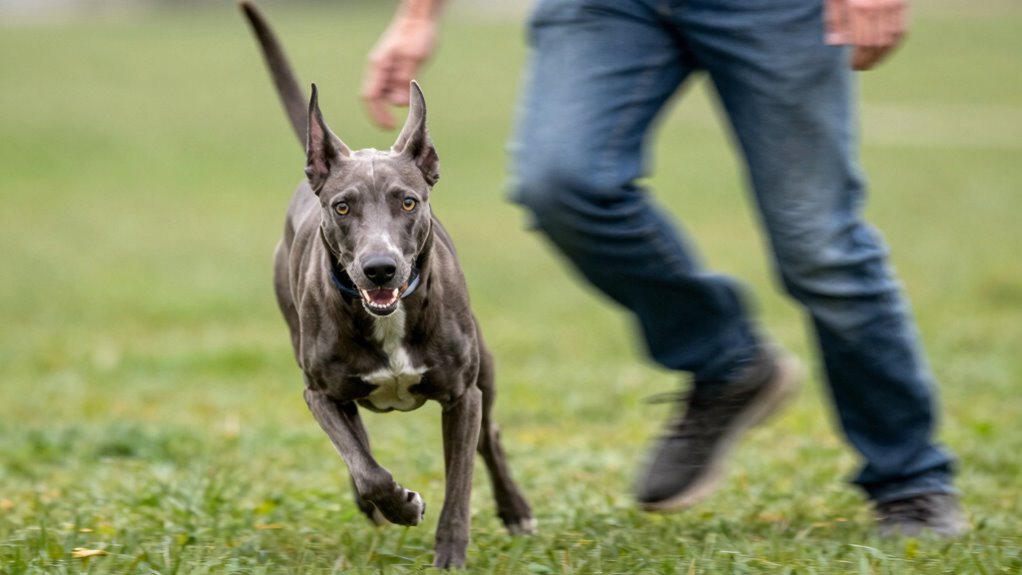
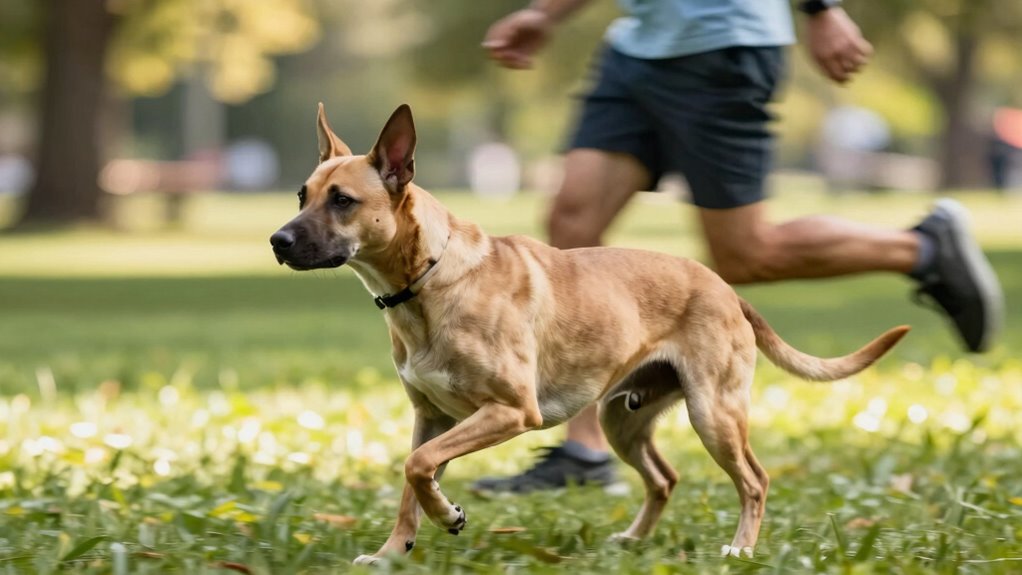
Dogs have an incredible ability to pick up on fast human movements, often reacting instinctively in ways that seem almost telepathic. You’ve probably noticed how a dog can suddenly dart across a room when you quickly reach for something or how they anticipate your steps during a walk. This heightened awareness is rooted in their natural instincts and keen senses, but it can also lead to challenges, especially when it comes to more complex activities like dog training or canine agility. When humans move too rapidly or unpredictably, dogs may struggle to keep up, becoming confused or overwhelmed instead of focused.
Fast human movements can disrupt a dog’s ability to process cues effectively. If you’re training your dog or trying to teach agility tricks, sudden or jerky motions might make it harder for them to understand what’s expected. They rely heavily on visual signals, and rapid, erratic movements can mask or distort these signals, leading to hesitation or miscommunication. For example, during agility exercises, precise and controlled movements are essential. If you move too quickly or unpredictably, your dog may not be able to coordinate their steps, resulting in missed jumps or wrong turns. The key to improving their performance lies in practicing controlled, deliberate motions that your dog can easily follow.
Moreover, dogs are naturally more attuned to steady, predictable movements because these help them anticipate what’s coming next. When your movements are unpredictable or too fast, they may become anxious or lose focus altogether. This is especially true for dogs that haven’t undergone specific training to handle agility drills or fast-paced commands. In dog training sessions, slow and clear cues help your dog learn to respond consistently. Once they master that, gradually increasing the speed of your commands can improve their reaction times without overwhelming them. The goal is to build their confidence and understanding, not to push them into confusion. Recognizing that visual cues are key to a dog’s understanding can help trainers design more effective training routines.
Additionally, understanding and respecting your dog’s natural sensory abilities can greatly enhance your training effectiveness. Recognizing how dogs perceive and process visual signals allows trainers to tailor their cues for better results. Incorporating consistent training routines can also help your dog become more comfortable with varying speeds and movements, reducing anxiety during rapid actions. It’s important to remember that dogs also have a heightened sensitivity to sudden changes in their environment, which can affect their focus and behavior. Ultimately, understanding your dog’s limits and working within their comfort zone is essential. Fast human movements can be beneficial if used judiciously, especially in canine agility, where speed and precision matter. But rushing or sudden jerks often backfire, causing frustration instead of progress. With patience, controlled movements, and consistent training, you can help your dog become more responsive and agile. Over time, they’ll learn to handle quick cues confidently, making training sessions more effective and enjoyable for both of you.
dog training clicker for visual cues
As an affiliate, we earn on qualifying purchases.
As an affiliate, we earn on qualifying purchases.
Frequently Asked Questions
How Do Puppies React Differently to Fast Movements Than Adult Dogs?
Puppies respond differently to fast movements because their curiosity drives juvenile agility, making them more reactive and playful. You’ll notice they often chase or bark at quick motions, eager to explore or understand. Unlike adult dogs, who may be more cautious or focused, puppies are energized by rapid changes, which can lead to more unpredictable reactions. Your puppy’s innate curiosity fuels their lively, curious responses to sudden human movements.
Can Training Reduce a Dog’s Fear of Quick Human Actions?
Yes, training can help tame your dog’s fear of quick human moves. Think of behavior modification as gently guiding your pup through a storm, gradually easing their worries. Desensitization techniques act like a calm lighthouse, shining steady light on their fears. By consistently exposing your dog to fast movements in controlled settings, you reshape their reactions, helping them see human quickness as less threatening and more familiar over time.
Are Certain Dog Breeds More Sensitive to Fast Movements?
Yes, some breeds are more sensitive to fast movements due to breed sensitivity and movement perception. For example, herding and terrier breeds often react strongly to quick actions because their instincts and training make them more alert to rapid changes. You should observe your dog’s reactions and tailor your training to help them become comfortable with fast movements, reducing stress and improving your bond.
How Does a Dog’s Age Influence Its Reaction to Sudden Motions?
They say “you’re only as old as you feel,” and with dogs, age impacts their reaction to sudden motions. Younger dogs have sharper sensory processing, making them more responsive to behavioral triggers like quick movements. As dogs age, their reactions slow down, and they might miss or ignore fast motions. This change is natural, but understanding their sensory processing helps you better manage their comfort and safety.
What Signs Indicate a Dog Is Overwhelmed by Fast Human Movements?
You’ll notice a dog is overwhelmed by fast human movements if their body language shows signs like pinned-back ears, a tense body, or a lowered tail. They might also avoid eye contact or retreat. These reactions occur because your rapid reaction speed can startle them, making them feel insecure or anxious. Pay close attention to these cues to help your dog feel safe and prevent stress from quick motions.
dog agility training treats
As an affiliate, we earn on qualifying purchases.
As an affiliate, we earn on qualifying purchases.
Conclusion
So, next time you dash past your dog, remember they see your quick movements differently. They might flinch, freeze, or even retreat, caught off guard by your speed. Their instincts tell them to watch, to wait, to understand. Your swift actions can confuse or scare them, but with patience and calmness, you can help them feel safe and secure. Embrace slow, gentle movements—bring peace, build trust, and strengthen your bond through understanding.
dog training leash for controlled movements
As an affiliate, we earn on qualifying purchases.
As an affiliate, we earn on qualifying purchases.

Jugbow Dog Shock Collar – 4500FT Dog Training Collar with Remote, IPX8 Waterproof Electric Dog Collar with 4 Training Modes, Security Lock, Rechargeable eCollar for 10-120lbs Small Medium Large Dogs
[4 Effective Training Mode – Recall & Correct Unwanted Dog Behavior] Featuring advanced Safe-Tech with 4 modes: Beep(1-8),…
As an affiliate, we earn on qualifying purchases.
As an affiliate, we earn on qualifying purchases.