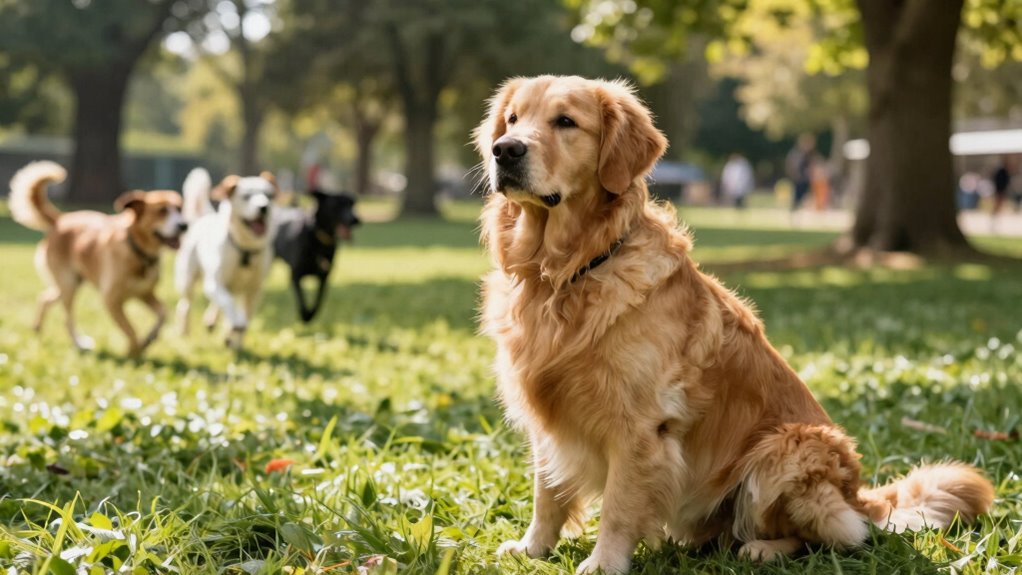

Your dog watches other dogs more than you because it’s driven by natural curiosity and social instincts. They use their focus to decode body language, tail positions, and facial expressions to understand social hierarchies and communication signals. This helps them decide how to behave, who to approach, or when to stay safe. Most of their attention is about gathering social information, not disinterest. If you want to see why this behavior is so normal, keep exploring this fascinating subject.

Get pet supplies delivered free with Prime
- Fast, free delivery on millions of items
- Prime Video, Amazon Music and more included
- Member-only deals all year
Key Takeaways
- Dogs are naturally curious social animals that focus on other dogs to interpret social cues and hierarchy.
- Watching other dogs helps them decode body language, signals, and intentions for safe social interaction.
- In unfamiliar environments, dogs observe more to gather social information and assess potential threats or allies.
- The behavior reflects their instinct to understand social structure, not boredom or distraction.
- Training that encourages focus on humans can redirect this natural observation towards desired behaviors.
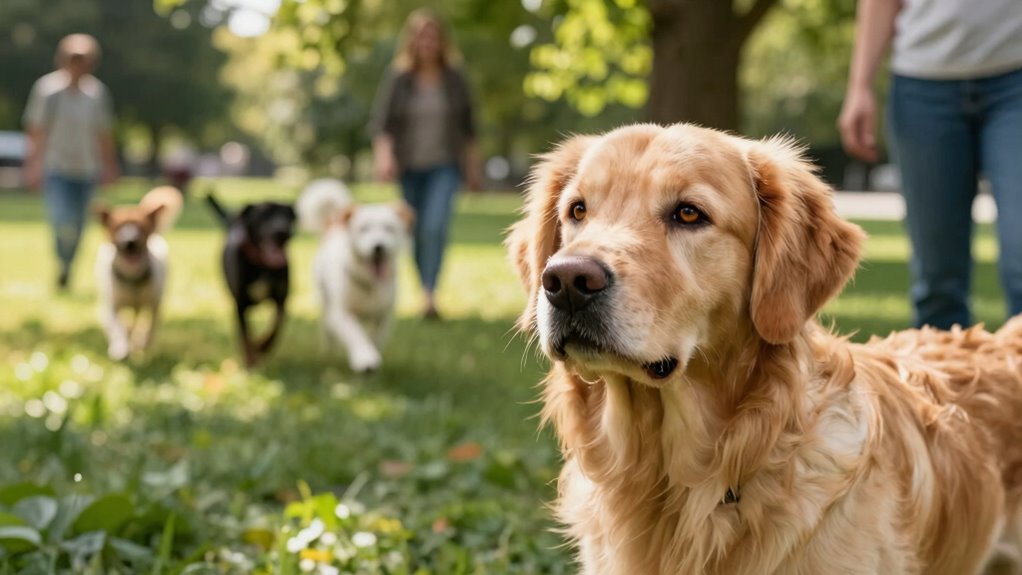
If your dog often seems more interested in watching other dogs than paying attention to you, it’s a common behavior rooted in curiosity and social instincts. Dogs are naturally wired to observe their surroundings, especially other dogs, because much of their communication and social structure happens through visual cues. When your dog fixates on others, it’s not just boredom or distraction—it’s part of how they interpret their environment and understand their place within the social hierarchy. They watch to pick up on subtle signals like body language, tail position, ear orientation, and facial expressions, which tell them who’s dominant, who’s submissive, and how they should behave.
Dog communication relies heavily on these visual signals, and your dog’s interest in other dogs is a way of decoding these messages. By observing, they learn who to approach, who to avoid, and how they should navigate social interactions. This behavior is especially prominent if your dog encounters unfamiliar dogs or if they’re in a new environment. They’re gathering information, trying to gauge the intentions and status of others around them. It’s not necessarily about being disobedient or aloof; it’s about fulfilling their innate need to understand their social world. Recognizing the importance of visual communication can help you better understand their behavior and why they prioritize observing others.
Dogs observe social cues to understand who to approach or avoid, especially in unfamiliar environments.
Understanding the social hierarchy among dogs helps explain why your pet might focus so intently on other dogs. In their eyes, the social order is a complex but essential system that influences how they behave and interact. Watching others helps your dog determine their own rank or assess whether they need to assert themselves or hold back. If they see a more dominant dog, they might watch more intently, trying to interpret if that dog is a threat or a potential ally. Conversely, they might ignore you during these moments because they’re more focused on social cues from their peers. Recognizing that visual signals are vital to their social interactions can help you better understand their behavior.
This behavior isn’t usually a sign of disinterest in you, but rather a reflection of your dog’s instincts to stay aware of their social environment. While it can sometimes seem like your dog isn’t paying attention, they’re actually processing crucial information to help them feel secure and confident. Their focus on other dogs is often driven by an instinct to stay aware of their social hierarchy, which is essential for their safety and well-being. If you want to encourage more focus on you, you can use training techniques that incorporate their natural curiosity—like rewarding their attention when they glance your way or when they demonstrate calm behavior. Ultimately, your dog’s watching habit is a window into their social world, a way for them to stay connected and understand their place in it.
As an affiliate, we earn on qualifying purchases.
Frequently Asked Questions
Do Dogs Watch Other Dogs Out of Curiosity or Anxiety?
Your dog watches other dogs out of curiosity or anxiety, depending on the situation. By observing their body language and canine communication signals, you can tell if they’re intrigued or nervous. If your dog’s tail is high and ears perked, they’re curious; if they show signs of tension, like lip licking or a tucked tail, they might feel anxious. Paying attention helps you understand their feelings and support them better.
Can Watching Other Dogs Influence My Dog’s Behavior?
Yes, watching other dogs can influence your dog’s behavior. When your dog observes others, it impacts their social development and can reinforce good or bad habits. Through dog training, you can guide this behavior by encouraging positive observations and interactions. Watching other dogs helps your pup learn social cues and appropriate responses, ultimately shaping their behavior. So, paying attention to what your dog watches can be a valuable part of their social and behavioral growth.
Is It Normal for Some Breeds to Watch Others More?
Yes, it’s normal for some breeds to watch others more. Breed tendencies influence social observation, making certain dogs naturally more curious or alert around other dogs. For example, herding or terrier breeds often pay close attention to their peers. This behavior helps them stay aware of their environment, and it’s a normal part of their social instincts. You’ll notice these breeds actively monitor other dogs more frequently.
How Can I Tell if My Dog’s Watching Behavior Is Stressed?
You can tell your dog’s watching behavior is stressed if you notice tense body language, like stiff posture or tucked tail, or if they show signs of discomfort, such as lip licking or yawning. Environmental triggers like loud noises or unfamiliar dogs can heighten stress. Pay attention to these cues, and try to reduce triggers or provide a calm environment to help your dog feel safe and relaxed.
Does Watching Other Dogs Affect a Dog’s Social Skills?
Watching other dogs can be like opening a window to canine curiosity, and it can positively influence your dog’s social skills. When your dog observes, they learn dog socialization cues, helping them navigate interactions confidently. However, excessive watching might indicate anxiety or overstimulation, hindering their social growth. By balancing observation with positive experiences, you help your dog develop healthy social skills and foster better relationships with other dogs.
dog socialization training collar
As an affiliate, we earn on qualifying purchases.
As an affiliate, we earn on qualifying purchases.
Conclusion
So, next time your pup’s eyes drift to the passing dogs like a lighthouse scanning the horizon, remember—they’re not ignoring you. Instead, they’re explorers, curious as a child in a candy store, soaking in every new scent and sight. Your dog’s gaze is a window to their world of wonder, a silent song of curiosity that keeps their spirit alive. Embrace those moments, for they’re the footprints of your dog’s endless adventure.
As an affiliate, we earn on qualifying purchases.
As an affiliate, we earn on qualifying purchases.
Halloween Picks
halloween
As an affiliate, we earn on qualifying purchases.