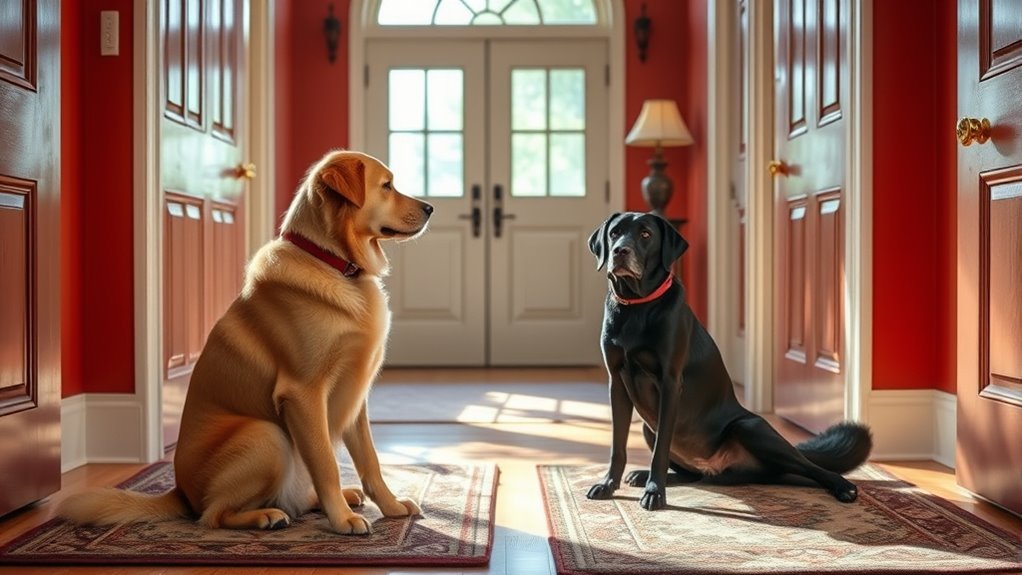

To teach your dog to stay calm at the door, start by desensitizing them to doorbell sounds through repeated ringing and rewarding calm behavior. Practice commands like sit and stay before opening the door, using treats and praise to reinforce patience. Keep the dog on a loose leash during greetings and avoid punishing excitement. Consistent routines and gradual exposure help your dog relax over time—exploring these techniques in more detail will help you succeed.
Key Takeaways
- Use desensitization by repeatedly ringing the doorbell and rewarding calm behavior.
- Teach and reinforce commands like “sit” and “stay” before opening the door.
- Keep the dog on a loose leash during greetings to maintain control.
- Manage excitement by calmly removing the dog if overly hyper, then restart training.
- Establish consistent routines and positive reinforcement to promote long-term calmness.
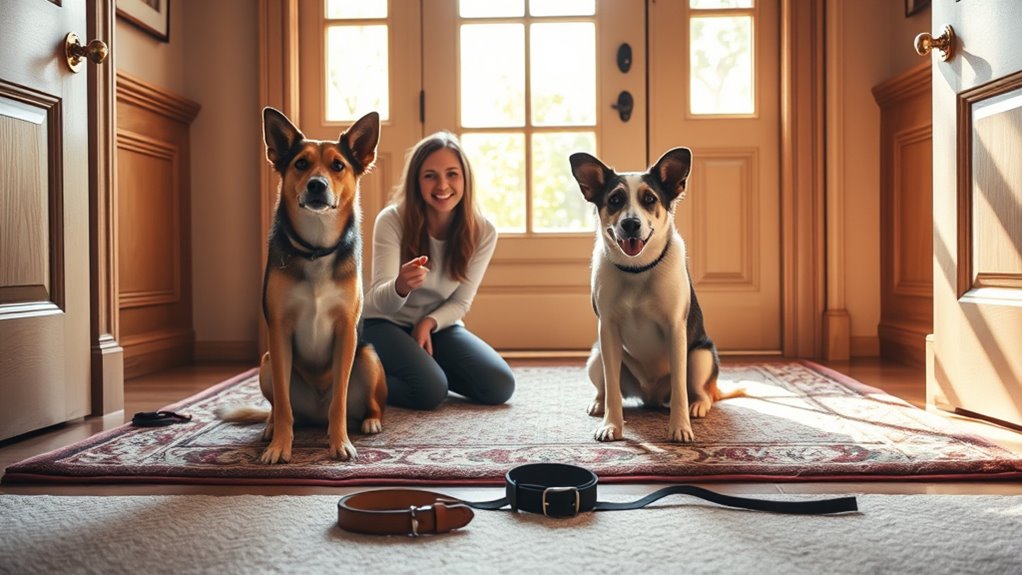
When guests arrive or the doorbell rings, many dogs tend to bark, jump, or become overly excited, making it challenging to keep calm. This is a common scenario for dog owners who want their pets to behave politely at the door. The key to managing this behavior lies in effective doorbell training and establishing proper greeting procedures. You can teach your dog to remain calm and controlled during these moments by following a consistent plan that reinforces good behavior and reduces excitement.
Start with doorbell training by desensitizing your dog to the sound of the doorbell. Ring the bell yourself repeatedly, and each time, reward your dog for staying calm or for not reacting excessively. Use treats and praise to reinforce the behavior you want—calmness and patience—rather than jumping or barking. This helps your dog associate the doorbell with positive experiences, rather than chaos or excitement. Over time, your dog will begin to understand that the doorbell isn’t something to get worked up over.
Next, work on greeting procedures that promote calmness. When someone arrives, instruct your dog to sit and stay before the door is opened. If your dog is not already familiar with these commands, practice them in low-stress scenarios first. When the door opens, keep your dog on a loose leash and maintain a calm demeanor yourself. If your dog begins to jump or bark, gently correct this with a command like “leave it” or “quiet,” and redirect their attention to you with a treat or praise. Consistency is vital here—every time someone comes to the door, follow the same greeting procedures.
As you progress, gradually increase the level of distraction by having friends or family members ring the doorbell and wait outside. Reinforce the desired behavior each time, rewarding calmness and patience. If your dog gets overly excited, don’t punish; instead, calmly remove them from the situation for a moment and then restart the process. This teaches your dog that calm behavior is what earns positive reinforcement and attention.
Furthermore, integrating automation in business concepts, such as consistent training routines, can help your dog adapt more quickly to expected behaviors and reduce anxiety during door arrivals. Patience and consistency are key in training your dog to stay calm at the door. By practicing doorbell training regularly and establishing clear greeting procedures, you’ll help your dog understand what’s expected. Over time, they’ll become more relaxed and controlled when visitors arrive, making your home a more peaceful place for everyone. Remember, the goal isn’t just to stop the barking or jumping but to foster a sense of calmness and good manners that lasts beyond just door visits.
Frequently Asked Questions
How Long Does It Typically Take to Train a Dog to Stay Calm?
Training your dog to stay calm at the door usually takes a few weeks, but it varies based on individual progress. Consistent practice, patience, and positive reinforcement speed up the training duration. Some dogs pick it up quickly, within a week, while others may need several weeks to master the behavior. Stay committed, and you’ll see steady improvements as your dog learns to stay calm in different situations.
Can This Training Method Work for All Dog Breeds?
Around 70% of dog owners find consistent training effective, but breed differences can influence results. While this method can work for many breeds, you might need training modifications based on your dog’s size, energy level, and temperament. Some breeds, like herding or working dogs, may require more patience and tailored techniques. Adjusting your approach guarantees your dog learns to stay calm, regardless of their breed.
What Should I Do if My Dog Gets Aggressive at the Door?
If your dog shows door aggression, stay calm and avoid punishment. Use calm reinforcement by rewarding your dog with treats and praise when they remain relaxed near the door. Practice controlled exposure, gradually increasing the time they stay calm, and use a firm but gentle command to redirect their attention. Consistency and patience are key; over time, your dog will learn to associate calmness with positive rewards.
Are There Specific Treats That Work Best for This Training?
You’ll want treats that are irresistibly tasty—think tiny pieces of cheese or chicken—because they make your dog’s tail wag like a helicopter blade. When practicing, use perfect reward timing, giving treats the moment your dog stays calm, so they connect good behavior with the reward. The best treat selection is something your dog loves and can eat quickly, so you can maintain a smooth, rewarding training session that feels like a game-changer!
How Do I Maintain Calm Behavior After Initial Training Success?
To maintain calm behavior after initial success, use consistent reinforcement techniques like praising or giving treats when your dog stays calm. Keep your training sessions regular, and reinforce good behavior immediately. Consistency strategies involve setting clear boundaries and routines, so your dog understands expectations. Avoid rewarding excitement or jumping, and calmly redirect your dog if they become overexcited. This ongoing approach helps your dog stay calm and responsive over time.
Conclusion
Remember, patience is your best friend when teaching your dog to stay calm at the door. Consistent practice and positive reinforcement will turn your pup into a model citizen—no need to call in a wizard from Hogwarts! Just like a good knight guards the castle, your dog can learn to remain composed. Stick with it, and soon, you’ll both enjoy peaceful greetings—minus the ruckus. After all, even in 2024, a calm pup is a happy pup.