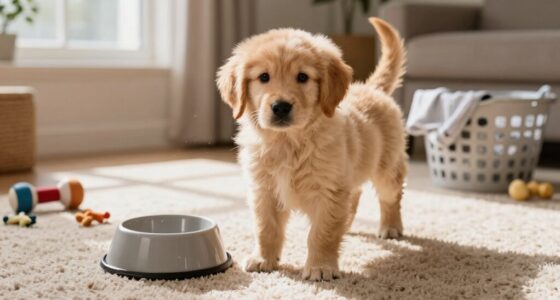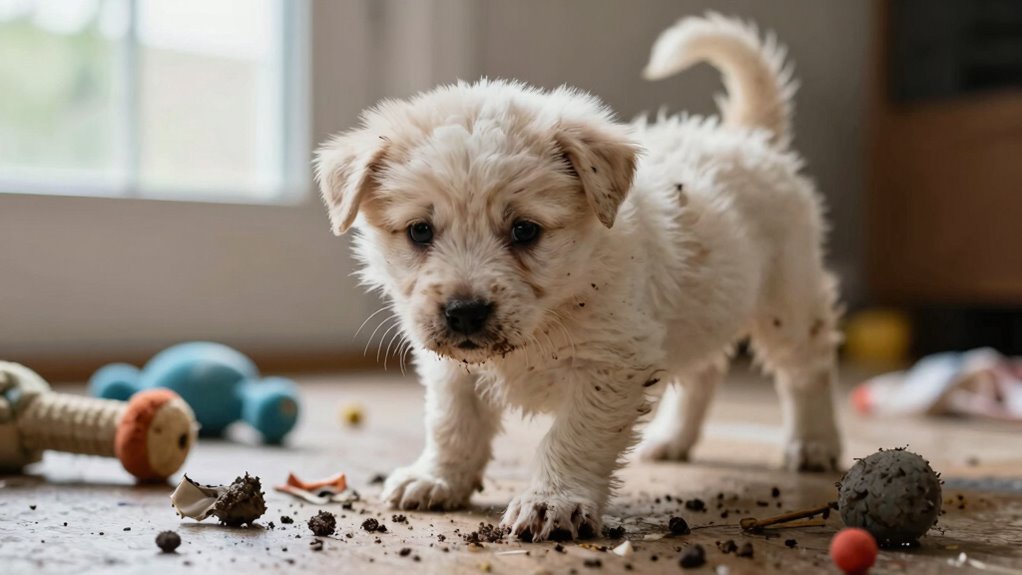

When your puppy’s progress looks messy, it’s because this is a natural part of their development. During this stage, they explore, chew, nudge, and have accidents as they learn what’s acceptable. This behavior may seem chaotic, but it’s how they grow and understand their environment. With patience, consistent training, and positive reinforcement, these messy moments will soon turn into well-behaved habits. Stick with it, and you’ll see how this phase sets the foundation for their good behavior.

Get pet supplies delivered free — and shop member deals
- Fast, free delivery on millions of items
- Access to Prime Big Deal Days deals on October 6–7
- Prime Video, Amazon Music and more included
Key Takeaways
- Puppies explore their environment through behaviors like chewing and nipping, which appear messy but are natural developmental stages.
- Messy behaviors result from puppies learning boundaries, causing accidents and clutter as they discover their surroundings.
- Crate training and routines may initially seem chaotic but help puppies feel secure and develop good habits over time.
- The apparent disorder reflects their cognitive growth and curiosity, essential for mastering new skills.
- Patience and positive reinforcement during this phase support their progress toward more organized and controlled behavior.
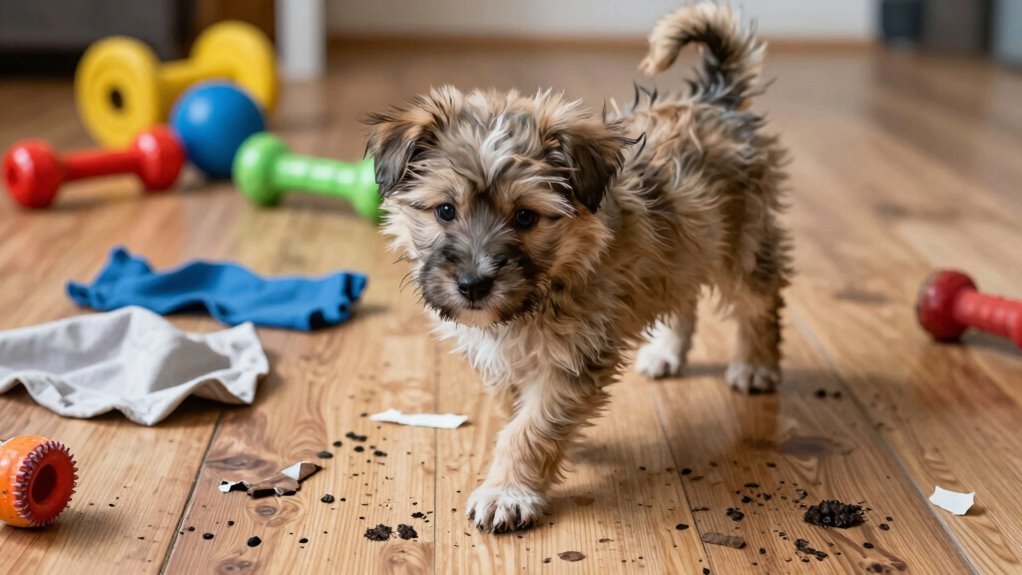
When you first bring a puppy home, it often looks more messy than adorable, and that’s completely normal. Puppies are tiny bundles of curiosity, and their early behaviors can be unpredictable. During this initial phase, puppy training is essential, but it’s also a process that takes time and patience. One of the most effective methods you can use right from the start is crate acclimation. This helps your puppy see the crate as a safe space, which can reduce accidents and destructive behavior as they learn boundaries.
Bringing a puppy home is messy, normal, and full of learning—patience and crate training help them feel safe and secure.
In the beginning, your puppy might bark, whine, or try to escape the crate. This is natural, as they’re adjusting to a new environment and missing their littermates. Instead of rushing or punishing, focus on making the crate a positive place. Use treats, toys, and gentle praise to encourage your puppy to enter and stay comfortably. Over time, they’ll associate the crate with comfort and security rather than confinement. Patience is key here; the process may be messy at first with accidents or fussing, but consistency will pay off.
Puppy training during this messy phase involves setting clear routines. You’ll notice that your puppy might not understand house rules at first. They might chew on shoes, nip during play, or have frequent accidents. These behaviors are part of their developmental stage. Instead of reacting harshly, redirect their attention and reinforce good habits through positive reinforcement. When your puppy follows commands or behaves well, praise them lavishly. This builds trust and encourages them to repeat those behaviors.
The messiness isn’t just limited to accidents or destructive behavior; it also includes the clutter of puppy gear, scattered toys, and sometimes even spilled food or water bowls. This chaos can be frustrating, but it’s a sign that your puppy is exploring and learning. Additionally, understanding puppy development stages can help you better navigate this chaotic phase and set realistic expectations. Recognizing that this exploratory behavior is a natural part of their growth can help you remain patient and supportive as they develop new skills. Furthermore, learning about positive reinforcement techniques can make the training process more effective and enjoyable for both of you.
As an affiliate, we earn on qualifying purchases.
Frequently Asked Questions
How Long Does Puppy Progress Typically Take?
Puppy progress usually takes several months, often around 3 to 6, depending on your puppy’s temperament and training consistency. During this time, focus on puppy nutrition to support growth and implement socialization techniques to build confidence. Remember, setbacks are normal, and patience is key. With regular training, proper nutrition, and positive socialization, you’ll see steady improvements, even if progress seems messy at first.
Can I Speed up My Puppy’s Training?
You can speed up your puppy’s training by consistently using the right training equipment and ensuring proper puppy nutrition. Invest in quality tools like clickers and leashes to reinforce commands effectively. A balanced diet boosts their energy and focus, making training sessions more productive. Remember, patience and regular practice are key. While progress may seem messy initially, sticking to these essentials helps your puppy learn faster and develop good habits.
What Signs Indicate My Puppy Is Improving?
You’ll notice your puppy is improving when you see clear Puppy milestones, like better leash walking or responding to commands. Behavior changes, such as reduced biting or increased calmness, are also good signs. Consistent progress might be subtle at first, but if you see these signs, it means your training is working. Keep patient and positive, as steady improvements show your puppy is learning and growing.
How Do I Handle Setbacks During Training?
Setbacks during training are like storms in calm skies—you’ll face them, but they’re temporary. When they happen, stay consistent with household routines and reinforce crate training gently. Celebrate small wins to keep your puppy motivated, and avoid punishment. Remember, perseverance turns setbacks into setups for success. Keep calm, stay patient, and your puppy will learn that setbacks are just part of the journey toward good behavior.
Is It Normal for Puppies to Regress Temporarily?
Yes, it’s normal for puppies to regress temporarily during their training journey. You might notice setbacks and regression concerns, but this is often part of reaching new puppy milestones. Puppies learn at different paces, and setbacks don’t mean failure. Stay patient and consistent. Remember, progress isn’t always linear, and these temporary regressions are just steps toward eventual success, helping your puppy develop better habits over time.
As an affiliate, we earn on qualifying purchases.
Conclusion
Remember, as you watch your puppy’s progress, it’s like witnessing a messy canvas transforming into a masterpiece. The chaos of tiny paws and scattered toys is just the beginning of a beautiful picture in the making. Keep your patience, because beneath the mess, your puppy is growing stronger, smarter, and more confident. Soon, those unruly moments will fade into a harmonious dance of trust and love, revealing the wonderful dog you’ve been shaping all along.
As an affiliate, we earn on qualifying purchases.
As an affiliate, we earn on qualifying purchases.
Fall Picks
fall essentials
As an affiliate, we earn on qualifying purchases.