Some puppies struggle more with visitors because they haven’t had enough positive exposure during their socialization period or they feel territorial about their space. Natural instincts, like barking or hiding, can also make them more hesitant around new people. If they’ve experienced fear or discomfort early on, it’s harder for them to trust visitors. Understanding these underlying causes can help you find ways to ease their anxiety and build confidence. Keep exploring to find helpful tips.

Get pet supplies delivered free with Prime
- Fast, free delivery on millions of items
- Prime Video, Amazon Music and more included
- Member-only deals all year
Key Takeaways
- Lack of early socialization can lead to fear and hesitation around unfamiliar people.
- Territorial instincts cause puppies to perceive visitors as threats to their space.
- Signs of discomfort like cowering or tail tucking indicate socialization barriers.
- Overwhelm from sudden interactions can increase resistance to new visitors.
- Gradual, positive exposure helps build confidence and reduces anxiety over time.
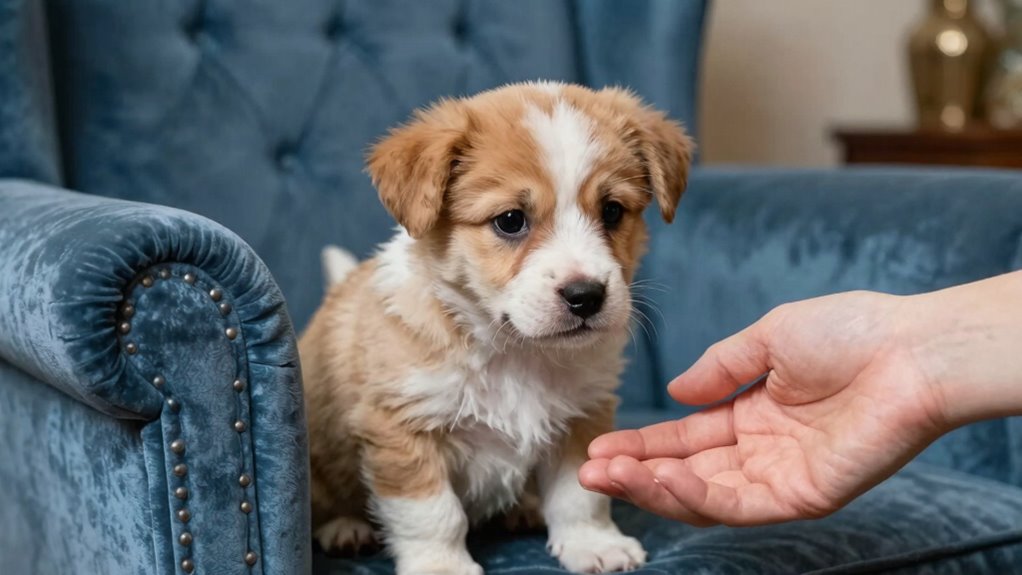
Many puppies find it challenging to warm up to visitors, and understanding why can help you ease their anxiety. Often, their hesitation stems from socialization barriers they’ve faced early on. If your puppy hasn’t been exposed to different people, environments, or sounds during their vital socialization period, they might feel unsure or scared when strangers come into their space. This isn’t unusual, and it’s something you can work on gradually. You might notice that your puppy cowers behind furniture or tucks their tail when new people approach, signaling discomfort. Recognizing these signs is the first step toward helping them feel more comfortable.
Many puppies struggle to warm up to visitors due to early socialization barriers and unfamiliarity.
Another key factor is their territorial instincts. Puppies, like adult dogs, naturally see their home as their territory, and they can be protective of it. When visitors arrive, your puppy might perceive them as a threat to their space, which triggers their territorial instincts. This can manifest as barking, growling, or even snapping if they feel their boundaries are being crossed too quickly. Understanding this behavior helps you approach the situation differently. Rather than forcing interaction, you can give your puppy time to adjust, allowing them to observe visitors from a safe distance. Over time, with positive reinforcement, they’ll start associating visitors with good experiences rather than threats. Establishing a safe space where your puppy can retreat and feel secure can also help ease their territorial reactions. Additionally, incorporating gentle training methods can help your puppy develop better social skills without overwhelming them. Creating a consistent routine around visitors can further reinforce a sense of predictability and security.
The combination of socialization barriers and territorial instincts creates a natural resistance to new people. If your puppy has had limited social interactions, they might be more prone to these challenges. Early socialization is essential; exposing your puppy to a variety of friendly people in controlled, positive settings can markedly reduce their anxiety. If they’re showing signs of territorial behavior, it’s important to respect their space and not push them into uncomfortable situations. Instead, you can use treats and praise to reinforce calm behavior around visitors, helping them learn that new people aren’t a threat. Additionally, understanding biodiversity and conservation principles can inspire gentle training methods that promote a balanced, less anxious disposition. Incorporating positive reinforcement techniques can significantly improve your puppy’s confidence and social skills.
Understanding these underlying reasons allows you to develop a gentle, patient approach. Avoid rushing your puppy into interactions they’re not ready for, and give them plenty of opportunities to explore and trust visitors at their own pace. Over time, their socialization barriers will lessen, and their territorial instincts will become less reactive. Your patience and consistent positive experiences are key to helping your puppy feel safe and secure around new people.
Products Worth Considering

PetSafe ScoopFree Clumping Self-Cleaning Litter Box

iRobot Roomba Plus 678X Robot Vacuum and Mop Combo with AutoWash Dock

PETLIBRO RFID Automatic Cat Feeder with Collar Tag and Wi-Fi App Control
As an affiliate, we earn on qualifying purchases.
Frequently Asked Questions
How Can I Tell if My Puppy Is Genuinely Fearful?
You can tell your puppy is genuinely fearful if their body language shows signs like tucked tail, flattened ears, or avoiding eye contact. They might cower or tremble. Use calming techniques such as speaking softly, offering treats, or giving space to help them feel safe. Watch for these cues, and if fear persists, consult a vet or trainer for tailored advice to ease their anxiety.
Are Certain Breeds More Prone to Visitor Anxiety?
Certain breeds are more prone to visitor anxiety due to breed tendencies and past experiences. For example, shy or sensitive breeds like Chihuahuas or Basenjis often react more nervously to new people. You should observe your puppy’s specific visitor reactions, as individual temperament varies. Proper socialization and positive reinforcement can help reduce anxiety, regardless of breed. Understanding your puppy’s breed tendencies allows you to tailor socialization efforts effectively.
What Early Signs Indicate a Puppy Will Struggle With Visitors?
You can spot early signs that your puppy might struggle with visitors through shy or fearful behavior, such as hiding, trembling, or avoiding eye contact. If your pup reacts strongly to new people during puppy socialization, it’s a sign you should work on visitor desensitization now. Pay attention to their body language; these cues often indicate discomfort, and addressing them early helps prevent future anxiety issues.
How Long Does It Typically Take for Shy Puppies to Adjust?
Shy puppies typically take several weeks to adjust through consistent puppy socialization and positive stranger interactions. Your patience and gentle exposure help build their confidence gradually. You should aim for short, positive visits with visitors, avoiding overwhelming your puppy. Over time, with ongoing socialization, your puppy will become more comfortable around strangers. Remember, every puppy is different, so some may take longer, but steady, gentle exposure fosters progress.
Can Training Entirely Eliminate Visitor-Related Fear in Puppies?
No, training can’t entirely eliminate visitor-related fear in puppies, no matter how much you try. Ironically, socialization strategies and desensitization techniques often help puppies accept visitors, but some fears linger like stubborn shadows. You might see progress, but complete eradication is rare. Keep applying gentle exposure and positive reinforcement, knowing that patience and consistency are your best tools—fear may never fully vanish, but it can become manageable.
Conclusion
Understanding why some puppies struggle more with visitors helps you be more patient and supportive. Remember, about 30% of puppies show signs of fear or hesitation around new people, which is completely normal. With gentle exposure and positive reinforcement, you can help your puppy become more comfortable over time. So, keep calm, be consistent, and watch as your furry friend gradually gains confidence—making visits less stressful and more enjoyable for everyone involved.