
Many dogs prefer eating later because their natural biological rhythms and metabolism influence when they feel hungry. In the wild, they eat larger meals after activity, and domesticated dogs often still follow this pattern, feeling hungrier later in the day when energy needs increase. Skipping breakfast might align with their internal clock and slower morning metabolism. If you want to understand how to better support your dog’s mealtime habits, there’s more to reflect on below.
Key Takeaways
- Dogs may have a natural circadian rhythm that causes decreased morning hunger and increased appetite later in the day.
- Their metabolism is slower in the morning, reducing the desire to eat breakfast but increasing hunger after activity.
- Individual habits, health issues, or gastrointestinal discomfort can suppress morning appetite, leading to breakfast refusal.
- Dogs often prefer eating after daily activity, aligning mealtime with their energy peaks rather than morning cues.
- Gradually adjusting feeding schedules to match their biological rhythms can help improve morning appetite.
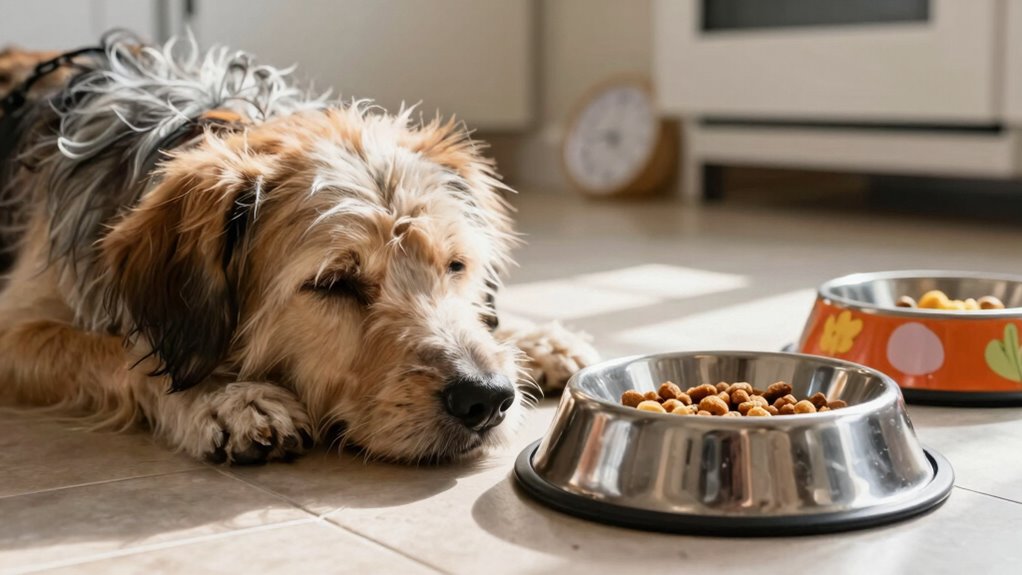
Many dog owners notice that their pets often skip breakfast but enthusiastically devour dinner, leaving them wondering what’s behind this odd behavior. It’s a common scenario, and understanding the reasons can help you better manage your dog’s feeding routines. One vital factor is the way your dog’s feeding schedule impacts their natural rhythms. Dogs, like humans, have a circadian rhythm that influences their activity and hunger cycles. If your dog tends to skip breakfast, it might be because their body isn’t wired to feel hungry immediately after waking up, especially if they’re used to a certain routine. They may be more receptive to food later in the day when their energy levels naturally peak, which ties into their canine metabolism.
Many dogs prefer eating later in the day due to their natural rhythms and metabolism.
Canine metabolism plays an essential role here. Unlike humans, dogs process their food differently and have varying energy needs throughout the day. In the wild, dogs or their ancestors would often eat larger meals after periods of activity, conserving energy for hunting or foraging. Today, domesticated dogs still follow a similar pattern, often feeling more inclined to eat after they’ve had some activity or when they’re naturally more alert. If your dog is less active in the morning or if their metabolism is slower, they may not feel hungry at breakfast time. Instead, they might prefer to eat when they’re more awake and energetic, which often coincides with dinner time. Recognizing their internal clock can help you better tailor their feeding schedule to support their natural habits.
Your dog’s individual habits and health also influence this behavior. Some dogs simply have a preference for eating later in the day due to their internal clock. Others might have underlying health issues, like gastrointestinal discomfort, that make them reluctant to eat in the morning. It’s important to observe their overall health and behavior, as persistent refusal to eat could be a sign of a medical concern. Adjusting their feeding schedule gradually can help align their mealtime with their natural appetite cues. For example, if you move their breakfast slightly later each day, you might find they become more receptive to eating in the morning. Recognizing that metabolic differences can significantly impact their hunger patterns is crucial for managing their diet effectively. Additionally, understanding the importance of biological rhythms can help you create a routine that supports their overall well-being.
Ultimately, understanding your dog’s unique metabolism and respecting their natural feeding schedule can make mealtime less stressful for both of you. Recognizing that some dogs are naturally more inclined to eat later in the day helps you develop a routine that fits their biological rhythms, ensuring they stay healthy and happy.

Pet Feeding Reminder Coolrunner Pet Feeding Reminder for Dogs Cats
- Durable Material: Made of strong ABS material
- Easy Suspension: Two suspension options available
- Time Segments: Divided into morning, afternoon, night
As an affiliate, we earn on qualifying purchases.
As an affiliate, we earn on qualifying purchases.
Frequently Asked Questions
Can Dogs Refuse Breakfast Due to Anxiety or Stress?
Yes, dogs can refuse breakfast due to anxiety or stress. Behavioral triggers like separation anxiety or unfamiliar environmental factors can make your dog hesitant to eat in the morning. Stress from changes in routine, loud noises, or new surroundings may also affect their appetite. Recognizing these signs helps you identify potential causes and create a calmer environment, encouraging your dog to eat more consistently at breakfast.
Does Age Affect a Dog’s Breakfast Appetite?
Yes, age affects a dog’s breakfast appetite. Puppies often have more energy and need frequent feedings, while senior dogs may have decreased appetite due to health issues or dental problems. Your dog’s feeding schedule can influence this too, as irregular routines might cause appetite fluctuations. If you notice a sudden loss of interest in breakfast, consult your vet to rule out health concerns. Adjusting the schedule or diet might help restore their enthusiasm in the morning.
Are Certain Breeds More Prone to Skipping Breakfast?
Certain breeds are more prone to skipping breakfast due to breed tendencies and genetic factors. For example, some small or toy breeds naturally have a lower appetite in the morning, while others may have sensitive stomachs that discourage early eating. You should observe your dog’s individual behavior, as genetics influence appetite patterns. Adjust feeding times if needed, and consult your vet if skipping meals becomes a concern, ensuring your dog stays healthy.
How Does Diet Impact a Dog’s Morning Hunger?
Think of your dog’s diet as a morning alarm, signaling their hunger. Diet influences metabolic changes and hormonal fluctuations, which directly impact morning hunger. If they eat a heavy or carb-rich dinner, their metabolism might slow overnight, dulling hunger in the morning. Conversely, a balanced, protein-rich diet can boost their morning alertness and appetite, making breakfast more appealing. Adjusting their diet helps regulate their natural hunger cues effectively.
Can Medication Influence a Dog’s Breakfast Refusal?
Yes, medication can influence your dog’s breakfast refusal. Some medications have side effects like nausea or decreased appetite, making your dog less interested in food in the morning. Dietary supplements might also affect their hunger levels or cause tummy upset. If your dog suddenly refuses breakfast after starting medication, consult your vet to discuss potential side effects or adjustments, ensuring your pet stays healthy and well-nourished.

Outward Hound Fun Feeder Slo Bowl – Medium 2‑Cup Capacity, Slow Feeding, Small to Medium Dogs & Cats, Non-Slip, Blue, Notch Pattern
- Slow Feeding Up to 10X: Reduces eating speed for small to medium dogs
- 2-Cup Capacity: Holds dry or wet food for medium-sized dogs
- Interactive Puzzle Design: Encourages mindful, longer mealtime engagement
As an affiliate, we earn on qualifying purchases.
As an affiliate, we earn on qualifying purchases.
Conclusion
So, next time your dog turns away from breakfast but devours dinner in a flash, remember it’s all about their internal clock and comfort. Picture those quiet mornings, slow and steady, like a gentle river, while evenings burst with energy, quick and enthusiastic like a racing stream. Trust their natural rhythms, and you’ll better understand their unique appetite dance. After all, each day has its own rhythm, and your dog’s is just waiting to be understood.

Zesty Paws Probiotics for Dogs – Gut Health for Dogs, Pumpkin, 90 Ct
- Flavor: Yummy soft chew for dogs
- Key Ingredient: Contains clinically studied DE111
- Health Support: Supports gut flora and digestion
As an affiliate, we earn on qualifying purchases.
As an affiliate, we earn on qualifying purchases.

petivity Dog GPS Tracker Powered by Purina, Waterproof Real Time Tracking GPS Dog Collar, Downloadable App, Subscription Required
- Real-Time GPS Tracking: Tracks your dog's live location
- Waterproof Design: Durable for outdoor use
- Downloadable App: Manage tracker via Petivity app
As an affiliate, we earn on qualifying purchases.
As an affiliate, we earn on qualifying purchases.