To keep your backyard agility course safe and fun, you need to set proper obstacle spacing based on your dog’s size and skill. Make certain there’s enough room for them to naturally stride, especially for jumps and weaving poles. Anchor obstacles securely and use weather-resistant materials. Regularly check and adjust spacing as your dog improves. Following these simple rules helps create a confident, injury-free experience—keep going for more expert tips to perfect your setup.

Get pet supplies delivered free with Prime
- Fast, free delivery on millions of items
- Prime Video, Amazon Music and more included
- Member-only deals all year
Key Takeaways
- Ensure obstacle gaps accommodate your dog’s size and natural stride to prevent injuries and promote confidence.
- Maintain secure, weather-resistant materials and proper anchoring for stability and safety during use.
- Space jumps and weave poles to allow comfortable clearance, adjusting as your dog’s agility skills improve.
- Keep tunnel entrances/exits clear with sufficient room for safe entry and exit.
- Regularly reassess and modify obstacle spacing to match your dog’s progress and ensure ongoing safety and fun.
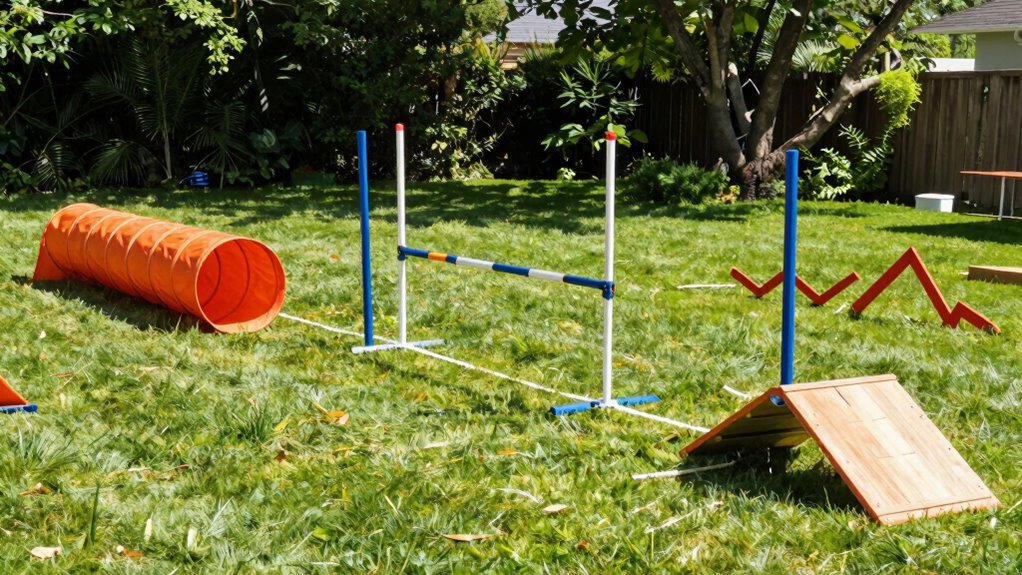
Creating a backyard agility setup is a great way to keep your dog active and entertained while saving time and money on trips to training centers. When designing your course, paying attention to spacing rules is vital to guarantee it’s both fun and safe for your furry friend. Proper spacing prevents your dog from accidentally hitting obstacles or getting overwhelmed, which can lead to injuries or frustration. To start, consider the size and agility level of your dog. Smaller or beginner dogs need wider gaps between obstacles to move comfortably without feeling cramped. For larger or more experienced dogs, you can gradually narrow the spacing, but always prioritize safety.
Creating a safe, enjoyable backyard agility course tailored to your dog’s size and skill level ensures safe, confident navigation.
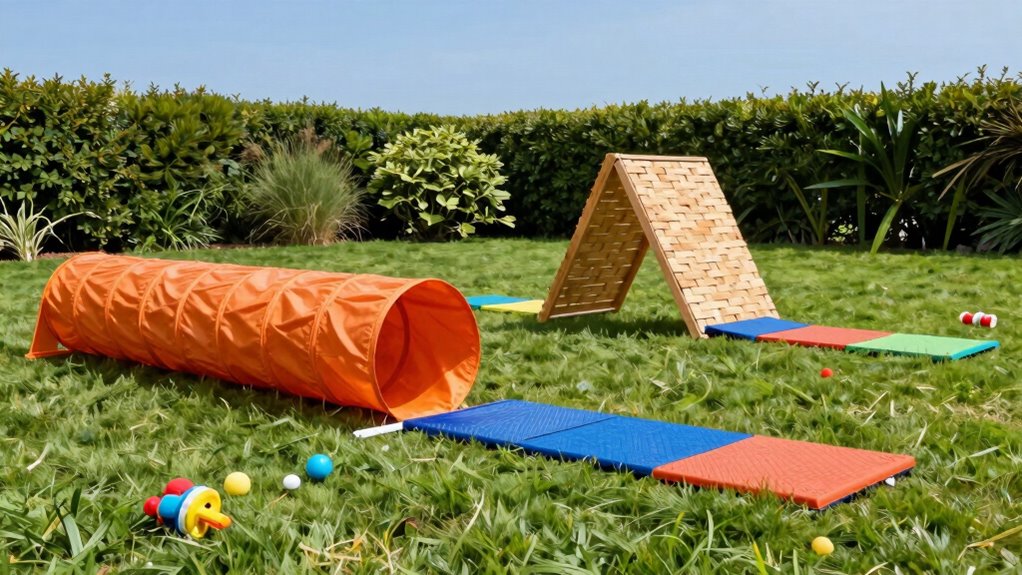
A key element in setting up your backyard agility course involves selecting the right obstacle materials. You’ll want durable, weather-resistant options that can withstand outdoor elements, like PVC pipes, sturdy wood, or specialized plastic materials. These materials should be lightweight enough for you to reposition easily but strong enough to stay stable during use. When choosing obstacles such as jumps, tunnels, or weave poles, ensure they are securely anchored to prevent tipping or shifting. This stability not only keeps your dog safe but also helps build confidence as they learn to navigate each element smoothly.
Training tips play an essential role in making your backyard agility setup effective and enjoyable. Start with simple obstacles and focus on positive reinforcement. Use treats, praise, or toys to encourage your dog as they complete each task. Keep training sessions short and engaging, gradually increasing difficulty as your dog becomes more confident. Always supervise your dog during training to correct any unsafe behaviors immediately. Remember to introduce new obstacles gradually, giving your dog time to familiarize themselves with each one before progressing.
When spacing obstacles, think about your dog’s natural stride and ability. For example, if you’re setting up jumps, allow enough room for your dog to clear them comfortably without feeling rushed or constrained. For tunnels, ensure there’s enough clearance at both ends so your dog can enter and exit smoothly. Weave poles should be spaced according to your dog’s size—generally, their shoulders or hips will determine the ideal distance. Regularly check the setup to make sure everything remains secure and appropriately spaced as your course evolves.
As an affiliate, we earn on qualifying purchases.
Frequently Asked Questions
How Do I Adjust Spacing for Different Dog Breeds?
To modify spacing for different dog breeds, you should consider breed-specific spacing and agility size adjustments. Larger breeds need more room between obstacles to prevent collisions, while smaller breeds require tighter spacing. Measure your dog’s height and agility capability, then customize the layout accordingly. Always guarantee the setup allows your dog to move comfortably and confidently, promoting safety and fun. Regularly reassess and adjust as your dog grows or improves in agility.
What Safety Precautions Are Recommended During Setup?
You should always guarantee your setup is secure and free of hazards. Use dog harnesses to keep your dog safe during training and avoid sharp or unstable equipment. Keep training treats handy to reward good behavior and maintain focus. Regularly check the spacing between obstacles to prevent collisions or injuries. Make sure the surface is non-slip, and supervise your dog at all times to ensure a fun, safe agility experience.
Can I Customize Agility Equipment for Space Constraints?
Think of your agility course as a tailor-made suit—you can customize it to fit your space perfectly. You can modify equipment materials and training techniques to suit your yard’s size. For example, use smaller jumps or softer materials for tight spaces. Adjust height and distance to match your dog’s skill level, ensuring everyone stays safe and engaged. Customization keeps the fun alive while respecting your space constraints.
How Often Should I Check for Equipment Wear and Tear?
You should check for equipment wear and tear weekly to guarantee safety. Regular equipment maintenance includes inspecting for loose bolts, rust, or frayed ropes. Wear inspection helps catch potential hazards early, preventing accidents. By promptly addressing any damages, you keep the setup fun and safe for your dog. Don’t forget to routinely clean and tighten all components, especially after heavy use or bad weather, to maintain ideal condition.
Are There Specific Spacing Guidelines for Outdoor Vs Indoor Setups?
Yes, there are specific spacing guidelines for indoor versus outdoor setups. For indoor obstacles, you should allow at least 2-3 feet between equipment to prevent collisions and guarantee safe navigation. Outdoors, maintain a wider space of 4-6 feet for outdoor safety, accommodating weather and varied terrain. Proper spacing helps your dog move comfortably and reduces the risk of injury, whether indoors or outdoors.
As an affiliate, we earn on qualifying purchases.
Conclusion
By following these spacing rules, you create a fun and safe backyard agility area where your dog can thrive. Proper setup prevents injuries and keeps the activity enjoyable for both of you. Remember, isn’t a well-organized space just as important as the training itself? So, take the time to plan your layout carefully—your furry friend will thank you with enthusiastic runs and happy tails every time!
weather-resistant dog agility equipment
As an affiliate, we earn on qualifying purchases.
As an affiliate, we earn on qualifying purchases.
As an affiliate, we earn on qualifying purchases.
Halloween Picks
halloween
As an affiliate, we earn on qualifying purchases.