Understanding CADR helps you choose an air purifier that effectively clears pet dander and odors by matching its cleaning power to your room size. A higher CADR means the device filters air faster and more efficiently, which is especially important in spaces with pets. Look for a purifier with a CADR at least two-thirds of your room’s square footage for ideal results. Keep exploring to learn how to select the best model for your needs.
Key Takeaways
- CADR measures how quickly an air purifier removes specific pollutants like pet dander and odors.
- Higher CADR ratings indicate faster and more effective air cleaning for pet allergens and odors.
- Match the purifier’s CADR to your room size—aim for at least two-thirds of the space’s square footage.
- HEPA filters effectively trap pet dander and allergens, while activated carbon filters neutralize odors.
- Properly selected CADR ensures continuous, efficient air purification, improving indoor air quality for pet owners.
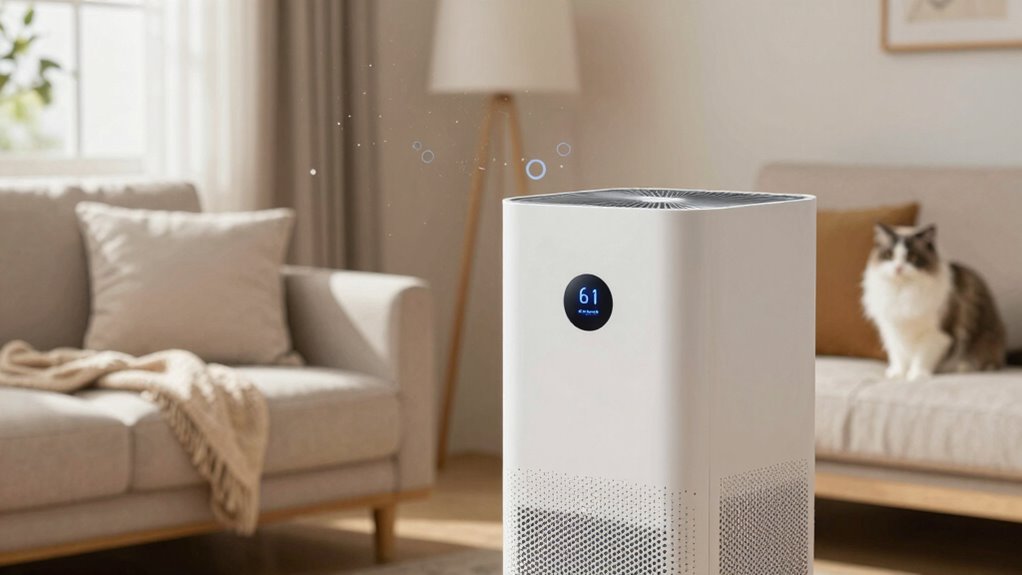
Have you ever wondered how to determine which air purifier is right for your space? One of the most important aspects to consider is how effectively it handles pet dander and odors. To make an informed decision, understanding CADR, or Clean Air Delivery Rate, is essential. CADR measurement standards provide a standardized way to compare how well different air purifiers remove specific pollutants like pet dander and odors. These standards guarantee that you’re selecting a device capable of cleaning your air efficiently, regardless of brand or model.
When it comes to filtering pet dander and odors, HEPA filter technology plays a pivotal role. HEPA filters are designed to trap tiny particles, including pet dander, pollen, and dust mites, with incredible efficiency. They can capture particles as small as 0.3 microns with at least 99.97% accuracy, which makes them ideal for allergy sufferers and pet owners. Since pet dander is a common trigger for allergies, investing in an air purifier with a high-quality HEPA filter ensures you’re considerably reducing airborne allergens. Additionally, many air purifiers incorporate activated carbon filters alongside HEPA technology to target odors caused by pets, cooking, or smoke. The carbon filters absorb and neutralize smells, leaving your space fresher.
Understanding CADR measurement standards helps you evaluate how much air an air purifier can clean in a given time. CADR ratings are provided for smoke, pollen, and dust, but these ratings also give insight into how well the device handles pet dander and odors. A higher CADR score indicates a faster and more efficient purification process. For pet owners, especially those dealing with persistent odors or airborne dander, choosing an air purifier with a high CADR rating is vital. It guarantees the unit can process the volume of air needed for your space, whether it’s a small bedroom or a large living room. Additionally, paying attention to air exchange rates can help ensure continuous filtration.
Choosing an air purifier with a high CADR ensures efficient removal of pet dander and odors for your space.
Moreover, matching the CADR to your room size guarantees maximum performance. Manufacturers often recommend choosing an air purifier with a CADR rating that’s at least two-thirds of your room’s square footage. This way, you get continuous, effective filtration of pet dander and odors without overworking the device. In essence, by understanding both HEPA filter technology and CADR measurement standards, you can select an air purifier that effectively tackles pet allergens and smells, creating a healthier, more comfortable environment for you and your pets.
Frequently Asked Questions
How Does CADR Impact Energy Consumption?
CADR impacts your air purifier’s energy consumption by influencing its energy efficiency. Higher CADR ratings often mean the device runs at higher power levels to clean larger spaces faster, which increases power consumption. However, choosing an energy-efficient model with the right CADR for your room size helps balance effective purification and lower energy use. So, consider both CADR and power consumption to optimize your air purifier’s performance and save on energy costs.
Can CADR Ratings Vary Between Different Brands?
Yes, CADR ratings can vary between brands due to differences in measurement standards and brand consistency. For example, one brand might report a higher CADR for pet dander than another, even if their devices perform similarly. This variation can make comparisons tricky, so it’s crucial to look for standardized testing and reliable reviews. Always check whether the ratings follow industry standards to guarantee you’re getting an accurate picture of an air purifier’s performance.
Is a Higher CADR Always Better for Pet Allergies?
A higher CADR generally means better allergen removal efficiency, which is helpful for pet allergies. It indicates the air purifier can clean the air more quickly and effectively, reducing pet dander and odors. However, you should also consider air purifier technology, like HEPA filters, to guarantee maximum allergen removal. So, while a higher CADR is beneficial, combining it with advanced technology makes your air purifier more effective against pet allergies.
How Often Should I Replace Filters for Optimal CADR?
Think of your filter like a trusty steed—its filter lifespan depends on your usage. You should replace filters every 6 to 12 months for peak CADR, especially if pet dander and odors are concerns. Regular replacement keeps your purifier working efficiently, ensuring cleaner air. Check your device’s manual for specific guidance, as high-pet environments may require more frequent changes to maintain top performance.
Do CADR Ratings Include Odor Removal Capabilities?
Yes, CADR ratings do include odor removal capabilities. When looking at an air purifier’s efficiency, a higher CADR score for odors indicates it effectively diminishes smells like pet dander and household odors. This means you’ll get a better overall performance in cleaning the air, especially for odor removal. Always check the specific CADR rating for odors to ensure the purifier suits your needs for maintaining fresh indoor air.
Conclusion
Now that you understand CADR and how it helps tackle pet dander and odors, you’re better equipped to choose the perfect air purifier. Remember, a higher CADR means faster and more effective cleaning—think of it as your modern-day Excalibur against airborne nuisances. So, don’t wait for a plague to strike; invest in a purifier today and breathe easier, knowing you’ve got the upper hand in your castle of cleanliness.