
CBD is becoming a popular natural tool to support your dog’s health and manage issues like anxiety. To use it effectively, consider your dog’s size, age, and individual response, starting with a low dose and gradually increasing. Proper dosing promotes calming effects without side effects. Monitoring your dog’s reaction and consulting a vet helps ensure safety. Keep exploring to discover how you can optimize CBD use for your pet’s well-being.
Key Takeaways
- CBD supports canine health by promoting relaxation, reducing anxiety, and addressing various health issues naturally.
- Proper dosing depends on factors like dog size, age, and individual response, requiring a personalized approach.
- Starting with a low dose (1-2 mg per 10 pounds) and gradually adjusting ensures safety and effectiveness.
- Consistent CBD use can help dogs cope with stressors such as thunderstorms, fireworks, separation, and travel.
- Consulting a veterinarian is essential for determining the appropriate dose and monitoring for side effects.
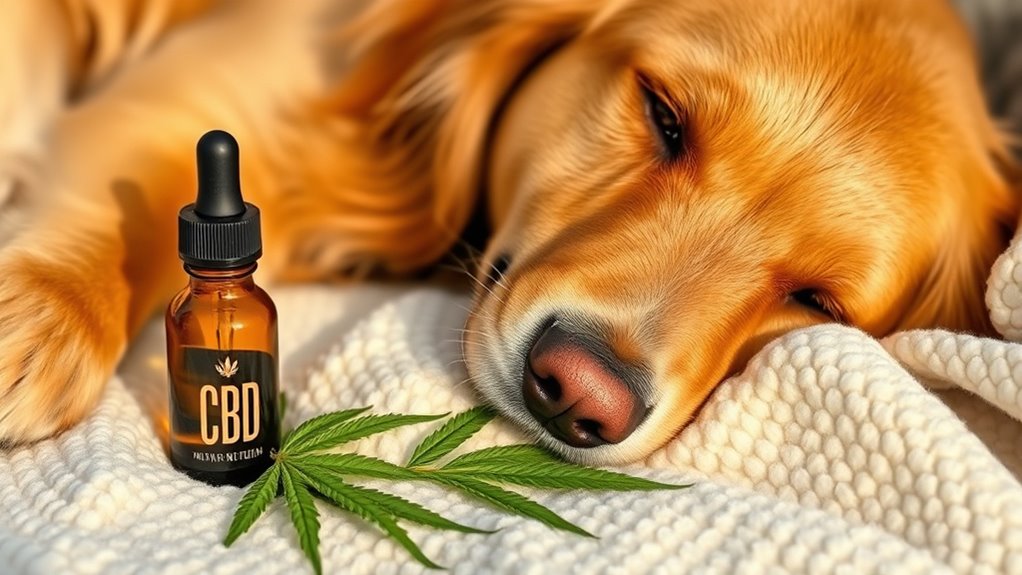
As more pet owners seek natural ways to support their dogs’ health, CBD has emerged as a popular option in canine wellness. Many are turning to CBD to help manage various health issues, especially canine anxiety. When starting your dog on CBD, one of the most important considerations is determining the right CBD dosage. Unlike medications with clear dosing guidelines, CBD requires a personalized approach. Factors such as your dog’s size, weight, age, and individual response all influence the appropriate amount. Typically, smaller dogs need less, while larger breeds may require higher doses. It’s best to start with a low dose and gradually increase it, observing your dog’s behavior and reactions. Consulting with your veterinarian can help you establish a safe and effective CBD dosage tailored to your pet’s needs.
Understanding CBD dosage is essential because giving your dog too little might not produce the desired calming effect, especially if your goal is to alleviate canine anxiety. Conversely, excessive amounts could lead to unwanted side effects like drowsiness or gastrointestinal upset. Finding that sweet spot requires patience and careful observation. Many pet owners begin with a small amount, such as 1-2 milligrams of CBD per 10 pounds of body weight, and then adjust based on how their dog responds. Keep in mind that CBD’s effects can take some time to become noticeable, often requiring consistent administration over several days or weeks. This helps guarantee you’re not increasing the dose prematurely and allows your dog’s system to adapt gradually.
When addressing canine anxiety, CBD has shown promising results for many dogs experiencing stress from thunderstorms, fireworks, separation, or travel. It’s believed to interact with the endocannabinoid system, helping to regulate mood and reduce anxiety. For anxious dogs, CBD can promote a sense of calm and relaxation, making stressful situations more manageable. However, every dog is different, and some may respond more quickly or require different dosages. Monitoring your dog closely after administering CBD is key. If you notice signs of over-sedation or if anxiety persists, consult your veterinarian for guidance on adjusting the dosage or exploring other options. Remember, patience is indispensable; while CBD can be effective, it’s not an overnight fix, and consistent, appropriate dosing is essential for achieving the best results in managing canine anxiety.
Frequently Asked Questions
Can CBD Replace Traditional Veterinary Treatments for Dogs?
CBD can’t substitute traditional veterinary treatments for dogs, but its effectiveness can complement them. You should always consult your vet before integrating CBD into your dog’s care plan. Veterinary integration ensures proper dosing and safety, especially for specific health conditions. While CBD offers benefits like pain relief and anxiety reduction, it should be used alongside conventional treatments, not as a substitute, to ensure your dog’s well-being and safety.
How Long Does It Take for CBD to Work in Dogs?
Like a whisper of the wind, CBD’s effects in dogs vary. Typically, you’ll notice changes within 30 to 60 minutes, depending on factors like CBD absorption and the product’s formulation. The onset duration can be quicker if given on an empty stomach, but it might take longer with food. Keep in mind, individual dogs respond differently, so patience is key as you observe how your pet reacts.
Are There Any Breeds That Should Avoid CBD Use?
Certain breeds with breed sensitivities or genetic predispositions may need to avoid CBD. For example, breeds like Border Collies and Collies are more prone to certain neurological conditions, so you should consult your vet before giving CBD. Small breeds or dogs with liver or kidney issues might also react differently. Always check with your veterinarian to verify CBD is safe for your specific dog, especially if they have breed-related health concerns.
What Are the Signs of CBD Overdose in Dogs?
Like a broken record, you need to watch for overdose symptoms in your dog. Signs of CBD overdose include excessive sedation, vomiting, diarrhea, and unsteady movements. These toxic effects can be serious if ignored. If you notice your dog acting unusually, stop giving CBD and consult your vet immediately. Remember, moderation is key, and understanding these symptoms helps keep your furry friend safe and healthy.
Is CBD Safe for Puppies and Senior Dogs?
You can give CBD to puppies and senior dogs, but you should always consult your veterinarian first. During puppy development, CBD may support calming and joint health, while in senior dog health, it can help manage inflammation and mobility issues. Always start with a low dose and monitor your dog’s response closely to guarantee safety. Proper dosing and professional guidance are key to making CBD a beneficial addition for your furry friend.
Conclusion
Don’t let concerns about safety hold you back. When used responsibly, CBD can be a helpful addition to your dog’s wellness routine, offering relief and comfort. Always consult your vet before starting, but remember, many pet owners see positive changes. If you’re worried about side effects, start with a low dose and monitor your pup closely. With proper guidance, CBD can support your furry friend’s health and happiness.