To pick the right grooming tools for your dog, identify their coat type first. Short coats like Beagles need a rubber glove or soft brush, while long-haired breeds like Shih Tzus require daily slicker brushes and regular trims. Curly coats such as Poodles benefit from slicker brushes and professional grooming every few weeks. Knowing these details helps you choose tools that keep your dog comfortable, healthy, and looking great—discover more tips to perfect your grooming routine.
Key Takeaways
- Use a rubber glove or soft bristle brush for short, smooth coats like Beagles and Boxers.
- Select a slicker brush or wide-tooth comb for long-haired breeds such as Shih Tzus and Afghan Hounds.
- Opt for a curly hair-specific brush or comb, like a slicker brush, for breeds like Poodles and Portuguese Water Dogs.
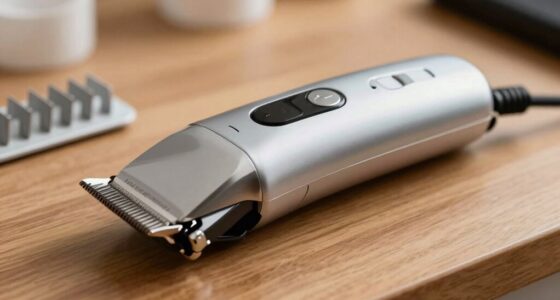
- Regularly maintain tools like grooming scissors, trimmers, and brushes suited to your dog’s coat type.
- Choose professional grooming tools, such as specialty clippers, for efficient trimming of dense or curly coats.

Are you overwhelmed by the variety of dog coat types? It’s easy to feel daunted when trying to determine the best grooming tools and routines for your furry friend. Different coat types require specific grooming tips and coat maintenance strategies to keep your dog healthy and comfortable. Understanding the unique needs of each coat type will help you choose the right tools, prevent matting, and reduce shedding.
Navigating different dog coat types helps keep your pet healthy, comfortable, and looking their best.
For dogs with short, smooth coats like Beagles or Boxers, grooming is usually straightforward. Regular brushing with a rubber grooming glove or a soft bristle brush helps remove loose hair and dirt. These coats typically don’t mat easily, but routine maintenance prevents buildup of debris, which can cause skin irritation. Bathing can be done as needed, using a gentle dog shampoo, but be careful not to overdo it, as short coats often don’t require frequent baths. The focus should be on maintaining skin health through proper grooming tips, such as checking for dry patches or irritation.
Long-haired breeds like Shih Tzus, Lhasa Apsos, or Afghan Hounds require a different approach. Their coats tend to tangle and mat if not cared for regularly, making consistent coat maintenance essential. Use a slicker brush or wide-tooth comb daily to detangle and prevent mats from forming. Regular trims can help manage excessive length and keep your dog comfortable. When grooming these breeds, patience is key—take your time to gently work through knots and avoid pulling on the hair, which can cause discomfort. Bathing should be scheduled every few weeks with a moisturizing shampoo, followed by thorough drying and brushing to prevent tangles. Proper grooming tips include trimming their hair around the eyes and paws to improve visibility and mobility.
Curly-haired breeds like Poodles and Portuguese Water Dogs have unique grooming needs. Their dense, curly coats are prone to matting if not maintained diligently. Regular, frequent brushing with a slicker brush and a comb designed for curly hair helps keep their coat free of tangles. Many owners opt for professional grooming every six to eight weeks to keep their coat in excellent condition. Bathing is essential to remove dirt and prevent skin issues, but it should be paired with thorough drying and brushing to maintain the curl pattern. Coat maintenance for these breeds also involves trimming around sensitive areas and sometimes clipping the coat to a manageable length. Additionally, understanding coat types and grooming requirements can help prevent common issues like matting and skin infections.
No matter your dog’s coat type, understanding their specific grooming tips and coat maintenance needs ensures they stay comfortable, healthy, and looking their best. Selecting the right tools and establishing a consistent grooming routine makes a significant difference, reducing stress for both you and your dog. With a little knowledge and effort, you’ll master grooming your pup and keep their coat in prime shape.
Frequently Asked Questions
How Often Should I Replace My Dog’s Grooming Tools?
You should replace your dog’s grooming tools every 6 to 12 months to guarantee grooming safety and effective tool maintenance. Worn-out blades, dull scissors, or frayed brushes can cause discomfort or injury. Regularly inspecting your tools helps you spot damage early, maintaining safe grooming sessions. Replacing them when needed ensures your dog’s coat stays healthy, and your grooming efforts remain safe and efficient.
Are There Eco-Friendly Grooming Products Suitable for All Coat Types?
Did you know over 60% of pet owners prefer eco-friendly products? You’ll find grooming products with natural ingredients and sustainable packaging suitable for all coat types. These options are gentle on your dog’s skin and better for the environment. Whether your dog has short, long, or curly fur, eco-friendly grooming products help you keep your pet clean while reducing your ecological footprint. It’s a simple switch for a healthier planet and happier pup.
Can Specific Brushes Help Reduce Shedding Significantly?
Yes, specific brushes can help reduce shedding markedly if you use the right one and proper brushing techniques. Slicker brushes and de-shedding tools effectively remove loose hair and undercoat, minimizing shedding around your home. Regular brushing stimulates skin health and distributes natural oils. Be gentle, work in the direction of hair growth, and avoid over-brushing. Consistent grooming with the right tools can make a noticeable difference in shedding reduction.
What’s the Best Way to Introduce a New Grooming Tool?
To introduce a new grooming tool, start slowly and use grooming safety as your priority. Let your dog sniff and get comfortable with the tool before using it on their coat. Use gentle, positive reinforcement to create a calm experience. Regular tool maintenance keeps it effective and safe for your dog. Gradually increase usage, ensuring your dog feels secure throughout, making grooming a positive routine for both of you.
How Do I Prevent My Dog From Getting Scared of Grooming?
To prevent your dog from getting scared of grooming, you should focus on reducing dog anxiety and practicing grooming desensitization. Start slowly, reward calm behavior, and gradually introduce grooming tools. Use treats and praise to create positive associations, keep sessions short, and stay patient. Consistency and gentle handling help your dog feel safe and secure, making grooming a less stressful experience for both of you.
Conclusion
Now that you know the different coat types, you’ll be better equipped to choose the right grooming tools for your dog. Remember, a well-maintained coat keeps your pup comfortable and healthy. Are you ready to give your furry friend the care they deserve? With the right tools and knowledge, grooming becomes easier and more effective. Your dog’s perfect coat is just a tool away—so go ahead, make grooming a breeze!