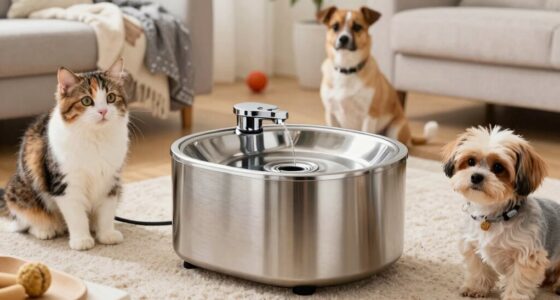
To prevent tension during mealtime, you should feed your dogs separately using individual stations like crates or designated bowls. Keep a consistent feeding schedule to reduce anxiety and supervise their meals to intervene if disputes start. Remove bowls promptly after eating and praise calm behavior to reinforce good manners. By establishing clear rules and routines, you create a peaceful feeding environment where each dog feels secure and respected. If you want to learn more, you’ll discover how these strategies can transform your dog’s mealtime experience.

Get pet supplies delivered free — and shop member deals
- Fast, free delivery on millions of items
- Access to Prime Big Deal Days deals on October 6–7
- Prime Video, Amazon Music and more included
Key Takeaways
- Feed dogs separately using individual stations or crates to prevent resource guarding and conflicts.
- Maintain a consistent feeding schedule to reduce anxiety and promote calm behavior.
- Supervise mealtime to intervene quickly if disputes occur and ensure proper manners.
- Remove bowls promptly after feeding and praise calm behavior to reinforce good manners.
- Establish clear mealtime rules to create a peaceful, respectful environment for all dogs.
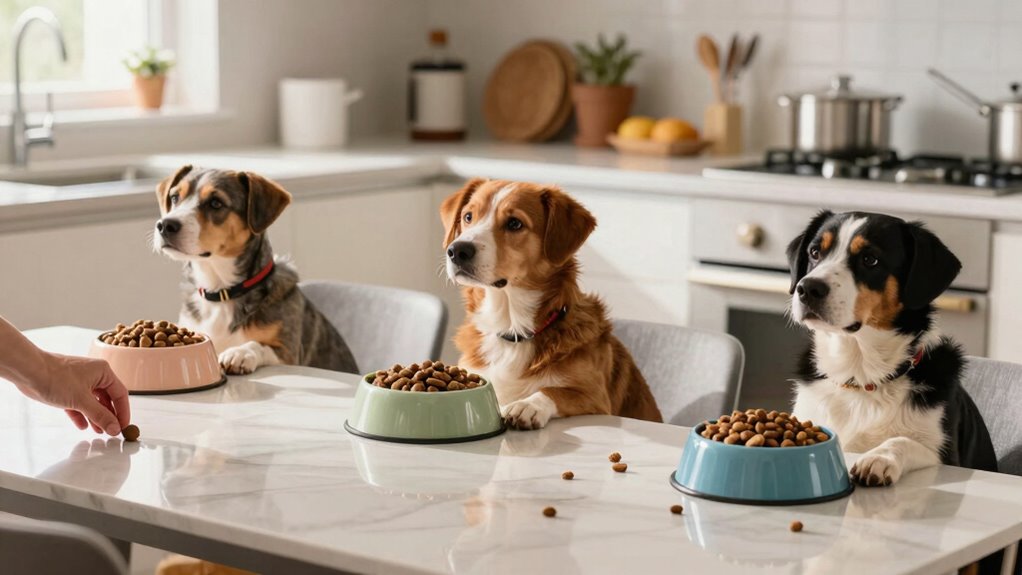
Have you ever wondered if there’s a right way to feed your dog? Many pet owners overlook the importance of dog feeding etiquette and canine mealtime manners, but establishing clear rules can make mealtimes more peaceful and enjoyable for everyone. Handling multiple dogs during mealtime can quickly become chaotic if you’re not intentional about how you manage their feeding routines. So, adopting a straightforward, consistent approach can prevent tension and guarantee each dog feels secure and respected.
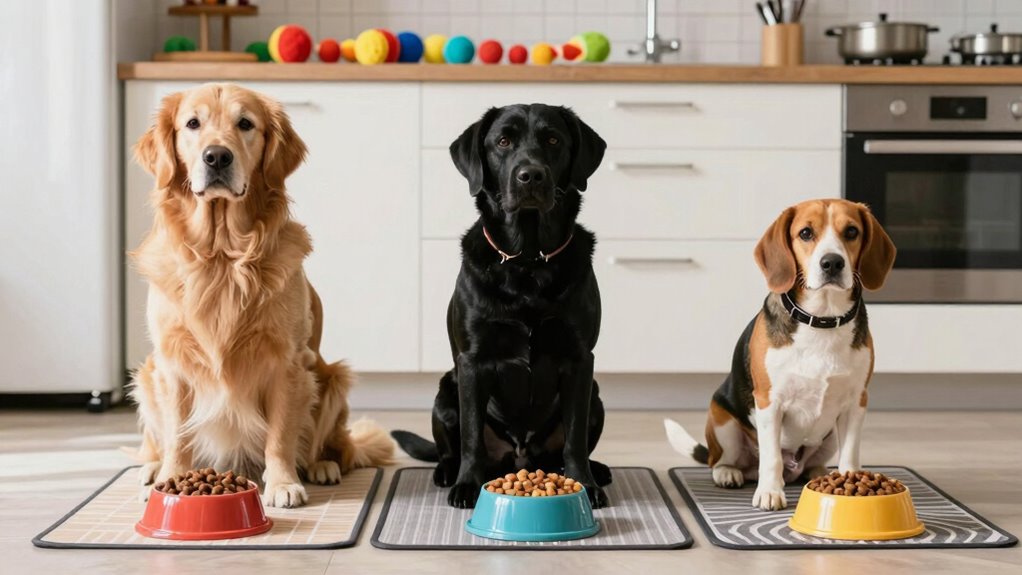
First, consider feeding your dogs separately. When multiple dogs eat together without boundaries, competition can lead to growling, guarding, or even fights. By providing individual feeding stations—whether separate bowls placed a few feet apart or using crates—you create a physical barrier that discourages resource guarding. This setup not only reduces stress but also reinforces good canine mealtime manners, showing your dogs that their food is safe and that you respect their personal space. It’s a simple but effective way to prevent disputes before they start. Additionally, understanding your dogs’ natural instincts around food can help you tailor their feeding routines to minimize conflict.
Feed dogs separately with individual stations to prevent conflicts and promote calm, respectful mealtime manners.
Next, establish a consistent feeding schedule. Dogs thrive on routine, and regular mealtimes help set expectations. When each dog knows exactly when they’ll be fed, they’re less likely to become anxious or exhibit begging behaviors. Consistency also helps you monitor their intake, making it easier to spot any health issues early. Remember, patience is key: don’t rush or rush your dogs through their meals. Instead, allow them to eat at their own pace, reinforcing calm behavior during mealtime. Being aware of canine feeding routines can further improve their overall mealtime experience.
It’s equally important to supervise their eating. Stay nearby during mealtime to intervene if any disputes arise, and ensure each dog finishes their meal before giving the next. This approach reinforces canine mealtime manners and teaches your dogs that calm, respectful behavior is expected. Avoid giving treats or extra food during or immediately after mealtime, as this can encourage resource guarding or overeating, which might lead to tension later. Additionally, incorporating positive reinforcement techniques can help reinforce good manners and reduce anxiety around mealtime.
Lastly, after the meal, take a moment to clean up and reward good behavior. Consistently removing bowls and praising calmness helps your dogs associate good manners with positive reinforcement. Over time, these routines strengthen your dogs’ understanding of proper dog feeding etiquette, making future mealtimes smoother and more harmonious. Being mindful of dog feeding etiquette ensures a peaceful environment and promotes your dogs’ overall well-being.
dog feeding station with individual bowls
As an affiliate, we earn on qualifying purchases.
As an affiliate, we earn on qualifying purchases.
Frequently Asked Questions
How Do I Introduce the Mealtime Rule to My Dogs?
To introduce the mealtime rule, start with boundary setting by establishing a designated feeding area for each dog. Practice mealtime patience by feeding them at the same time daily and calmly rewarding good behavior. Use commands to signal when they can eat and avoid rushing. Consistently reinforce the routine, and soon, they’ll understand boundaries, reducing tension and promoting a peaceful mealtime environment for all your dogs.
What if My Dogs Still Argue During Meals?
You might wonder if your dogs still argue during meals despite your efforts. Research shows that consistent training techniques and understanding dog behavior can reduce conflicts. You should observe their interactions, separate them if needed, and reinforce calm behavior with treats. If tension persists, consider consulting a professional trainer. Patience and reinforcement are key, as every dog learns at its own pace, and addressing issues early prevents long-term conflicts.
Can This Rule Work With Dogs of Different Sizes?
Yes, this rule can work with dogs of different sizes if you adjust for size compatibility and feeding hierarchy. Place larger dogs in their designated areas first, then smaller ones, ensuring each dog feels secure and confident. Establish clear feeding hierarchy by supervising and maintaining control. This approach helps prevent disputes, as each dog understands their place during mealtime, reducing tension regardless of size differences.
How Long Should I Enforce the Mealtime Rule?
You should enforce the mealtime rule consistently for at least a few weeks, gradually extending the enforcement as behavior reinforces positive habits. Training consistency is key to establishing routine, so stick with it daily. Reinforce good behavior with praise or treats and gently correct any tension or disputes. Over time, this consistency helps your dogs understand boundaries, making mealtime peaceful and reducing stress for everyone involved.
Is This Rule Safe for Puppies or Senior Dogs?
You can confidently use this mealtime rule for puppies and senior dogs, just like a gentle shepherd guiding different sheep safely. Puppy safety is essential, so make certain their bowls are separate and monitored, while senior nutrition needs special attention, like softer foods or smaller portions. This rule helps prevent food guarding or fights, creating a peaceful mealtime environment that’s safe and nourishing for all your dogs, no matter their age.
dog crate for mealtime separation
As an affiliate, we earn on qualifying purchases.
As an affiliate, we earn on qualifying purchases.
Conclusion
By following the multiple dog mealtime rule, you create harmony instead of chaos. It’s simple: clear boundaries prevent tension, much like a well-organized meal prevents messy spills. Without rules, your dogs might scramble for attention, but with them, they learn patience and respect. Just as a calm, orderly meal fosters peace, your consistent approach turns potential conflicts into calm, content moments. In the end, a little structure makes all the difference, transforming mealtime from chaos into connection.
As an affiliate, we earn on qualifying purchases.
As an affiliate, we earn on qualifying purchases.
Fall Picks
fall essentials
As an affiliate, we earn on qualifying purchases.