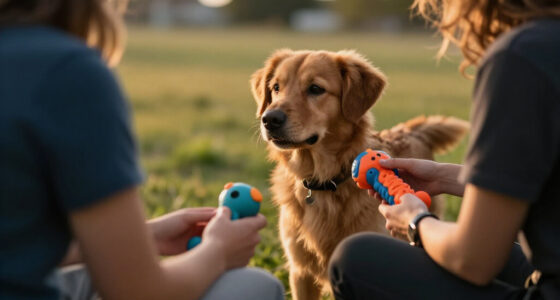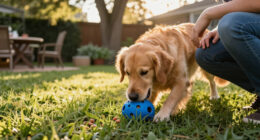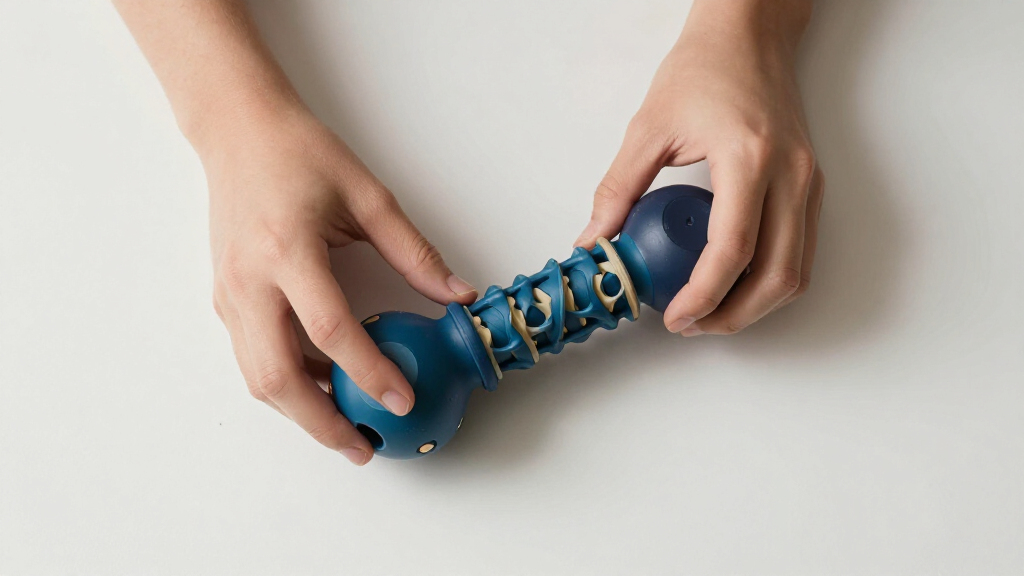

Choose and introduce an interactive dog toy that fits your dog’s size, chewing habits, and experience. This guide is for dog owners who want to offer puzzle, treat-dispensing, or interactive play at home. Allow about 20-30 minutes to select a toy, prepare it, and supervise the first session. You will know the setup is working when your dog can engage with the toy safely and shows interest without becoming distressed or frustrated.

Get pet supplies delivered free — and shop member deals
- Fast, free delivery on millions of items
- Access to Prime Big Deal Days deals on October 6–7
- Prime Video, Amazon Music and more included

Interactive Dog Ball Toy with 3 Play Modes, Sound, Vibration, and USB-C Charging
- ✔ Toy type: Interactive ball
- ✔ Play modes: 3
- ✔ Shell: E-TPU

Interactive Moving Dog Toy Ball with Rope
- ✔ Toy type: Moving ball with rope
- ✔ Modes: Fast, slow, and interactive
- ✔ Activation: Motion-activated

360° Rotating Tether Tug Toy for Dogs
- ✔ Toy type: Rotating tether tug
- ✔ Rotation: 360 degrees
- ✔ Height settings: 38, 46, and 54 inches
Difficulty: Beginner | Time: 20-30 minutes for setup and the first supervised play session
What You’ll Need
Tools & Materials:
- An interactive dog toy sized for your dog
- Dog-safe treats or a portion of your dog’s regular food, if the toy dispenses food
- A clean, open floor area with enough room for play
Knowledge:
- Your dog’s approximate weight, chewing style, and food sensitivities
- Whether your dog has used puzzle or treat-dispensing toys before
Check the toy maker’s age, size, and cleaning guidance before use. Choose a toy made from materials intended for dogs, and avoid pieces small enough to swallow. If your dog has allergies, a medical diet, or a history of swallowing objects, ask your veterinarian which toys and treats are suitable.
Interactive Dog Ball Toy with 3 Play Modes, Sound, Vibration, and USB-C Charging
For buyers who want one toy to cover several kinds of play, this ball has the strongest all-around feature set in the group. Its three play modes combine movement with sound, vibration, and seven LED colors, so the interaction is not limited to chasing a rolling object. Compared with the rope-equipped ball, it gives more detail about its shell, charging time, playtime, and water resistance, making its practical use easier to assess.The 3.15-inch E-TPU shell is described as lightweight and flexible, and the ball is rated IP54 for water resistance. It is listed for indoor and outdoor use, unlike the tether, which depends on suitable grass. A roughly 50-minute USB-C charge is also notably shorter than the approximately two hours specified for the rope ball. The stated playtime is up to 3.5 hours, though actual sessions will depend on use.Its main limitation is important: the ball is not intended for aggressive chewers, and supervised play is recommended. Buyers looking for a toy to leave with a dog unattended should consider a different type. It also asks dogs to engage with a moving, illuminated toy; a dog who prefers pulling or chewing may get more out of the tether’s rope toys. Within this lineup, though, it is the most adaptable choice for varied movement-based play.
Pros:
- Three modes combine movement, sound, and vibration.
- Seven LED colors add a visible cue during play.
- USB-C charging takes about 50 minutes, with up to 3.5 hours of stated playtime.
- IP54 water resistance and indoor/outdoor use give it broader placement flexibility than the grass-only tether.
Cons:
- Supervision is recommended, especially for pets that chew aggressively.
- The product is not intended for aggressive chewers.
Best for: Owners seeking a rechargeable, multi-sensory ball for supervised play indoors or outdoors.
Not ideal for: Dogs that chew aggressively, or owners who need a toy suitable for unsupervised use.
Bottom line: Choose this ball for the broadest mix of supervised interactive play and the clearest stated charging and use details in this lineup.
“Choose this ball for the broadest mix of supervised interactive play and the clearest stated charging and use details in this lineup.”
Interactive Moving Dog Toy Ball with Rope
This moving ball is the lineup’s clearest choice for owners who want to shape the sound as well as the motion. It pairs motion activation with fast, slow, and interactive modes, and its Bluetooth playback lets an owner choose audio instead of relying only on built-in bird sounds. That makes it more adjustable in one specific way than the top-ranked ball, whose listed sound is part of its preset feature mix.The included rope gives dogs another point of interaction while the ball rolls unpredictably. The maker says it is suitable for carpet, hardwood, and tile, which offers useful guidance for indoor play. Compared with the first ball, however, the specifications leave several buyer questions open: there is no stated playtime, shell material, size, or water-resistance rating. Its USB-C charging takes about two hours, and a power adapter is not included, so owners need a compatible adapter ready.Those missing details make this a more focused pick than a clear all-purpose winner. It suits buyers who value motion-triggered engagement and selectable audio, but it is harder to assess for longer sessions or outdoor use than the first ball. As with any motorized moving toy, owners should supervise play and check whether their dog is interacting safely, especially if chewing is part of the routine. Dogs more interested in sustained tugging may be better served by the outdoor tether.
Pros:
- Motion activation encourages the dog to re-engage with the toy.
- Fast, slow, and interactive modes offer different movement patterns.
- Bluetooth playback lets owners select audio alongside built-in bird sounds.
- The product specifies use on carpet, hardwood, and tile.
Cons:
- The approximately two-hour charge is longer than the first ball’s stated charging time.
- A power adapter is not included.
- The provided details do not specify playtime, shell material, size, or water resistance.
Best for: Owners whose dogs respond to rolling toys and who want motion activation plus Bluetooth audio options.
Not ideal for: Buyers who need stated playtime, shell details, outdoor-use guidance, or the quickest listed recharge.
Bottom line: Pick this ball when customizable sound and motion-triggered play outweigh the value of more complete durability and runtime details.
“Pick this ball when customizable sound and motion-triggered play outweigh the value of more complete durability and runtime details.”
360° Rotating Tether Tug Toy for Dogs
This tether changes the kind of interaction entirely: rather than sending a ball across the floor, it gives a dog a fixed outdoor target to chase, tug, and chew. The pole rotates through 360 degrees, uses two springs for rebound, and comes with three rope toys. For dogs who prefer grabbing and pulling to following lights or sound, that can make it a more relevant form of play than either moving ball.Its three height settings—38, 46, and 54 inches—allow some adjustment to the dog’s size and play style. That is a different kind of flexibility from the first ball’s multiple sensory modes: the ball offers more variety in how it moves and responds, while the tether varies the height and gives the dog rope targets. The setup is less portable, though. Installation takes about 20 minutes and the product calls for firm, stable grass; its description advises avoiding dry, wet, or sandy ground. Buyers without a suitable yard should look to one of the indoor-capable balls.The tether’s outdoor focus also means it is not a direct replacement for a general indoor interactive toy. The provided details do not specify dimensions beyond height settings or give a material breakdown for the pole and ropes, so we cannot compare its construction with the E-TPU ball in detail. It makes the most sense where the installation conditions are met and a dog enjoys tugging. If the goal is varied play in multiple locations, the top-ranked ball is the more practical fit.
Pros:
- Three included rope toys support tugging, chasing, and chewing.
- 360-degree rotation and spring rebound encourage active interaction.
- Three height settings allow adjustment for different play styles.
- Offers a distinct outdoor alternative to the lineup’s rolling balls.
Cons:
- Requires installation on firm, stable grass.
- The description advises against dry, wet, or sandy ground, limiting suitable placement.
- The roughly 20-minute installation is more involved than starting a rechargeable ball.
Best for: Owners with suitable firm, stable grass and dogs who enjoy chasing, tugging, and rope play.
Not ideal for: Apartment dwellers, owners without an appropriate grass installation area, or anyone seeking an indoor toy.
Bottom line: Choose the tether when outdoor rope play is the priority and your yard meets the stated installation conditions.
“Choose the tether when outdoor rope play is the priority and your yard meets the stated installation conditions.”
As an Amazon Associate we earn from qualifying purchases.
Before You Start
Plan to supervise the first play session from start to finish. An interactive toy is not a substitute for exercise, training, or human attention, and it should not be left with a dog who may chew it apart. Inspect the toy for loose parts, sharp edges, cracks, or damage before loading it. Keep children nearby only if they can give the dog space and avoid taking the toy while the dog is playing.
Step-by-Step Instructions
Step 1: Choose a toy that fits your dog
Match the toy’s size and difficulty to your dog’s body and experience. Select a sturdy, appropriately sized toy that your dog cannot fit entirely in its mouth or break into swallowable pieces. For a first puzzle, choose one with visible openings and simple ways to reach food. Consider a non-food toy if treats are unsuitable for your dog’s diet.
Tip: A toy that is too difficult can frustrate a beginner; one that is too small or fragile can create a choking or ingestion risk.
Check: The toy is intact, feels sturdy, and is too large to swallow whole. Its instructions allow use by dogs of your dog’s size and age.
Step 2: Inspect and prepare the play area
Put the toy on a clean, level surface away from stairs, breakable items, and other pets that might compete for it. Examine every part, including removable lids, flaps, and treat compartments. Wash the toy if needed, then dry it fully before adding food unless the maker’s instructions say otherwise.
Tip: Remove damaged toys from use. Tape, glue, or other home repairs may leave parts that a dog can chew or swallow.
Check: The play space is clear, the toy is clean and dry, and no piece is loose, cracked, or sharp.
Step 3: Load a small amount of suitable food
If the toy is designed for food, add a few pieces of your dog’s regular kibble or a small amount of a familiar, dog-safe treat. Follow the toy’s loading guidance and account for treats in your dog’s daily food allowance. Leave some openings easy to reach so your dog can discover how the toy works.
Tip: Avoid foods that are toxic to dogs or unfamiliar ingredients that may upset your dog’s stomach. Ask your veterinarian about ingredients if you are unsure.
Check: The food fits securely in the intended compartments, and there is no excess filling that could make the toy hard to use or clean.
Step 4: Show your dog how to start
Place the toy within your dog’s view and let the dog approach at its own pace. Point to an easy opening or move one treat so your dog can see and smell it. Let the dog sniff, paw, or nudge the toy; avoid forcing the dog’s mouth or paws onto it.
Tip: Keep your voice calm. If your dog backs away, give it room and try again later rather than pushing the toy closer.
Check: Your dog approaches, sniffs, or investigates voluntarily. A cautious dog can simply observe during the first introduction.
Step 5: Supervise a short first session
Stay close while your dog works on the toy. Let the dog experiment with simple actions, and offer a brief demonstration if it gets stuck. End the session after about 5-10 minutes, or sooner if your dog loses interest, chews pieces off, guards the toy, or appears distressed. Remove the toy calmly when play is over.
Tip: Separate dogs during food-based play if either dog crowds, guards, or steals the other’s toy.
Check: Your dog engages without swallowing toy parts, showing distress, or starting conflict with another pet.
Step 6: Clean, store, and review the toy
Remove leftover food and clean the toy according to its care instructions. Check it again for wear after play, then store it out of reach if it is not designed for unsupervised use. Note whether your dog seemed interested, confused, or able to finish the puzzle too quickly.
Tip: Food left in crevices can spoil or attract pests. Take extra care with toys that have small compartments or fabric parts.
Check: The toy is clean, dry, and intact after the session, and you know whether its current difficulty suits your dog.
Common Mistakes to Avoid
- Choosing a toy that is too small, fragile, or advanced for the dog. — Check the maker’s size and age guidance, inspect the construction, and start with a simple design.
- Filling the toy so tightly that the dog cannot find a starting point. — Load only a few pieces at first and leave an easy opening visible.
- Leaving a dog alone with a toy that can be chewed apart. — Supervise play, inspect the toy regularly, and put it away when the session ends.
- Adding unfamiliar treats or too much food. — Use familiar dog-safe food in small amounts and include it in the daily food allowance.
Troubleshooting
Problem: Your dog ignores the toy.
Solution: Set it aside and try again later in a quiet area. Use a familiar food reward and show an easy way to reach it. Do not force interaction.
Problem: Your dog becomes frustrated or barks at the toy.
Solution: Make the puzzle easier by exposing a treat or removing some obstacles. Stop the session if frustration continues, then try a simpler toy another time.
Problem: Your dog chews the toy instead of using the puzzle.
Solution: Interrupt calmly and remove the toy if your dog is damaging it or swallowing pieces. Choose a sturdier design or a different type of activity, and supervise closely.
Problem: Food gets stuck or the toy is difficult to clean.
Solution: Stop using it until you can remove the food and clean it according to the maker’s directions. Choose a toy with compartments you can inspect and wash fully.
What Success Looks Like
The toy remains intact, your dog can engage with it at a manageable level, and play ends without distress, swallowed pieces, or conflict. Afterward, the toy is clean and dry, and you have a clear idea whether to repeat the same setup or make the next session easier or harder.
Next Steps
Offer the toy during a supervised session when your dog is calm, and vary the activity rather than relying on one toy every time. Increase puzzle difficulty gradually only when your dog solves the current version comfortably. Replace any toy that becomes damaged, and ask your veterinarian for guidance if play triggers guarding, repeated distress, or an attempt to swallow non-food objects.
Frequently Asked Questions
How long should my dog use an interactive toy?
Start with about 5-10 minutes of supervised play. End earlier if your dog loses interest, becomes frustrated, or starts damaging the toy. Adjust later sessions to your dog’s response.
Can I leave my dog alone with a treat-dispensing toy?
Only if the maker says the toy is suitable for that use and you already know your dog does not damage or swallow it. Supervise the first sessions and put the toy away if it shows signs of wear.
What should I put inside a food toy?
Use a small amount of familiar kibble or a dog-safe treat that fits your dog’s diet. Count it as part of the daily food allowance and check with your veterinarian about unfamiliar ingredients or medical diets.
What if my dog cannot solve the puzzle?
Make the first challenge easier by exposing a treat or removing obstacles. Demonstrate a simple action, then give your dog time to explore. Choose a simpler toy if the dog remains frustrated.
How often should I check an interactive toy?
Inspect it before and after each use. Stop using it if you find cracks, sharp edges, loose parts, or pieces your dog could swallow.
Fall Picks
fall essentials
As an affiliate, we earn on qualifying purchases.