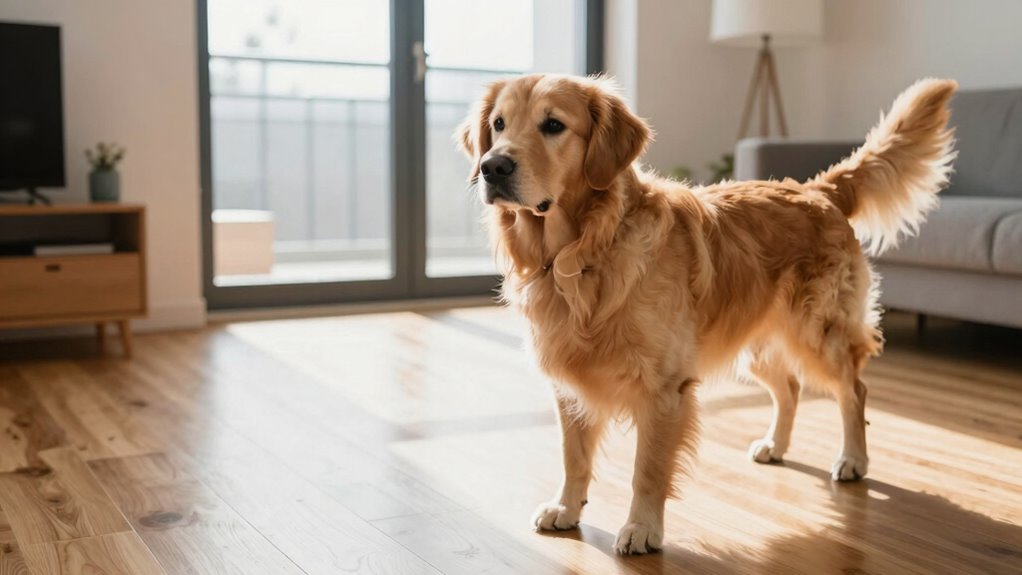

When you bring a dog into a new house, they often act strangely because they instinctively scent mark to establish familiarity and reduce anxiety. Moving disrupts their routines, making them more clingy, nervous, or prone to accidents. They may also sniff, hide, or act out as stress responses. Supporting their natural behaviors, maintaining consistent routines, and giving them time helps them adjust. If you keep observing, you’ll discover more ways to make this changeover smoother for your dog.

Get pet supplies delivered free with Prime
- Fast, free delivery on millions of items
- Prime Video, Amazon Music and more included
- Member-only deals all year
Key Takeaways
- Dogs rely on scent marking to establish territory and feel secure in a new environment.
- Routine disruptions cause confusion, leading to behaviors like accidents or excessive sniffing.
- Stress from unfamiliar sights, sounds, and smells triggers anxious behaviors and clinginess.
- Natural scent marking and behaviors are essential for dogs to create familiarity and reduce anxiety.
- Consistent routines and patience help dogs adapt and settle into their new home more quickly.
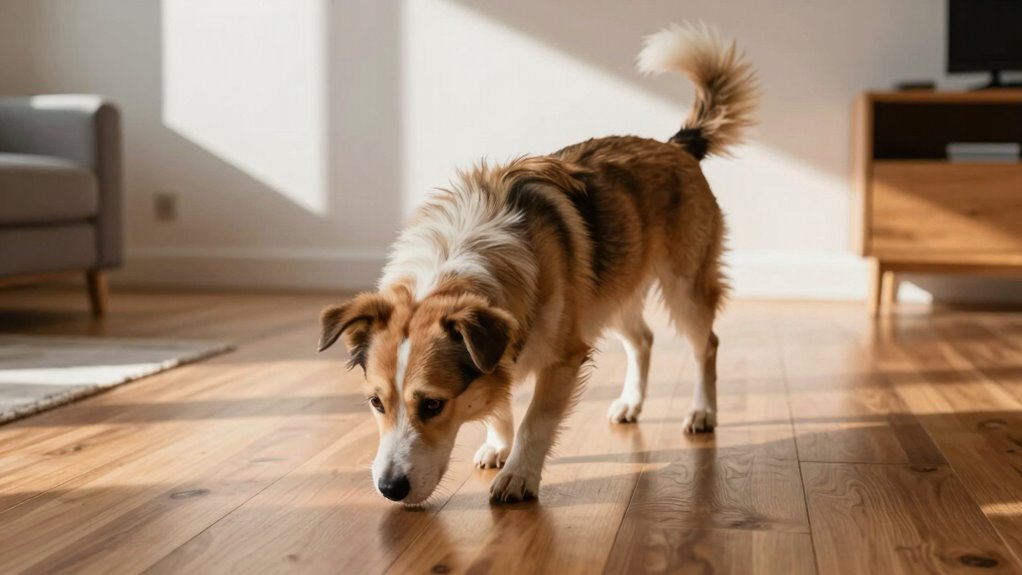
Moving into a new house can be exciting, but it also raises questions about how your dog will adjust. One common issue is their strange behavior during the first few days or weeks in the new environment. Dogs are creatures of habit, and any change in their surroundings can unsettle them. They might seem anxious, confused, or even act out in ways you’re not used to. Dogs rely heavily on their sense of smell to understand the world around them, and unfamiliar scents can contribute to their distress. When they enter a new house, they instinctively start scent marking — rubbing their body against furniture, scratching at the floor, or urinating in specific spots — to claim their territory. These actions are natural and necessary for them to feel secure in their environment. Scent marking helps them create a familiar scent map, which reduces their anxiety and helps them settle in. You might notice your dog becoming more focused on scent marking during these first days, and it can seem like they’re acting strangely because they’re trying to make the space feel more like their own. Recognizing the importance of territory establishment can help you understand these behaviors better.
Another factor contributing to their weird behavior is the disruption of their usual routines and the process of dog house training. House training is a learned behavior that relies heavily on consistency. When you move, your dog’s usual cues and routines are disrupted, and they may forget or struggle to remember where they’re supposed to go potty or sleep. This can lead to accidents inside or unusual behaviors like sniffing around excessively or hiding. It’s important to be patient and reinforce house training gently, providing lots of praise when they do well. Establishing new routines quickly will help your dog regain a sense of normalcy and lessen their confusion. Additionally, the disruption of routines can heighten their stress levels, making them more prone to anxious behaviors. During this adjustment period, your dog might also act more clingy or nervous because of the unfamiliar smells, sounds, and sights. They may seek more reassurance from you or exhibit signs of stress like pacing or whining. This is natural, and with time, patience, and consistent routines, they’ll begin to feel more comfortable. Recognizing that these behaviors are part of their natural adjustment process can help you stay calm and supportive. Remember that their weird behaviors are temporary responses to change, and giving them space to explore, while maintaining familiar routines, will help them settle in faster. Ultimately, understanding the importance of scent marking, house training, and routine stability will help you support your dog through this transition phase.
Products Worth Considering

Roborock Qrevo S Pro Robot Vacuum and Mop

Roborock RockNeo Q110H Wire-Free Robot Lawn Mower

PetSafe ScoopFree OpenSky Self-Cleaning Litter Box
As an affiliate, we earn on qualifying purchases.
Frequently Asked Questions
How Long Does It Typically Take for Dogs to Settle in a New House?
It usually takes about a few days to a few weeks for your dog to settle into a new house. During this time, they may focus on house training and scent marking to establish their territory. Be patient and consistent with routines, and give them plenty of reassurance. Over time, their curiosity will turn into comfort, making the new house feel like home.
Can Certain Dog Breeds Be More Prone to Weird Behaviors Initially?
Certain dog breeds are more prone to initial weird behaviors due to breed tendencies and behavioral genetics. You might notice that more anxious or sensitive breeds, like Border Collies or Chihuahuas, react strongly to new environments. These tendencies suggest that behavior isn’t random but rooted in genetics. Understanding this helps you be patient, giving your dog time to adapt, knowing some breeds naturally need more reassurance during stressful shifts.
What Are Signs That a Dog Is Stressed in a New Environment?
You’ll notice signs of dog anxiety and environmental stress when your dog whines, paces, or avoids eye contact in the new house. They might also hide, tremble, or seem overly alert to sounds and smells. Excessive licking or yawning can indicate discomfort, while loss of appetite shows they’re overwhelmed. Recognizing these signs helps you create a calmer environment, easing your dog’s adjustment and reducing their stress.
Should I Bring Familiar Items From the Old House to Comfort My Dog?
Absolutely, bring familiar items like a comfort object or their favorite blanket. Who knew that a familiar scent could be your dog’s lifeline in this brave new world? It’s like handing them a tiny piece of home to cling to amidst the chaos. By doing so, you immediately reduce stress and make their adaptation smoother. Because honestly, what’s more comforting than a scent that says, “Hey, I got you”?
When Is It Necessary to Consult a Vet About My Dog’s Behavior?
You should consult a vet if your dog’s behavior worsens or persists beyond typical behavioral adjustment periods. If your dog shows signs of distress, aggression, or unusual fear that training doesn’t improve, it indicates underlying issues needing professional help. Vets can assess for health problems and suggest specialized dog training strategies, ensuring a smooth behavioral adjustment. Prompt consultation helps prevent long-term behavioral issues and promotes your dog’s well-being.
Conclusion
Moving into a new house can be overwhelming for your dog, making them act strangely at first. But with patience, reassurance, and familiar routines, they’ll settle in and feel safe again. Remember, it’s normal for dogs to need some time to adjust—think of it as them finding their new “home base.” So, next time your pup seems off, ask yourself: isn’t giving them time and love the best way to help them feel comfortable?