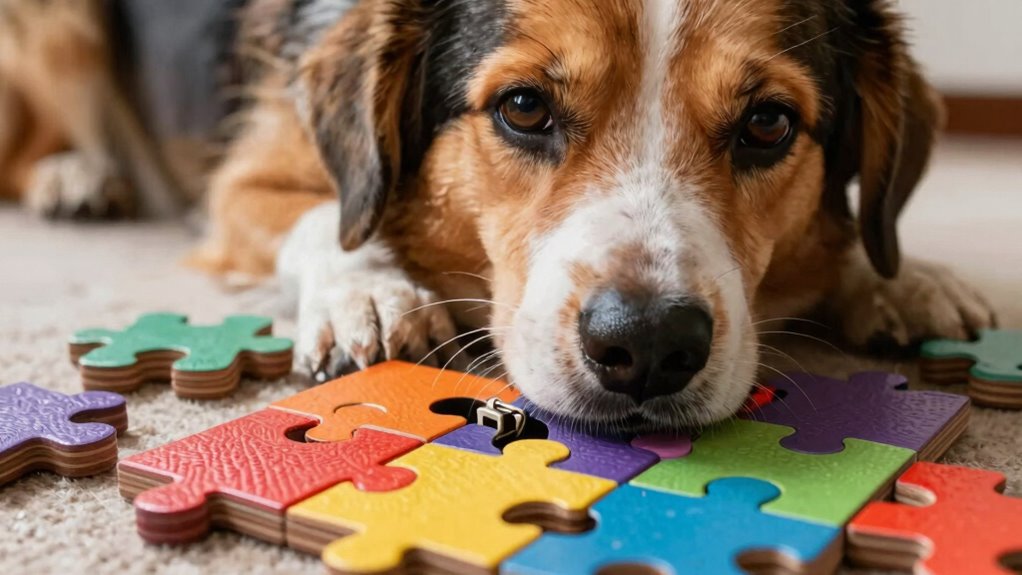

A common mistake that frustrates dogs is choosing puzzles that are either too easy or too difficult for their skills. If the puzzle is too simple, your dog may quickly lose interest and become bored. If it’s too complex, they might feel overwhelmed or give up, leading to frustration. The key is matching the puzzle’s difficulty to your dog’s current abilities and gradually increasing it. Keep your dog’s progress in mind, and you’ll help build confidence—there’s more to learn to keep things engaging.

Get pet supplies delivered free with Prime
- Fast, free delivery on millions of items
- Prime Video, Amazon Music and more included
- Member-only deals all year
Key Takeaways
- Selecting puzzles that are too difficult can cause dogs to give up and become frustrated.
- Mismatched difficulty levels hinder confidence and reduce motivation to engage with the puzzle.
- Progressing to overly complex puzzles too quickly overwhelms the dog, leading to discouragement.
- Failing to assess and match the dog’s current skill level results in unnecessary frustration.
- Not gradually increasing difficulty prevents the dog from building problem-solving skills effectively.
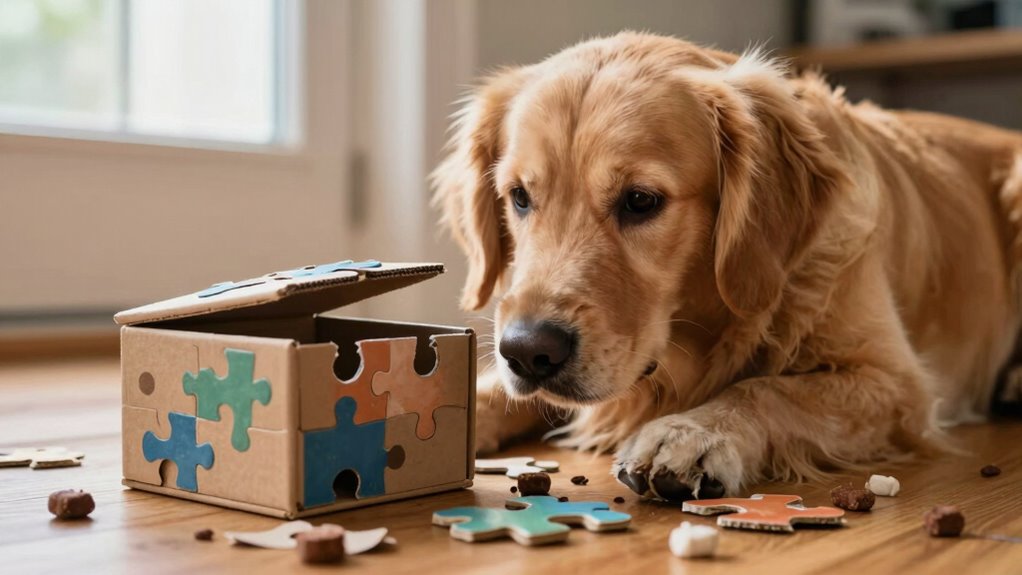
Many pet owners inadvertently frustrate their dogs by choosing puzzles that are either too easy or too difficult, which can lead to boredom or discouragement. When selecting a puzzle, your goal should be to match your dog’s current skill level, ensuring the activity remains engaging without causing frustration. This requires understanding some basic training techniques and puzzle design principles. If the puzzle is too simple, your dog may quickly lose interest, feeling like it’s not worth the effort. Conversely, if it’s too complex, your dog might give up before making progress, leading to frustration that discourages future attempts.
To avoid these pitfalls, start with puzzles that are easy enough for your dog to solve independently. Observe how your dog interacts with them. If they quickly figure it out, it’s a sign to move on to slightly more challenging designs. If they struggle or become discouraged, revert to simpler puzzles until they build confidence. Gradually increasing difficulty helps your dog develop problem-solving skills without feeling overwhelmed. This gradual progression is a key part of effective training techniques, as it encourages your dog to persist and learn new skills at a comfortable pace. Understanding puzzle design principles can help owners select and modify puzzles that keep their dogs mentally stimulated without causing frustration. Additionally, recognizing your dog’s current skill level ensures you’re providing appropriate challenges that promote learning rather than discouragement.
When it comes to puzzle design, look for features that align with your dog’s abilities. For example, some puzzles have hidden compartments or movable parts that require specific actions. Choose puzzles that match your dog’s size and strength, like sturdy materials for strong chewers or lightweight designs for smaller breeds. Also, consider puzzles that engage different senses—visual cues, scent trails, or tactile elements—to keep your dog mentally stimulated. As your dog improves, you can introduce puzzles with multiple steps or increased complexity, but always keep the challenge appropriate to their current skill level. Incorporating training techniques that reinforce persistence and patience can also enhance their problem-solving skills over time.
Products Worth Considering

PETLIBRO Granary 2 Wi-Fi Automatic Pet Feeder with Smart Scale, 5L

Fi Series 3+ GPS Dog Collar & Tracker, Membership Required, Gray Large

PETLIBRO Granary 2 Vision Duo Automatic Cat Feeder for Two Cats
As an affiliate, we earn on qualifying purchases.
Frequently Asked Questions
How Can I Tell if My Dog Is Frustrated With a Puzzle?
You can tell your dog is frustrated with a puzzle when they start to lose interest, become restless, or show signs of stress like pawing or whining. If the puzzle is too complex for their dog intelligence level, they might give up quickly or become overly fixated. Adjust the puzzle’s complexity gradually to match their skill, ensuring they stay engaged and motivated without feeling overwhelmed or frustrated.
Are Some Dog Breeds More Prone to Frustration With Puzzles?
Some dog breeds are more prone to frustration with puzzles, almost like they have a secret frustration switch! Breeds with strong breed tendencies, like retrievers or terriers, often excel with puzzles initially but can get frustrated if it’s too difficult. Frustration factors include high energy levels, intelligence, and persistence. You’ll notice these dogs may become impatient or give up faster, so tailoring puzzle difficulty to their breed tendencies helps keep them engaged and happy.
How Often Should I Change Puzzle Difficulty Levels?
You should change puzzle difficulty levels regularly to keep your dog engaged without causing frustration. Aim to adjust the puzzle design every few days or weekly, depending on your dog’s progress. Incorporate challenge variety to prevent boredom and boost mental stimulation. Observe your dog’s reactions—if they get stuck or frustrated, simplify the puzzle. Gradually increase difficulty as they master each level, ensuring a fun and rewarding experience.
Can Puzzle Frustration Lead to Behavioral Problems?
Yes, puzzle frustration can lead to behavioral problems in dogs. When they get stuck or overwhelmed, they might become anxious, destructive, or develop avoidance behaviors. During dog training and enrichment activities, it’s vital to make certain puzzles are challenging but not frustrating. Gradually increasing difficulty helps your dog stay engaged and confident, preventing negative behaviors and promoting mental stimulation and well-being.
What Signs Indicate My Dog Needs a Different Type of Mental Challenge?
If your dog shows boredom or disinterest during puzzle engagement, it’s a sign their dog intelligence might be underchallenged. Watch for behaviors like pawing, chewing, or trying to escape the puzzle. If your dog quickly solves puzzles or seems uninterested, it may need a different type of mental challenge. Adjust the difficulty or try new puzzle types to keep their mind engaged and prevent frustration.
Conclusion
Ultimately, understanding your dog’s puzzle preferences means you’ll avoid the trap of making things too hard or too easy. When you strike the right balance, you’ll keep your furry friend engaged and happy, rather than frustrated or giving up. Remember, it’s better to take baby steps than to bite off more than you can chew. With a little patience and insight, you’ll find that solving puzzles becomes a rewarding experience for both of you—like hitting the sweet spot.