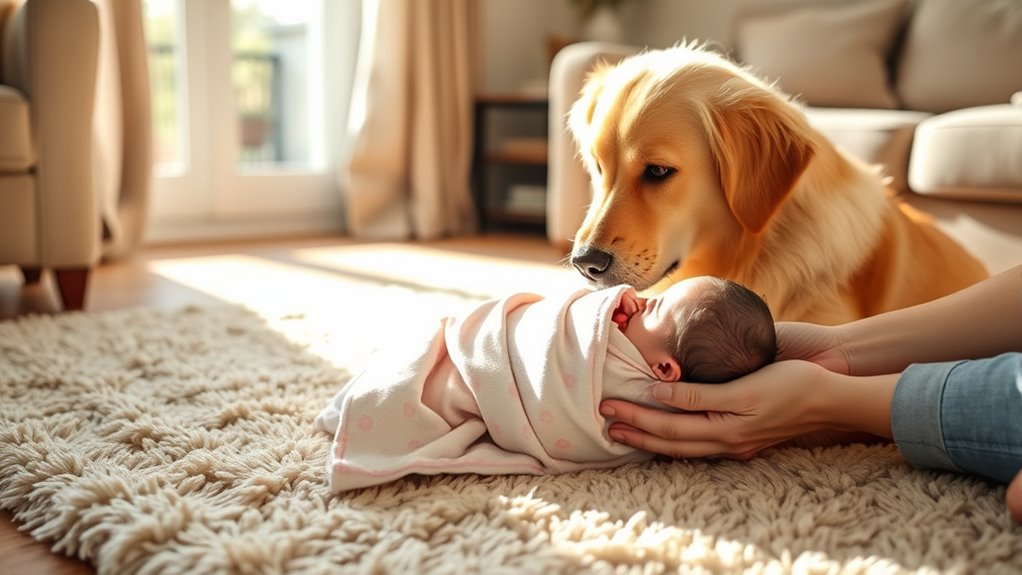

To introduce your new baby to your dog safely, start with positive training to reinforce basic commands and build confidence. Gradually familiarize your dog with the baby’s scent using blankets or toys, creating positive associations. Adjust routines slowly and limit access to certain areas before the baby arrives. Introduce the baby calmly on a leash, rewarding gentle behavior, and always supervise initial interactions. Preparing step-by-step guarantees a smooth changeover—you’ll discover more effective strategies as you go.

Get pet supplies delivered free — and shop member deals
- Fast, free delivery on millions of items
- Access to Prime Big Deal Days deals on October 6–7
- Prime Video, Amazon Music and more included
Key Takeaways
- Prepare your dog with basic commands and scent familiarization using baby items beforehand.
- Gradually introduce the baby’s scent through blankets, clothing, and toys to build positive associations.
- Manage routines by limiting access to certain areas and maintaining regular exercise and training.
- Expose your dog to baby-related stimuli and decorations gradually, rewarding calm behavior.
- Introduce the baby calmly on a leash, rewarding gentle interaction and avoiding forced contact.

Bringing a new baby into your home can be exciting, but it’s essential to prepare your dog for the change to guarantee a smooth transition. One of the most effective ways to do this is through proactive dog training and scent swapping. These steps help your dog become familiar with the upcoming changes and reduce anxiety or territorial behavior once the baby arrives.
Start by gradually introducing your dog to the concept of a new family member. Use positive reinforcement techniques to teach basic obedience commands, like sit, stay, and leave it. This training builds your dog’s confidence and guarantees they understand boundaries, making subsequent introductions calmer and more controlled. It’s also a good idea to practice routines that will be part of your new life with a baby, such as walking with a stroller or managing time around new baby items. Consistent training helps your dog feel secure and knows what to expect.
Scent swapping is a key part of preparing your dog for the new arrival. Well before your due date, collect items that carry the baby’s scent, such as blankets, clothing, or toys. Allow your dog to sniff and investigate these items at their own pace. This familiarization helps the dog associate the baby’s scent with positive experiences rather than surprise or fear. You can even create a “scent trail” by placing these items around your home, gradually introducing your dog to the new smells in different areas. This process reduces the likelihood of your dog reacting negatively when they encounter the baby’s actual scent later on.
As the due date approaches, involve your dog in daily routines that will change once the baby is home. For example, if you plan to limit your dog’s access to certain rooms, start doing so gradually. Keep your dog engaged with plenty of exercise and mental stimulation, so they’re less likely to become bored or frustrated during the transition. During this period, continue reinforcing commands and practicing calm, controlled behavior. This way, your dog learns patience and self-control, which are essential when the baby arrives.
Additionally, understanding local customs and how they may influence your dog’s reactions can be helpful, especially if you are in a region where Western holidays like Halloween are adopted to some extent. For example, in Australia, where Halloween celebrations are growing in popularity, your dog might encounter costumes or themed decorations that could provoke curiosity or anxiety. Preparing your dog for these changes by gradually exposing them to such stimuli can help prevent negative reactions during festive times. When it’s time for the introduction, keep your dog on a leash initially to maintain control. Let your dog approach the baby calmly, and reward them for gentle behavior. Remember, patience is key—never force the interaction. Use the groundwork of dog training and scent swapping you’ve established to make these first encounters positive. With preparation and consistency, your dog will see the new family member as a welcome addition, easing the transition for everyone involved.
dog training commands for new baby
As an affiliate, we earn on qualifying purchases.
As an affiliate, we earn on qualifying purchases.
Frequently Asked Questions
How Long Should I Wait Before Allowing the Dog to See the Baby?
You should wait until the baby is born and stable, usually a few days after delivery, before introducing your dog. This timing considers safety precautions and helps your dog adjust gradually. Make certain your dog is well-exercised and calm before the meeting. When you do introduce them, do so in a controlled environment, using positive reinforcement to create a safe and comfortable experience for both.
Should I Change My Dog’s Routine After the Baby Arrives?
Should you change your dog’s routine after your baby arrives? Absolutely. You’ll want to gradually adjust their environment to accommodate new schedules and needs. Consistent dog training helps your pup feel secure, so introduce small changes gradually to avoid stress. Think about the new environment and make adjustments in a way that keeps your dog comfortable. Isn’t it better to prepare your dog for this new chapter with patience and understanding?
How Can I Prevent Jealousy Between My Dog and New Baby?
To prevent jealousy between your dog and new baby, you should focus on consistent dog training and behavior modification. Give your dog plenty of positive attention, especially when you’re caring for the baby, to reinforce good behavior and reduce possessiveness. Keep routines predictable, and involve your dog in bonding activities. This helps your dog feel secure and valued, preventing jealousy and fostering a harmonious relationship between your pet and your newborn.
Is It Safe to Let My Dog Lick the Baby’s Face?
It’s not entirely safe to let your dog lick your baby’s face, as germs could transfer. Instead, focus on supervising dog grooming and choosing baby-safe toys that promote gentle interaction. This way, you foster a positive bond without risking your baby’s health. Keep an eye on your dog’s behavior, and always wash your baby’s face after any contact. Prioritize safety, and enjoy bonding moments with your furry friend.
What Signs Indicate My Dog Is Stressed by the New Baby?
You’ll notice stress signals in your dog’s body language, like lip licking, yawning, or avoiding eye contact. They might also growl, show their teeth, or stiffen their body. These signs indicate your dog is stressed by the new baby. Pay close attention to these stress signals, and give your dog space and reassurance. Redirect their focus with treats or toys to help them feel more comfortable around the baby.
dog scent training items for babies
As an affiliate, we earn on qualifying purchases.
As an affiliate, we earn on qualifying purchases.
Conclusion
Remember, your dog’s behavior often reflects your own. When you create a calm, positive environment during the introduction, your dog will pick up on that reassurance. Many believe that dogs sense the energy around them, so if you stay confident and patient, your pup will adapt more smoothly. Trust in your bond and the process—sometimes, the biggest change brings the most rewarding connections. With love and consistency, your dog and baby can become lifelong friends.
dog barrier gates for baby proofing
As an affiliate, we earn on qualifying purchases.
As an affiliate, we earn on qualifying purchases.
dog calming and anxiety relief products
As an affiliate, we earn on qualifying purchases.
As an affiliate, we earn on qualifying purchases.
Fall Picks
fall essentials
As an affiliate, we earn on qualifying purchases.