
A happy, well-adjusted dog shows lively, playful behaviors like chasing toys and wagging their tail smoothly. They relax with calm postures, such as lying with their belly exposed or stretching comfortably. Your dog seeks attention, responds positively to interactions, and maintains a confident, relaxed attitude. Signs of contentment include soft eyes, open mouth resembling a smile, and overall ease in their environment. Keep exploring these cues to better understand your furry friend’s happiness.
Key Takeaways
- The dog frequently initiates play and interacts enthusiastically with toys and people.
- It exhibits relaxed body language, such as lying down with exposed belly and loose posture.
- The dog responds positively to attention, approaching or leaning into familiar people comfortably.
- It displays subtle signs of happiness like soft eyes, gentle smiling, and relaxed demeanor.
- Consistent playful and relaxed behaviors indicate emotional well-being and a strong bond with its environment.
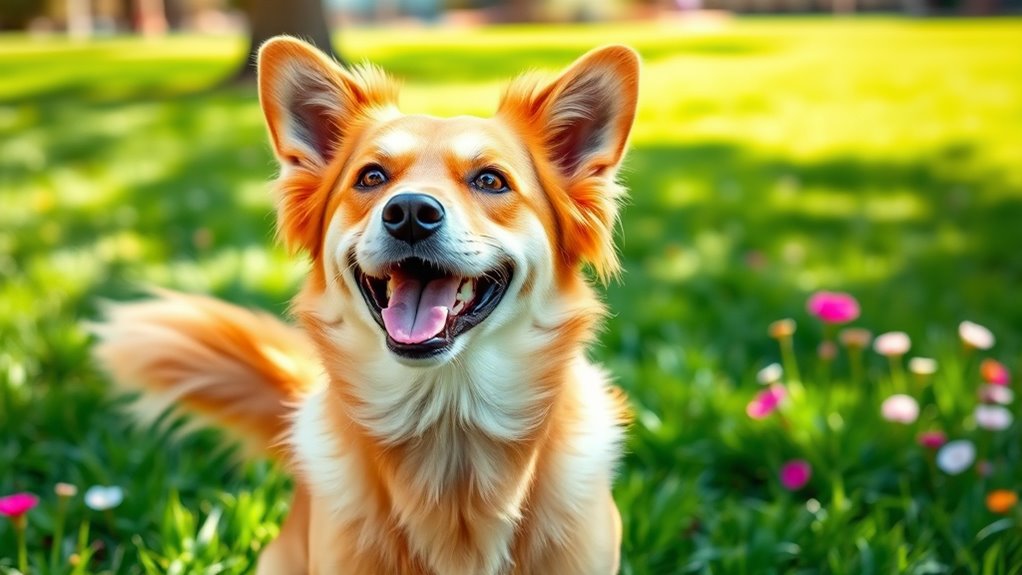
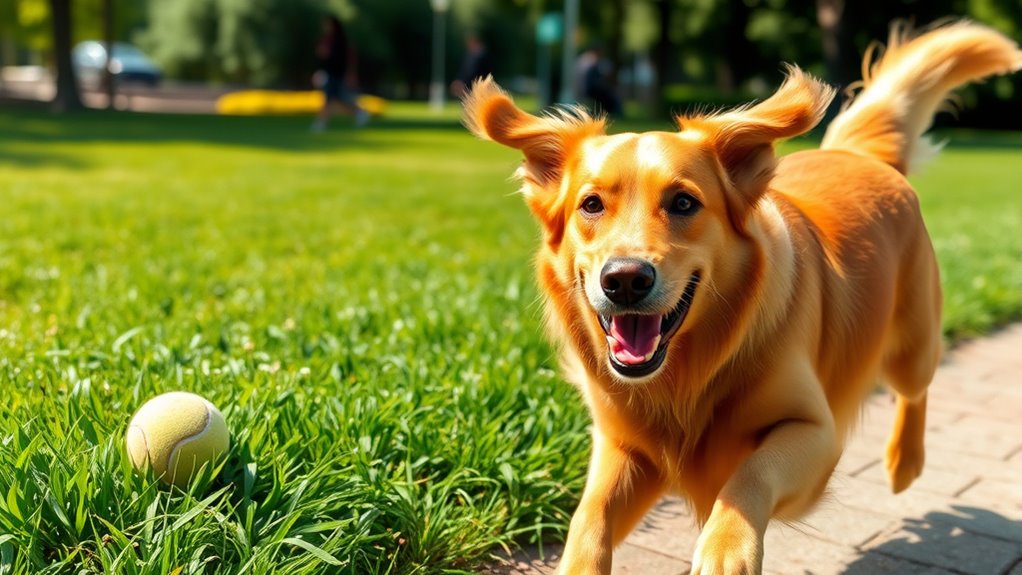
Dogs often show their happiness through simple, observable behaviors that you can easily recognize. One of the clearest signs is playful behavior. When your dog is feeling joyful, they might initiate playful interactions, such as bringing you their favorite toy, bouncing around excitedly, or engaging in playful pawing. These behaviors indicate that your dog feels comfortable and confident in their environment. Playfulness is a positive sign that they’re mentally stimulated and content. You might notice them chasing after a ball, mock wrestling with a soft toy, or simply nudging you with their nose, enthusiastic to engage. These actions are not just about fun—they reflect a happy state of mind, showing that your dog is relaxed and enjoying life.
A happy dog shows joy through playful actions like bringing toys and bouncing excitedly.
Along with playful behavior, a relaxed posture is another key indicator of a happy dog. When your dog feels at ease, their body language will appear loose and calm. They might lie down with their belly exposed, which is a sign of trust and comfort. Their tail will wag gently, not stiffly, and their ears will be in a neutral position. You may observe them stretching out comfortably on the floor or lounging in a favorite spot, indicating they’re relaxed and secure in their surroundings. A relaxed posture also includes soft eyes and a gentle open mouth, often resembling a slight smile. These subtle cues show your dog isn’t feeling threatened or anxious but is genuinely content.
You can also look for other signs that reinforce these behaviors. For example, a dog that’s happy often seeks your attention, coming over for petting or leaning against you. Their tail wagging is usually broad and fluid, not rigid or tense. Their overall demeanor is lively yet calm, and they respond positively to your presence and interactions. When your dog exhibits these behaviors, it’s a clear indication that they’re feeling good physically and emotionally.
Recognizing these signs helps you ensure your dog’s well-being and allows you to create a nurturing environment. Encouraging playful behavior through interactive toys and games can strengthen your bond and boost their happiness. Providing a safe, calm space for your dog to relax and lie down comfortably fosters a relaxed posture. Interestingly, consistent routines and positive reinforcement play vital roles in maintaining your dog’s happiness and mental health. Paying attention to these small but meaningful cues will let you know when your dog is truly happy and well-adjusted, making your bond even stronger. Ultimately, these observable behaviors serve as a window into your dog’s inner happiness, helping you nurture a joyful, healthy relationship.
Frequently Asked Questions
How Can I Tell if My Dog Is Content During Playtime?
You can tell your dog is content during playtime by observing their playful body language and relaxed facial expressions. If they’re wagging their tail, bouncing around happily, and engaging enthusiastically, they’re having fun. Look for loose, wiggly movements and a soft, relaxed face without signs of stress, like lip licking or yawning. These signs show your dog feels safe, happy, and fully engaged in play.
What Behaviors Indicate My Dog Is Mentally Stimulated?
When your dog’s eyes sparkle with curiosity and their tail wags with enthusiasm, they’re showing signs of mental engagement. You’ll notice enthusiastic sniffing, problem-solving during puzzle toys, and a lively attitude during dog enrichment activities. These behaviors indicate your dog is mentally stimulated, like a brain lit up with fireworks, fueling their happiness. Keep challenging them with new tasks and toys, and watch their mind blossom in joyful exploration.
How Does a Happy Dog Communicate With Other Animals?
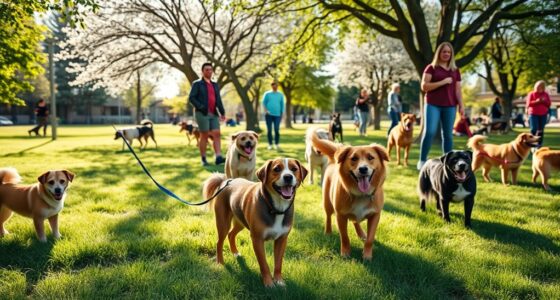
Your happy dog communicates with other animals through positive dog body language and social cues. You’ll notice relaxed posture, wagging tail, and gentle eye contact. Play bows and open-mouth smiles show friendliness, while sniffing and playful gestures invite interaction. When your dog feels comfortable, they’ll mirror the body language of others, signaling trust and social harmony. By observing these cues, you can understand how your dog happily interacts with their animal friends.
Are There Specific Signs of a Stressed or Anxious Dog?
Imagine a dog as a tightrope walker; when stressed, their body language cues like tucked tails, pinned-back ears, or excessive panting signal imbalance. Vocal signals such as whimpering, growling, or high-pitched barking also reveal anxiety. If you notice these signs—crossing their legs or avoiding eye contact—your dog might be stressed. Recognizing these cues helps you intervene and provide comfort, calming their nerves.
How Does a Well-Adjusted Dog Recover From Stressful Situations?
Your dog recovers from stressful situations by practicing proper dog socialization and using anxiety reduction techniques. You can help by providing a calm environment, offering gentle reassurance, and gradually exposing your dog to similar situations to build confidence. Use positive reinforcement to reward calm behavior, and make sure your dog feels safe. Over time, these methods strengthen your dog’s resilience, helping them bounce back quickly and feel more secure after stressful events.
Conclusion
Recognizing a happy, well-adjusted dog isn’t just about their wagging tail or bright eyes; it’s also about understanding subtle cues like relaxed body language and confident behavior. Some believe that dogs mirror their owners’ emotions, highlighting the importance of a positive environment. When your pup shows these signs, it’s a good indicator that they’re thriving emotionally and physically. Keep nurturing their happiness, and you’ll both enjoy a stronger, more loving bond.