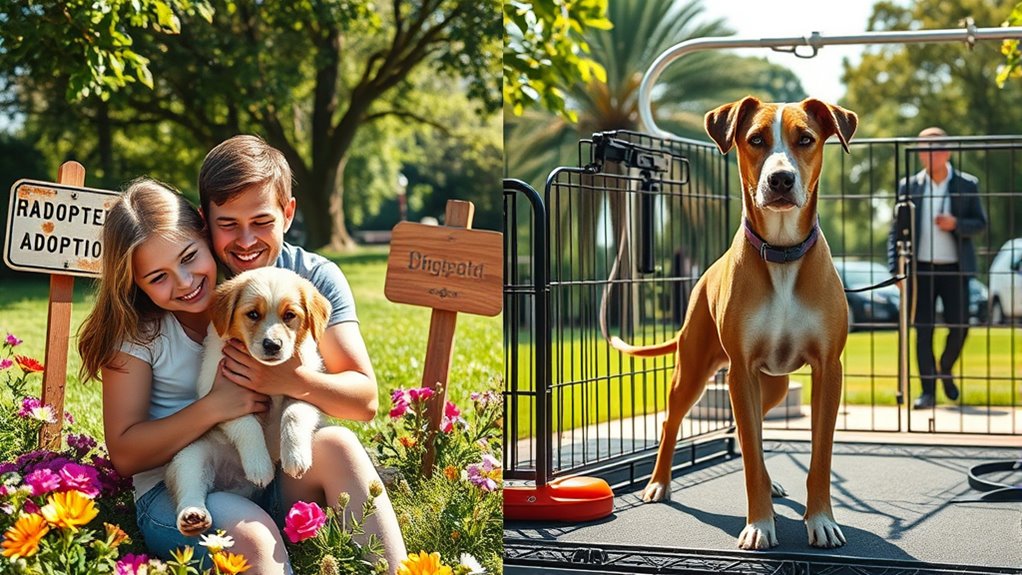

When deciding between adopting a dog from a shelter or buying from a breeder, consider your budget, breed preferences, and lifestyle. Adoption usually costs less and offers a wide variety of dogs, often with health care included. Breeders can provide specific breeds with predictable traits but tend to be more expensive. Understanding these differences helps you make an informed choice. If you want to explore more details, you’ll find helpful insights ahead.
Listen free for 30 days with Audible
Thousands of audiobooks and originals — cancel anytime.
As an affiliate, we earn on qualifying purchases.
Key Takeaways
- Adoption is generally more affordable, covering vaccinations, spaying/neutering, and health checks, while breeder prices can be significantly higher.
- Shelters offer a wide variety of mixed breeds in different ages and temperaments, whereas breeders specialize in specific breeds.
- Adoption provides a second chance for dogs in need and often includes support resources for integration.
- Buying from a breeder allows selection of predictable breed traits suited for specific needs like agility or service work.
- Both options incur ongoing care costs, but initial expenses are typically lower with adoption.

When deciding how to bring a new dog into your life, you might find yourself weighing the benefits of adoption against purchasing from a breeder. A key factor in this decision is understanding the cost differences between the two options. Adoption fees are generally much lower than buying from a breeder, which can make a significant difference if you’re on a budget. Adoption costs typically cover vaccinations, spaying or neutering, and a health check, often totaling a few hundred dollars. In contrast, purchasing a dog from a breeder can range from several hundred to thousands of dollars, especially for purebred or rare breeds. Keep in mind that additional expenses like initial veterinary care, supplies, and training can add up regardless of how you bring your dog home, but the upfront costs are usually more affordable with adoption.
Another major consideration is breed variety. When you choose to adopt, you’re opening your home to dogs of all shapes, sizes, ages, and temperaments, many of whom come from shelters or rescue organizations. While you might not always find a specific breed you’re looking for, shelters often have a diverse range of mixed breeds that can fit various lifestyles. On the other hand, if you have a particular breed in mind, buying from a reputable breeder might be the best route. Breeders specialize in specific breeds, allowing you to select a dog with predictable traits, size, and temperament suited to your needs. This can be especially important if you’re seeking a dog for a specific purpose, like agility competitions or service work, where breed characteristics matter.
Choosing between adoption and buying from a breeder ultimately depends on what you prioritize most. If cost and variety are top concerns, adoption offers a more affordable and diverse pool of dogs to choose from. It also gives a second chance to a dog in need, which many find rewarding. Additionally, adoption organizations often provide support and resources to help you integrate your new pet into your home. Conversely, if you’re set on a particular breed with specific traits, purchasing from a breeder might be more aligned with your expectations, though it comes at a higher cost. Both options have their merits, but understanding the differences in cost and breed variety can help you make a more informed decision. Whichever route you choose, you’ll be providing a loving home to a dog that deserves it, and that’s what truly counts.
As an affiliate, we earn on qualifying purchases.
Frequently Asked Questions
What Are the Long-Term Health Implications of Adoption Versus Buying From a Breeder?
Adopting a dog can lead to fewer genetic health issues because many shelters screen for common problems and provide initial veterinary care. However, adopting may carry unknown genetic risks if the dog’s background isn’t clear. Buying from a reputable breeder with thorough genetic screening can guarantee healthier lineage. Both options require ongoing veterinary care to maintain your dog’s health, so your commitment to regular check-ups is essential regardless of how you bring your dog home.
How Do Costs Compare Between Adopting and Purchasing a Dog?
You’ll find that adoption costs, including adoption fees, are generally lower than breeder costs, which can be quite high. Adoption fees often cover vaccinations, spaying or neutering, and initial health checks, making them more affordable upfront. Breeder costs, on the other hand, include the puppy’s price, which varies depending on breed and lineage, plus initial health care. Overall, adoption tends to be less expensive initially, but ongoing costs depend on the dog’s health and needs.
What Legal Protections Exist for Adopters Versus Buyers?
You have legal rights and contract protections whether you adopt or buy a dog. Adoption agencies often provide agreements outlining the shelter’s responsibilities, but these may offer limited legal recourse. When purchasing from a breeder, you typically sign a contract that covers health guarantees and return policies. In both cases, understanding your rights helps you navigate issues like health problems or misrepresentation effectively.
How Does Each Option Impact Puppy Mills or Unethical Breeding?
Did you know that approximately 10,000 puppy mills operate in the U.S., producing millions of puppies annually? By choosing adoption, you actively reduce demand for puppies from unethical breeding practices and puppy mills. Supporting shelters promotes ethical breeding practices and increases puppy mill awareness. Conversely, buying from breeders without transparency can inadvertently sustain unethical operations, so always research breeders thoroughly or consider adopting to make a positive impact.
Are There Age Restrictions or Considerations for Each Choice?
You should consider age restrictions and maturity considerations for both options. Adoption typically involves puppies at various ages, so verify the shelter has appropriate care for young or older dogs. When buying from a breeder, check for maturity considerations—some breeds need more time to develop before adoption. Be mindful of age restrictions, especially for very young or senior dogs, to ensure a good fit and proper care.
dog breed specific training collar
As an affiliate, we earn on qualifying purchases.
As an affiliate, we earn on qualifying purchases.
Conclusion
Choosing between adopting and buying a dog ultimately depends on your values and lifestyle. Did you know that around 3.3 million dogs end up in shelters each year? By adopting, you could be saving a life and making room for one more in need. Whether you go the adoption route or purchase from a reputable breeder, remember that providing love and care is what truly matters. Your choice can make a difference—think about the impact you want to have.
dog health and wellness supplies
As an affiliate, we earn on qualifying purchases.
As an affiliate, we earn on qualifying purchases.
As an affiliate, we earn on qualifying purchases.
Flea & tick season Picks
flea and tick prevention
As an affiliate, we earn on qualifying purchases.