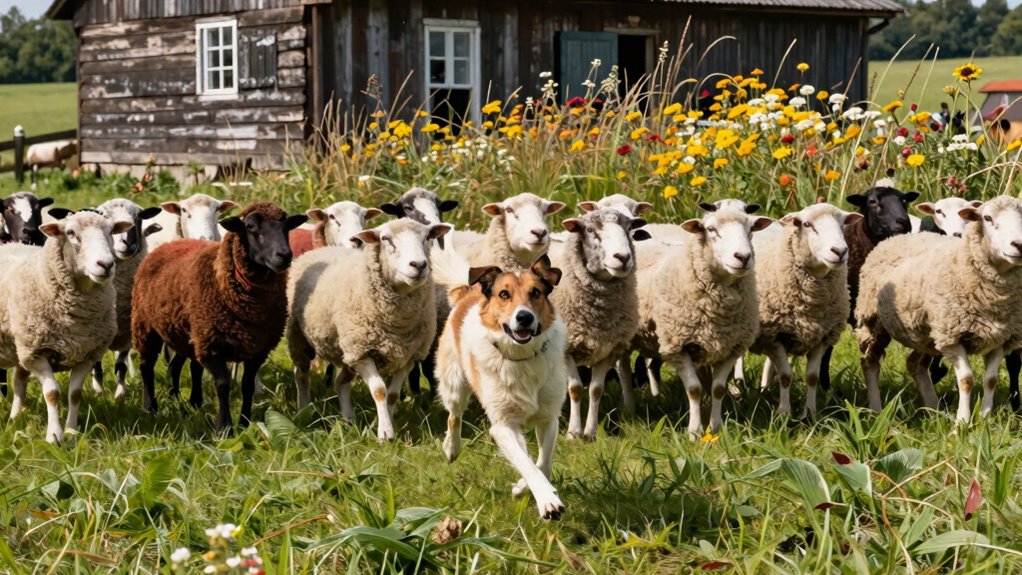

Herding breeds turn households into projects because their natural instincts drive them to control and manage everything around them. Their intelligence, agility, and strong herding drive make them want to organize, herd, and direct people and pets. Without proper outlets for their energy, they might become destructive or overly involved in household routines. Understanding these traits helps you create better routines and activities, so your dog stays happy and balanced. Keep exploring to discover how to effectively manage their natural behaviors.

Get pet supplies delivered free — and shop member deals
- Fast, free delivery on millions of items
- Access to Prime Big Deal Days deals on October 6–7
- Prime Video, Amazon Music and more included
Key Takeaways
- Herding breeds have strong instincts to control movement, leading them to manage household activities like children or pets.
- Their high energy levels and intelligence cause them to turn routines into ongoing, sometimes disruptive, projects.
- Lack of proper outlets for their natural herding drive results in destructive behaviors and household chaos.
- Inconsistent training and routines can make their alertness and herding instincts manifest as stubborn or disruptive actions.
- Proper mental and physical outlets channel their instincts positively, preventing household routines from becoming unmanageable projects.

Herding breeds are known for their intelligence, agility, and strong instincts to manage and guide livestock, but these traits also influence how they behave in household settings. When you bring a herding dog into your home, you quickly realize that their sharp minds and natural drive to work can turn everyday routines into ongoing projects. These breeds thrive on mental stimulation and physical activity, and without proper outlets, they tend to create their own entertainment—sometimes in ways that challenge your patience. It’s common to face training challenges because herding dogs often see life as a series of tasks to be managed, and they may try to herd children, other pets, or even you. Their instinct to control movement can lead to behaviors like nipping at heels or herding movement around the house, which can be disruptive if not addressed early.
Managing their energy becomes a priority when you own a herding breed. These dogs are famously active, and if their energy isn’t properly channeled, they’ll find their own ways to burn it off—sometimes in destructive manners. Long walks, vigorous play, and mental exercises like puzzle toys are essential to keep them engaged. Otherwise, their high energy levels might lead to boredom, which often manifests as digging, barking, or chewing. This isn’t stubbornness but a need to find purpose, and if left unfulfilled, they can turn household routines into ongoing projects that require your constant supervision and correction. Training these breeds can be both rewarding and demanding because they’re quick learners but also highly perceptive, meaning they pick up on your cues rapidly. However, their intelligence can make them stubborn if they sense inconsistency or if training isn’t engaging enough.
You need to establish clear boundaries and consistent routines to keep your herding dog happy and well-behaved. Because they’re so eager to please and smart enough to understand rules quickly, positive reinforcement works best. But patience is key, especially when tackling their training challenges. It’s a balancing act—giving them enough mental and physical stimulation to prevent misbehavior while maintaining structure to help them feel secure. Understanding their natural instincts can help you better manage their behaviors and prevent household projects from becoming overwhelming. Recognizing and working with their drive to herd can also prevent conflicts and destructive behaviors. Incorporating appropriate outlets such as agility or obedience training can also significantly improve their behavior and satisfaction. Providing mental challenges like scent work or problem-solving activities can help satisfy their intelligence and reduce undesired behaviors. Additionally, engaging in consistent training routines can reinforce positive habits and build mutual trust. With the right approach, you’ll find that these dogs can become loyal, well-behaved companions rather than household projects. Their natural instincts and energetic nature don’t have to be burdens—they can be channeled into a fulfilling partnership that keeps both of you active and engaged.
interactive puzzle toys for herding dogs
As an affiliate, we earn on qualifying purchases.
As an affiliate, we earn on qualifying purchases.
Frequently Asked Questions
How Do Herding Breeds Differ From Other Dog Types?
Herding breeds differ from other dog types because of their strong genetic traits and behavioral tendencies. You’ll notice they’re highly intelligent, energetic, and driven to control movement. These dogs excel at tasks like herding and problem-solving, but their instinct to organize and direct can make them seem like constant projects. You need to provide mental stimulation and consistent training to keep them happy and balanced in your household.
What Specific Household Challenges Do Herding Breeds Cause?
Herding breeds can challenge your household by turning everyday activities into indoor agility exercises, as they love to herd and control movement. You’ll need to supervise your yard closely because they tend to chase or herd anything that moves. Their intelligence and energy demand mental stimulation and regular exercise, making household management a project. Without proper outlets, they might become bored or destructive, so supervision and engaging activities are essential.
Are Herding Breeds Suitable for First-Time Dog Owners?
Herding breeds aren’t the best choice for first-time dog owners because their herding instincts and high energy levels demand a lot of mental and physical stimulation. You need to be prepared for consistent training, leadership, and exercise to keep them happy and well-behaved. If you’re ready for a challenge and can provide lots of activity, they can be wonderful companions, but they often turn households into ongoing projects.
How Can Owners Prevent Herding Behaviors From Becoming Problematic?
You can prevent herding behaviors from becoming problematic by implementing effective socialization strategies and providing environmental enrichment. Expose your dog to different people, animals, and environments early on, encouraging positive interactions. Keep them mentally stimulated with puzzle toys, training exercises, and varied activities to channel their energy productively. Consistent boundaries and calm leadership help reinforce good behavior, ensuring your herding breed remains balanced and happy without turning household routines into constant projects.
What Training Methods Work Best for Herding Breeds?
Think of herding breeds as enthusiastic cogs in a well-oiled machine, craving direction. To harness their energy, use consistent obedience training and engaging socialization techniques. Positive reinforcement fuels their motivation, turning learning into a game. Incorporate agility exercises and mental challenges to keep their minds sharp. By establishing clear boundaries and rewarding good behavior, you transform their natural instincts into well-behaved companions.
high energy dog toys for active breeds
As an affiliate, we earn on qualifying purchases.
As an affiliate, we earn on qualifying purchases.
Conclusion
So, next time your herding dog eyes the laundry basket or your kids’ toys with the intensity of a NASA engineer, remember—you’re not just dealing with a pet; you’re managing a full-blown project. Who knew that a little four-legged boss could turn your home into a never-ending, slightly chaotic, and utterly entertaining construction site? Embrace the chaos, because with herding breeds, every day’s an episode of “Household Makeover: Canine Edition.”
As an affiliate, we earn on qualifying purchases.
As an affiliate, we earn on qualifying purchases.
Fall Picks
fall essentials
As an affiliate, we earn on qualifying purchases.