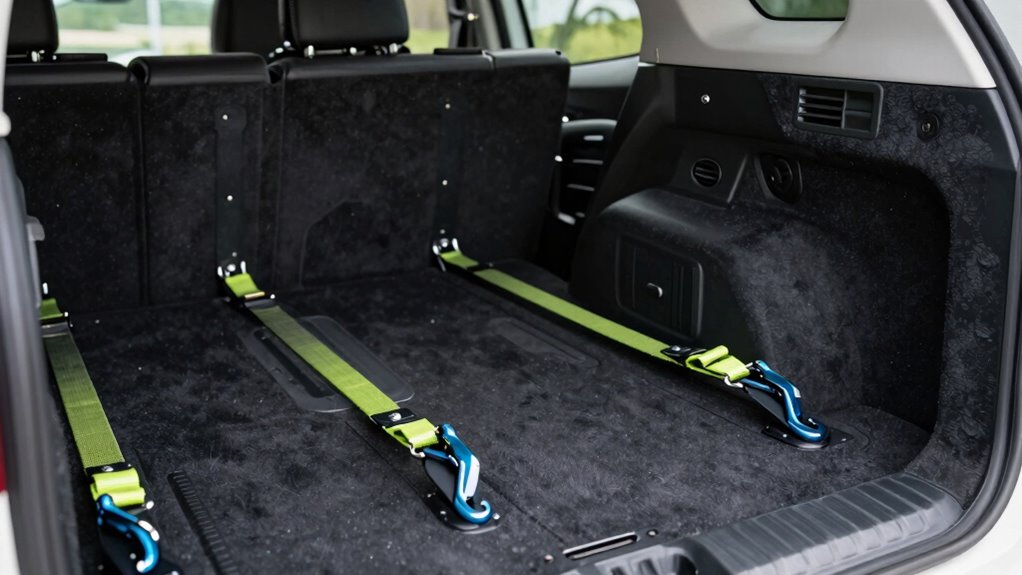

When securing travel crates in your SUV, always use the built-in anchor points designed for heavy loads. Attach your straps to sturdy tie-down hooks or anchor points to prevent shifting during transit. Make sure the straps are tight but not overly tight, and use multiple points for even support. Regularly check your straps to stay secure throughout your trip. Keep these tips in mind to guarantee your cargo stays safe—more details await if you keep exploring.
Key Takeaways
- Use built-in anchor points or tie-down hooks designed for cargo securing in your SUV.
- Attach heavy-duty straps to these anchor points, ensuring they are snug but not overly tight.
- Cross the straps to evenly distribute force and prevent cargo shifting during transit.
- Utilize non-slip mats underneath crates to improve grip and stability.
- Regularly check and tighten straps throughout the trip for continued security.
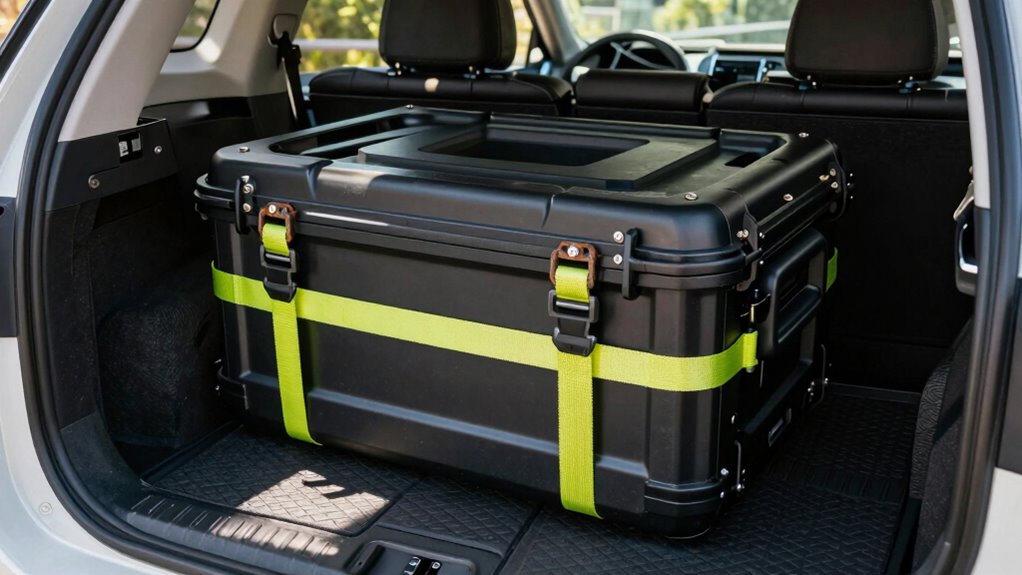
Travel crates for SUVs are essential tools for safely transporting your pets or securing cargo on the road. When you’re on the move, guaranteeing cargo security isn’t just about keeping your belongings in place—it’s about safety for everyone in the vehicle. Properly installing your crate is vital, and knowing the right tie-down points can make all the difference. Using the correct tie-down points prevents shifting, reduces the risk of damage, and keeps your pet or cargo secure during sudden stops or sharp turns.
First, always identify the built-in anchor points in your SUV’s cargo area. Most vehicles come equipped with designated tie-down hooks or anchor points specifically designed for securing cargo. These are your best options for crate installation tips because they’re engineered to withstand significant force, providing a sturdy anchor. Avoid using seat belts or other improvised straps, as they may not offer the necessary strength or stability to hold the crate securely.
When placing your travel crate, choose a position that minimizes movement and allows easy access if needed. Once positioned, attach heavy-duty straps or cargo tie-downs to the vehicle’s anchor points. Make sure the straps are snug but not overly tight, as excessive tension can damage the crate or the vehicle’s interior. Tighten the straps evenly to ensure the crate sits flat and doesn’t wobble. Using multiple tie-down points is recommended; this distributes the force evenly and prevents any one strap from bearing all the load.
In addition to securing the crate to the vehicle’s anchor points, consider adding non-slip mats underneath the crate. These mats increase stability and prevent sliding during transit. Check your straps periodically during long trips to guarantee they haven’t loosened. Remember, cargo security isn’t a one-time task—it requires ongoing attention to keep everyone safe.
Another tip is to avoid overloading the cargo area, which can compromise the effectiveness of your tie-downs. Keep the weight balanced to prevent shifting that could compromise your crate’s stability. If your SUV lacks built-in tie-down points or you need extra security, consider installing aftermarket anchor points designed for cargo management. Proper tie-down techniques ensure the safety and security of your cargo and passengers during your journey.
Frequently Asked Questions
What Materials Are Best for Travel Crates in SUVS?
You should choose travel crates made from durable materials like heavy-duty plastic or metal, as these offer better material durability and can withstand rough handling. Confirm the crate’s construction is compatible with your vehicle’s size and tie-down points, so it fits securely. Avoid flimsy materials like cardboard or thin plastic, which won’t hold up well during travel. Prioritize sturdy, vehicle-compatible options to keep your pet safe and secure on the road.
How Do I Choose the Right Size Crate for My SUV?
A stitch in time saves nine—so choose the right size crate for your SUV now. Measure your cargo space carefully, considering both length and height, to guarantee a snug fit. Look for ample crate ventilation to keep your pet comfortable. When selecting, leave a little extra room for ease of loading and unloading, but not so much that the crate shifts during transit. Always prioritize safety and comfort.
Are There Legal Regulations for Securing Travel Crates?
Yes, there are legal regulations for securing travel crates that you must follow. You need to guarantee legal compliance by adhering to safety standards set by local authorities and transportation agencies. Properly securing your crate with appropriate tie-down points prevents shifting or accidents during transit. Always check specific laws in your area or destination to guarantee you’re meeting all safety standards and avoid fines or unsafe situations while traveling with your pet.
Can I Use Adjustable Straps With Tie-Down Points?
Yes, you can use adjustable straps with tie-down points. Make sure to secure your travel crate firmly, utilizing cargo netting and padding materials to prevent movement and damage. Adjustable straps offer flexibility and a snug fit, ensuring the crate stays in place during transit. Always double-check your tie-downs and strap tension to maintain safety, especially when driving over rough terrain or sudden stops.
How Often Should I Inspect Tie-Down Points for Safety?
Think of your tie-down points as the backbone of your cargo safety; you should inspect them at least once a month. Routine inspections catch signs of wear, rust, or corrosion early, preventing potential failures. Regularly check for loose bolts or damage and clean off dirt to prevent corrosion. By doing this, you’re maintaining the strength and safety of your tie-down points, giving you peace of mind on every journey.
Conclusion
As you buckle your travel crate into your SUV, imagine it as a steadfast anchor, ready to keep your adventures smooth and safe. When you use those tie-down points, it’s like giving your cargo a gentle hug, preventing it from shifting with every turn. Feel the reassurance as your belongings stay secure, allowing you to focus on the scenic roads ahead. With proper tie-downs, your journey becomes a seamless cruise through open highways and winding trails.