To prevent injuries, use the two-finger rule to check your harness fit. Loosen the straps slightly and slide two fingers between the harness and your body—fingers should fit comfortably without feeling tight or overly loose. If more than two fingers fit, it’s too loose; if fewer, it might be too tight. Ensuring proper fit with this simple test helps keep you safe and secure. Keep going for tips to perfect your harness fit.
Key Takeaways
- The two-finger rule ensures harness snugness, preventing slips or failures during activity.
- It involves inserting two fingers between the harness and body to check proper fit.
- The test should be performed before each use to maintain safety during activity.
- Ensuring the correct fit reduces injury risk by maintaining secure harness positioning.
- Regularly applying this simple check promotes consistent safety and comfort during use.
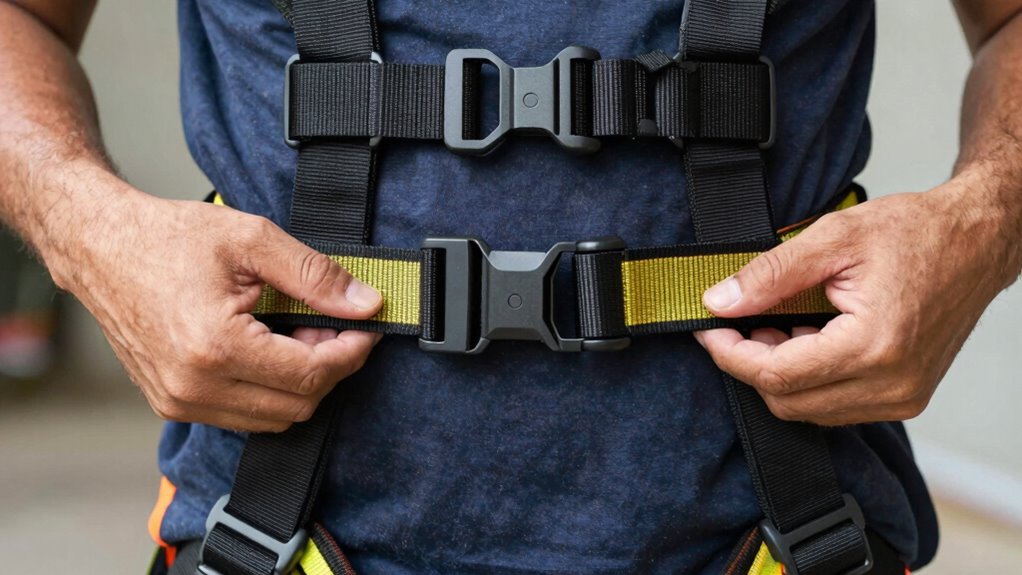
Have you ever wondered if your harness fits correctly? Ensuring a proper fit isn’t just about comfort; it’s about safety. One of the simplest ways to verify this is by doing a harness fit check using the two-finger rule. This method helps you determine if your harness is snug enough to provide protection without restricting movement or causing discomfort. To start, focus on the proper buckle placement. The buckle should sit flat and evenly against your body, without any twists or pinched fabric. When you clip the buckle, make sure it’s secure and that you hear a definitive click. The buckle should lie centrally on your body, usually around your pelvis or chest, depending on the type of harness. If it’s too loose or shifts easily, you risk it slipping out or failing during a fall. If it’s too tight, it could restrict your breathing or cause discomfort, which might distract you or reduce your focus. Adjusting the harness height is equally vital. Your harness must sit at the correct level—usually at your hips for a waist harness or at your chest for a full-body harness. To adjust it properly, loosen the straps, position the harness so that the main D-rings or attachment points are aligned with your shoulders or hips, then tighten the straps evenly. This ensures even weight distribution and maximum protection. Once you’ve adjusted the harness height and secured the buckle, it’s time for the two-finger test. Loosen your harness slightly, then place two fingers—index and middle—between the harness and your body. The fit should be snug enough that your fingers slide in easily, but not so loose that you can fit three or more fingers. If you can, it means your harness is too loose, and you should tighten it further. If you can’t fit two fingers comfortably, it’s too tight, and you should loosen it slightly. This simple test makes it easy to check if your harness is properly fitted before every use. Remember, a well-fitted harness isn’t just about avoiding injuries; it’s about guaranteeing maximum safety and comfort during your activity. Regularly performing this quick check helps you catch any adjustments that might have shifted during movement or wear. The two-finger rule is a quick, effective way to confirm that your harness remains secure and correctly fitted, giving you confidence whether you’re climbing, working at height, or participating in other safety-critical activities. Always prioritize proper buckle placement and adjusting harness height, and make this check a routine part of your safety protocol. Incorporating safety standards into your routine can further enhance your protection and peace of mind during use.

Albcorp Reflective Therapy Dog Vest Harness with 2 Removable Patches, Adjustable Woven Nylon, for Therapy Visits and Volunteer Programs, Black, Extra Large
- Includes Removable Patches: 2 therapy dog patches with reflective stitching
- Enhanced Visibility: Reflective stitching for low-light conditions
- Multiple Size Options: Chest measurement from 15 to 44.5 inches
As an affiliate, we earn on qualifying purchases.
As an affiliate, we earn on qualifying purchases.
Frequently Asked Questions
How Often Should I Recheck My Harness Fit During Use?
You should recheck your harness fit before each use and whenever you notice signs of wear or discomfort. Regular adjustment frequency depends on activity and harness wear, so make it a habit to verify the fit daily if you’re working regularly. Keep in mind that harnesses can loosen or stretch over time, so frequent checks guarantee your safety and proper fit, preventing potential injuries.
What Signs Indicate My Harness Is Too Tight or Too Loose?
Imagine you’re hanging from a tree, and you notice your harness feels uncomfortable or shifts unexpectedly. That’s a sign it’s too tight or loose. For safety concerns, guarantee you can slide two fingers comfortably between the harness and your body during a comfort assessment. If it’s too tight, it causes discomfort and restricts movement. If too loose, it risks slipping or not providing adequate protection.
Can the Two-Finger Rule Be Applied With Gloves On?
You can use the two-finger rule with gloves on, but it might affect fit check accuracy. Gloves can add bulk, making it harder to feel the harness snugly against your body. To guarantee proper fit, do a quick check with gloves on, but consider removing them if you’re unsure. This way, you maintain safety, comfort, and gloves compatibility, ensuring the harness fits correctly and prevents injuries during use.
Does Body Weight or Clothing Affect the Fit Check?
Body weight and clothing can influence your harness fit check. You might find clothing interference or clothing bulk affects how snugly the harness fits, making it seem tighter or looser. Similarly, your body size impacts the two-finger rule, as larger or smaller frames alter the space between the harness and your body. Always adjust and check your harness carefully, considering these factors to guarantee maximum safety and a proper fit.
Are There Different Fit Check Standards for Children or Larger Individuals?
Yes, there are different fit check standards for children and larger individuals. For child safety, harnesses are designed with smaller sizes and often stricter fit criteria to guarantee proper protection. Larger individuals may require adjustments or specialized harnesses that accommodate adult sizing. Always follow manufacturer guidelines for each age group and size to ensure the harness fits securely, preventing injuries and maximizing safety during use.

TRSMIMA Safety Harness Fall Protection – Safety Harnesses Construction Kit
- Adjustable Tongue Buckles: Supports waist 30.7-55.3 inches, weight 130-310 lbs
- High-Strength Steel D-Rings: Dorsal and side rings for secure attachment
- 6ft Dual-Function Lanyard: Fall arrest and shock absorption in one
As an affiliate, we earn on qualifying purchases.
As an affiliate, we earn on qualifying purchases.
Conclusion
By using the two-finger rule to check your harness fit, you considerably reduce your risk of injury. Studies show that proper harness fit can decrease fall-related injuries by up to 50%. So, always ensure you can comfortably slide two fingers between the harness and your body before starting work. Taking just a moment to check your fit can make all the difference in keeping you safe and secure during high-risk activities. Stay vigilant and harness up properly!
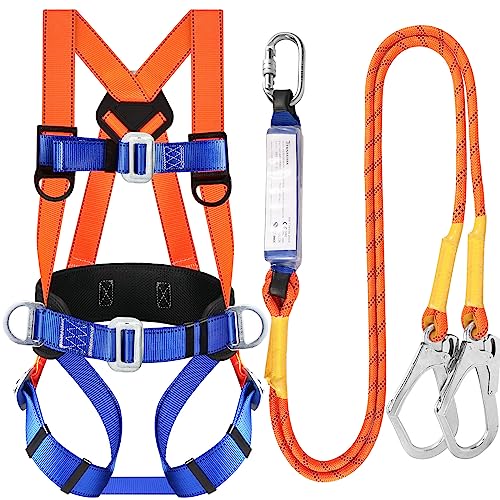
TT TRSMIMA Safety Harness Fall Protection Kit: Full Body Roofing harnesses
- Adjustable Fit for Medium to Large Bodies: Waist 30.7-51 inches, Chest 31.5-47.3 inches
- High-Quality International Standards: Meets ANSI/ASSE Z359.11-2014
- Multiple Adjustment Points: 4 adjustment points for a secure fit
As an affiliate, we earn on qualifying purchases.
As an affiliate, we earn on qualifying purchases.
TT TRSMIMA Safety Harness Fall Protection Kit: Full Body Roofing harnesses
- Adjustable Fit for Medium to Large Bodies: Waist 30.7-51 inches, Chest 31.5-47.3 inches
- High-Quality International Standards: Meets ANSI/ASSE Z359.11-2014
- Multiple Adjustment Points: 4 adjustment points for a secure fit
As an affiliate, we earn on qualifying purchases.
As an affiliate, we earn on qualifying purchases.