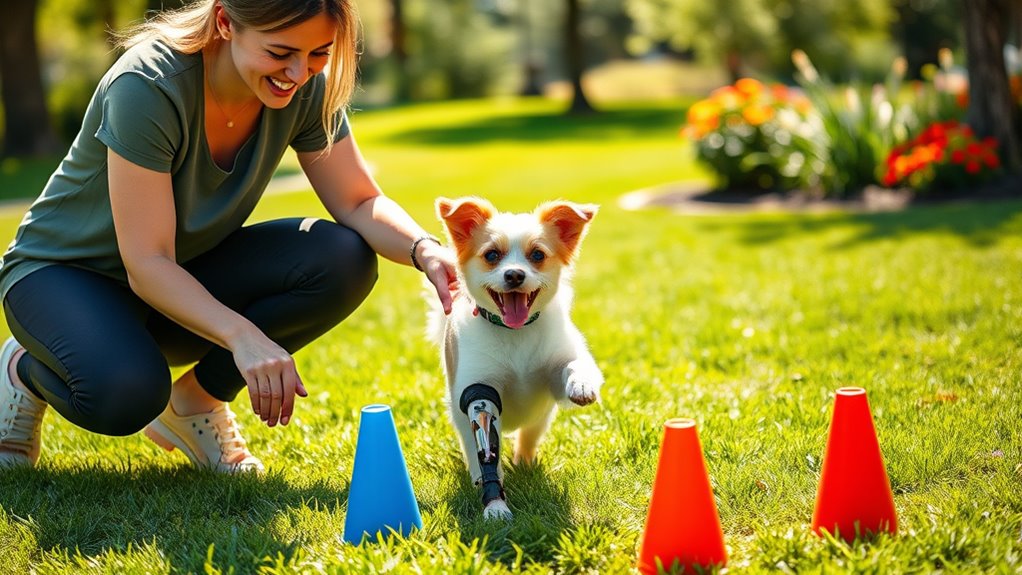

Training dogs with disabilities involves patience, tailored techniques, and positive reinforcement to build confidence and independence. Using assistive devices like wheelchair harnesses or ramps helps them navigate their environment comfortably. Focus on consistent cues, gradual goals, and rephrasing training methods to suit their sensory needs. A supportive, encouraging environment is essential for progress. Want to discover more about effective strategies and how to adapt your approach? Keep exploring to help your dog thrive despite their challenges.

Get pet supplies delivered free with Prime
- Fast, free delivery on millions of items
- Prime Video, Amazon Music and more included
- Member-only deals all year
Key Takeaways
- Use positive reinforcement and patience to gradually teach dogs with disabilities, avoiding rushing or forcing them.
- Introduce assistive devices slowly to build comfort and confidence in their use.
- Tailor training techniques to accommodate sensory impairments, using visual cues or vibrations as needed.
- Maintain a consistent, supportive environment that encourages trust and adapts to the dog’s individual progress.
- Focus on behavior modification to shape desirable actions and reduce problematic behaviors for better independence.
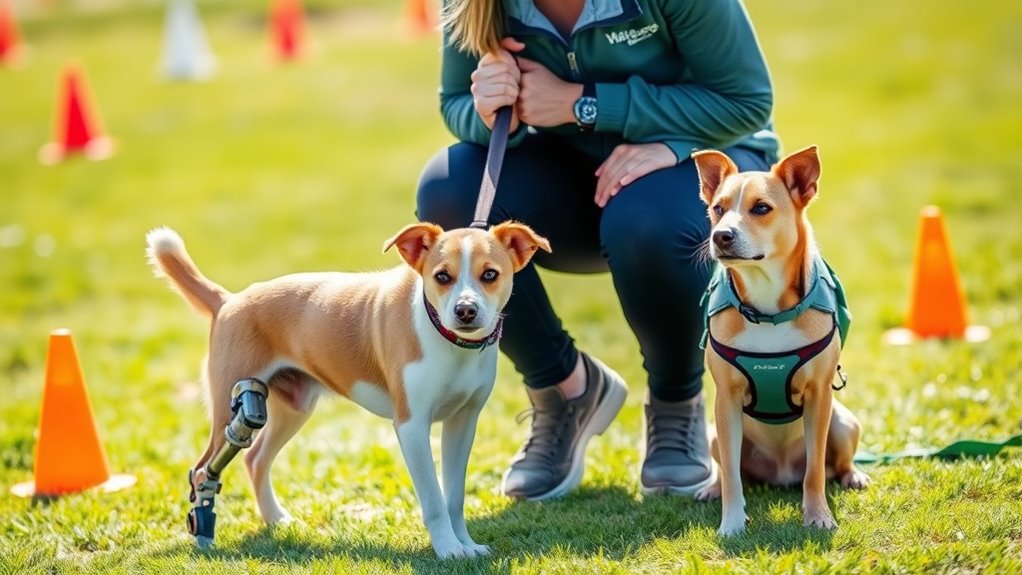
Training dogs with disabilities requires patience and tailored approaches, but with the right techniques, these dogs can learn new skills and improve their quality of life. One effective method involves the strategic use of assistive devices, which can compensate for mobility challenges or sensory impairments. These devices, such as wheelchairs, harnesses, or ramps, enable your dog to navigate their environment more independently. To integrate assistive devices successfully, you need to introduce them gradually, allowing your dog to become comfortable and confident using each tool. Positive reinforcement plays a essential role—praise, treats, or favorite toys help your dog associate assistive devices with positive experiences. Remember, patience is fundamental; rushing or forcing your dog can create fear or resistance. Understanding contrast ratio helps you select the right visual cues and environments that are comfortable for your dog, especially those with sensory impairments. Behavior modification techniques are equally important in training dogs with disabilities. These methods focus on shaping desirable behaviors and reducing problematic ones through consistent cues and rewards. For example, if your dog has difficulty jumping onto furniture, you can train them to use a ramp or step, rewarding them each time they successfully use the aid. Consistency is key—use the same commands and cues so your dog understands what’s expected. When your dog exhibits a behavior you want to encourage, immediately reward them to reinforce the action. Conversely, if they display undesired behaviors, calmly redirect and use positive reinforcement when they correct the behavior. This approach helps build confidence and encourages cooperation, especially when dealing with physical limitations or sensory deficits. Incorporating behavior modification alongside assistive devices can also help address behavioral challenges stemming from frustration or confusion related to their disabilities. For instance, a dog with hearing impairment might become anxious or reactive, but consistent training with visual cues or vibrations can help manage these reactions. It’s important to remain patient and flexible, adjusting your training techniques as your dog progresses. Small, incremental goals keep training manageable and prevent overwhelming your dog. Throughout this process, it’s imperative to observe your dog’s responses and adapt accordingly. Some dogs may take longer to adjust to assistive devices or new behaviors, and that’s okay. Your role is to be supportive, encouraging, and consistent. With time, patience, and tailored training strategies that include assistive devices and behavior modification, you’ll help your dog lead a happier, more comfortable life despite their disabilities.
As an affiliate, we earn on qualifying purchases.
Frequently Asked Questions
How Do Disabilities Affect a Dog’s Learning Ability?
Disabilities can affect a dog’s learning ability by introducing sensory impairments and cognitive challenges. You might notice that dogs with sensory impairments, like vision or hearing loss, need different cues and patience during training. Cognitive challenges can slow understanding or cause frustration. You should tailor your approach, using positive reinforcement and consistent routines, to help the dog overcome these hurdles and learn effectively despite their disabilities.
Are Certain Disabilities Easier to Train Than Others?
Some disabilities are easier to train than others, depending on breed differences and age considerations. For example, certain breeds are more adaptable and respond better to training, while older dogs may take longer but can still learn effectively. You should tailor your training approach based on your dog’s specific needs, focusing on patience and consistency. Recognizing these factors helps you succeed in training your dog, regardless of their disabilities.
What Specialized Tools Assist in Training Disabled Dogs?
You can use assistive devices like harnesses, wheelchairs, and sensory aids to help train disabled dogs effectively. These tools support mobility and comfort, making adaptive techniques easier to implement. For example, specialized harnesses can assist with balance, while vibration or sound cues guide behavior. Incorporating these tools into your training guarantees that your dog feels secure and motivated, ultimately improving their learning process and quality of life.
How Do Trainers Modify Techniques for Different Disabilities?
You modify techniques for different disabilities by tailoring your behavior modification strategies and using positive reinforcement effectively. For example, if a dog has mobility issues, you might incorporate gentle, low-impact exercises and reward progress with treats or praise. For sensory impairments, you rely on tactile cues or scent. Adjust your approach based on the dog’s specific needs, always focusing on building confidence and encouraging desirable behaviors through patience and consistent reinforcement.
Can Training Improve a Disabled Dog’s Independence?
Absolutely, training can turn a disabled dog into a fearless explorer, like a captain charting new waters. By using assistive devices and fostering behavioral adaptation, you empower your dog to navigate daily challenges with confidence. Consistent, tailored training helps them gain independence, transforming obstacles into opportunities. With patience and guidance, you help your dog become more self-reliant, proving that with support, they can thrive beyond limitations.
As an affiliate, we earn on qualifying purchases.
Conclusion
Training a dog with disabilities may test your patience, but it also reveals their incredible resilience. Just like you face challenges with courage, they overcome obstacles with unwavering spirit. While some tasks seem difficult, your bond grows stronger through every small victory. Remember, their disabilities don’t define them—they inspire you. In this journey, patience and love turn limitations into triumphs, proving that together, you can conquer anything.
assistive devices for disabled dogs
As an affiliate, we earn on qualifying purchases.
As an affiliate, we earn on qualifying purchases.
As an affiliate, we earn on qualifying purchases.
Fall Picks
fall essentials
As an affiliate, we earn on qualifying purchases.