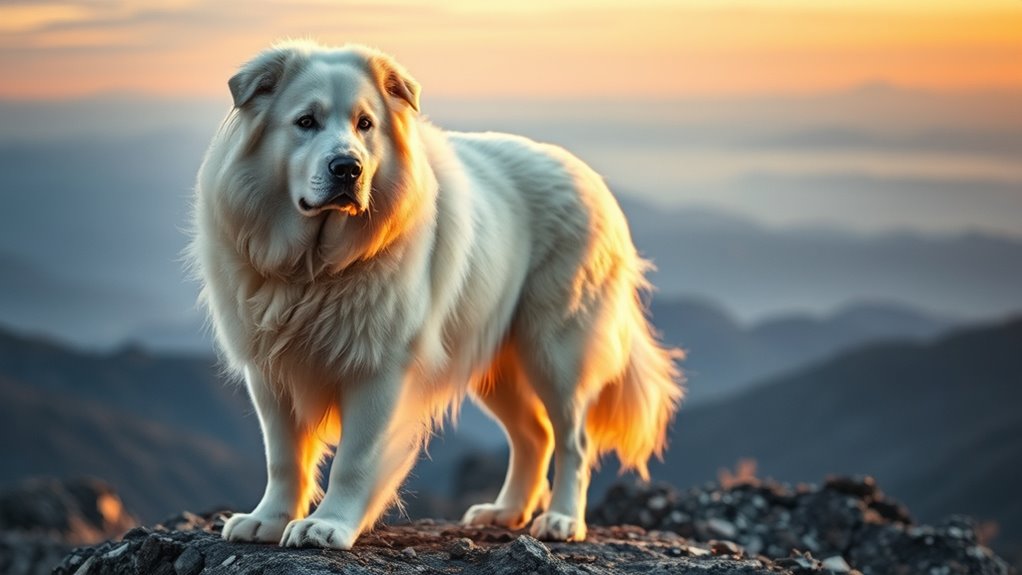

Great Pyrenees have strong protective instincts rooted in centuries of guarding flocks, homes, and loved ones. They’re naturally alert, watchful, and only bark when they sense a real threat, making them dependable guardians. They view their territory as sacred and will patrol it vigilantly, trusting their calm confidence to defend. Proper socialization helps them distinguish threats from harmless situations, ensuring they stay balanced. To understand how these instincts develop and how to nurture them, keep exploring their behaviors.
Key Takeaways
- Bred to safeguard flocks and homes, they are innately alert and attentive to their surroundings.
- They view their territory as sacred, defending it vigorously and patrolling designated areas.
- They communicate threats through selective barking, signaling awareness and readiness to protect.
- Proper socialization ensures they distinguish real threats from benign situations, preventing over-suspicion.
- Their loyalty and calm temperament make them dependable guardians when their protective instincts are properly channeled.
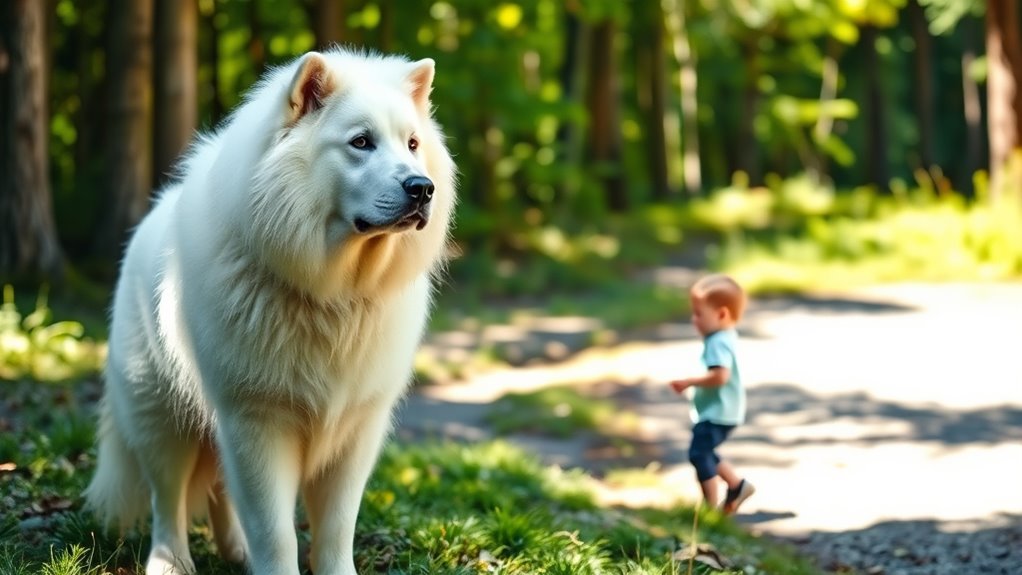
Have you ever wondered why the Great Pyrenees is renowned for its protective nature? The answer lies in its strong guardian behavior and pronounced territorial tendencies. This breed has been bred for centuries to safeguard flocks, homes, and loved ones. Their innate instinct to watch over and defend is deeply ingrained, making them exceptional guardians. When you observe a Great Pyrenees, you’ll notice that they’re naturally alert and attentive, always scanning their surroundings for potential threats. They don’t bark unnecessarily but will become vocal if they sense something unusual, signaling their alertness and readiness to defend. This guardian behavior is not just a trait but a core aspect of their personality, and it’s what makes them so dependable as protectors. Their temperament makes them highly reliable, yet they require proper training to ensure their protective instincts are channeled appropriately.
Their territorial tendencies further amplify their guarding instinct. The Great Pyrenees views its territory as sacred and will go to great lengths to defend it. Whether it’s your home, yard, or even a specific area they consider theirs, they’ll establish a clear boundary and patrol it regularly. This territorial nature can sometimes lead to them being wary of strangers, especially if they perceive an unfamiliar presence as a threat. You’ll notice they often position themselves at vantage points, watching over their domain with unwavering focus. This instinct to defend territory isn’t driven by aggression but by a natural desire to keep their loved ones safe. They’re vigilant and persistent, qualities that have made them trustworthy guardians over centuries.
Understanding these traits helps you appreciate why the Great Pyrenees can be so intimidating to outsiders but so loving and gentle with their family. Their guardian behavior is not about aggression but about protection. They’re deeply loyal and will stand their ground if they perceive danger. However, this territorial tendency requires proper socialization from a young age. You want to ensure your dog learns to distinguish between real threats and benign situations, so they don’t become overly suspicious or territorial. When properly trained and socialized, these traits make the Great Pyrenees a calm, confident protector who will guard your home and loved ones with unwavering dedication. Their natural instinct to defend, combined with their calm demeanor, makes them a unique and admirable breed for those seeking a loyal, formidable guardian.
Great Pyrenees dog training collar
As an affiliate, we earn on qualifying purchases.
As an affiliate, we earn on qualifying purchases.
Frequently Asked Questions
How Can I Tell if My Great Pyrenees Is Overly Aggressive?
You can tell if your Great Pyrenees is overly aggressive by observing vocalization cues like growling or barking excessively, and body language such as stiff posture, raised hackles, or direct staring. If your dog shows signs of lunging, snapping, or backing away aggressively, it indicates over-guarding behavior. Pay attention to these cues, and if you’re concerned, consult a professional trainer or behaviorist to help manage their instincts effectively.
Do Great Pyrenees Protect Their Family From Other Animals?
Ever wonder if your Great Pyrenees will guard your family from other animals? They definitely will, thanks to their strong guard dog behavior and territorial instincts. Your dog naturally perceives your family as part of their territory and will act protectively if they sense an intruder or threat from other animals. This protective nature is a core trait, making them excellent guardians, especially when they understand their boundaries and social cues.
At What Age Do Great Pyrenees Start Showing Protective Behavior?
You’ll notice Great Pyrenees start showing protective behavior around 6 to 12 months old. During puppy development, their breed temperament shines through as they become more alert and confident. As they grow, they develop strong instincts to guard their family, but this varies with individual dogs. Consistent training and socialization help them balance protectiveness with gentle companionship, ensuring they’re both confident and well-behaved protectors.
Can Training Reduce a Great Pyrenees’ Overprotectiveness?
Yes, training can help reduce your Great Pyrenees’ overprotectiveness. You should focus on obedience training and socialization techniques early on, exposing your dog to different people and environments. Consistent commands and positive reinforcement teach your dog appropriate reactions, easing their tendency to overprotect. Over time, this approach helps your dog become more confident and balanced, making them less overly protective and more comfortable in various situations.
Are Female Great Pyrenees as Protective as Males?
You might think female Great Pyrenees are as protective as males, but gender differences often influence protective instincts. Males tend to be more fiercely protective, sometimes like a lion guarding its pride, while females can be just as vigilant but may display it differently. Ultimately, individual temperament matters more than gender, but if you’re seeking the most protective dog, male Pyrenees might have a slight edge.
Great Pyrenees bark control device
As an affiliate, we earn on qualifying purchases.
As an affiliate, we earn on qualifying purchases.
Conclusion
As you watch your Great Pyrenees confidently guard your home, it’s no coincidence their protective instincts run deep. Their gentle nature perfectly balances their fierce loyalty, creating a loyal guardian who instinctively senses danger. When you least expect it, their watchful eyes remind you that sometimes, the strongest protectors appear when you need them most. Embrace their unwavering devotion, knowing that their instinct to protect is woven into their very soul, just like the bond you share.
As an affiliate, we earn on qualifying purchases.
Great Pyrenees protective harness
As an affiliate, we earn on qualifying purchases.
As an affiliate, we earn on qualifying purchases.