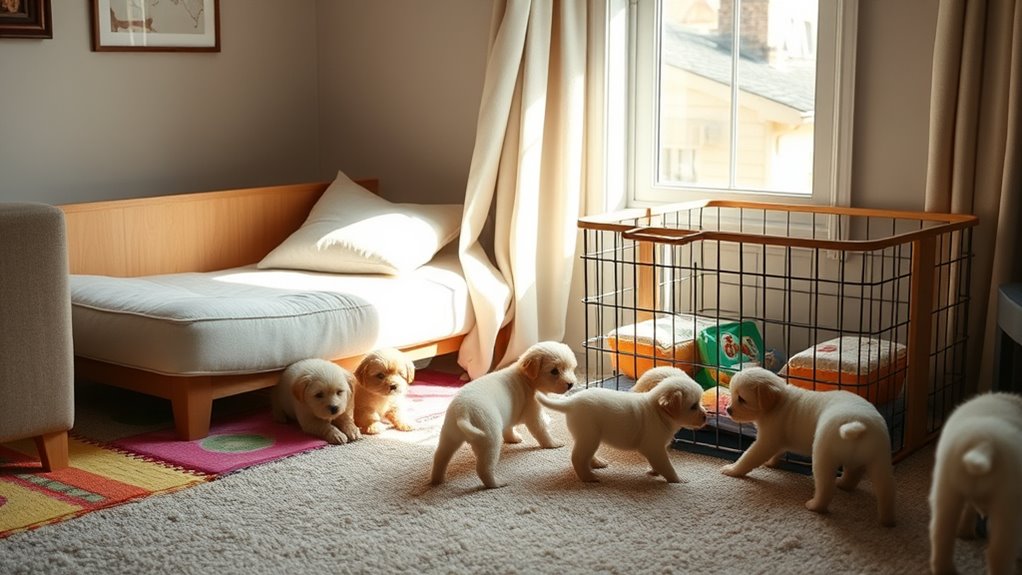

To set up a safe home for puppies, remove hazards like loose cords, small objects, and sharp furniture edges. Secure electrical outlets and use baby gates to restrict access to unsafe areas. Choose sturdy furniture that won’t tip over and place non-toxic plants out of reach. Install cameras for monitoring and secure trash cans to prevent scavenging. Pay attention to detail to create a space where your puppy can explore safely—if you keep going, you’ll find ways to make their environment even better.

Get pet supplies delivered free with Prime
- Fast, free delivery on millions of items
- Prime Video, Amazon Music and more included
- Member-only deals all year
Key Takeaways
- Remove or secure hazardous items like cords, small objects, and sharp edges to prevent injury or choking.
- Use baby gates and designated safe zones to restrict access to unsafe areas.
- Choose non-toxic, pet-safe plants and place them out of puppy reach to avoid ingestion.
- Install cameras and automation devices to monitor and enhance safety when unsupervised.
- Secure trash cans and ensure windows or balconies are properly screened to prevent accidents.
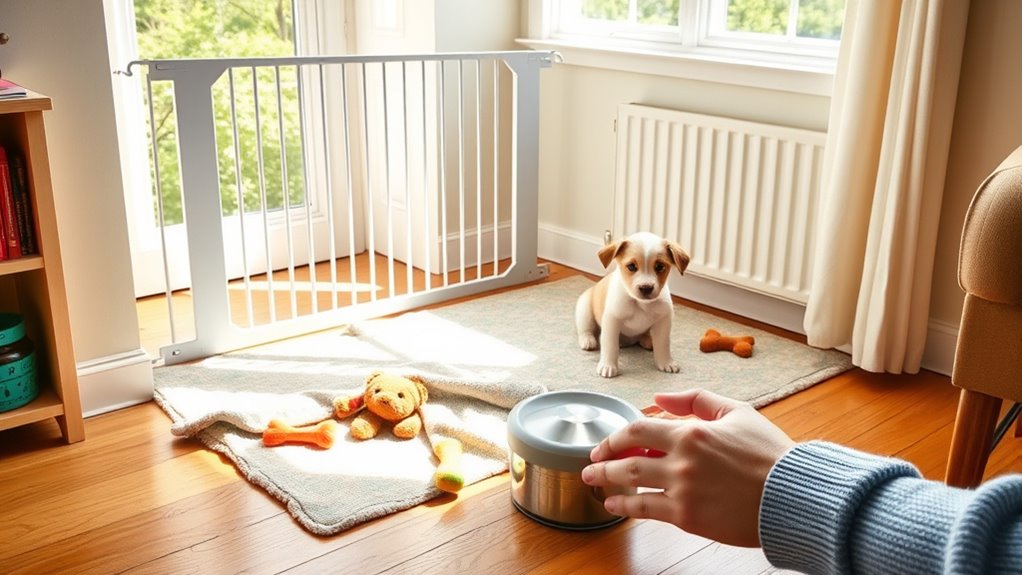
Creating a safe home for your new puppy is essential to guarantee their well-being and comfort. As you prepare your space, focus on puppy proofing furniture to prevent accidents or damage. Start by removing or securing items that could harm your puppy, such as loose cords, sharp edges, or small objects they might swallow. Cover electrical outlets and use baby gates to restrict access to unsafe areas. Consider placing furniture in a way that minimizes the chance of your puppy knocking things over or getting trapped. Using furniture covers or protective pads helps prevent chewing or scratching, which can lead to injuries or damage. When puppy proofing furniture, think about the materials; opt for items that are sturdy and less likely to tip over if your puppy jumps on them. Keep an eye out for any gaps or loose parts that could be pulled off or swallowed. Creating a designated safe zone, such as a crate or a specific room, allows your puppy to explore without constant supervision, reducing the risk of accidents. Additionally, installing automation technology like cameras or smart locks can help monitor your puppy’s activity when you’re not nearby. Choosing non-toxic plants is another critical step. Many popular houseplants are toxic to dogs, so double-check the toxicity level before bringing new greenery indoors. Stick to pet-safe plants like spider plants, Boston ferns, or certain succulents. These plants are not only safe but also help improve indoor air quality, creating a healthier environment for your puppy. When selecting plants, ensure they are free from pesticides or fertilizers that could be harmful if ingested. Place plants in areas that are out of your puppy’s reach, especially if they tend to chew on anything they find interesting. Hanging plants or placing them on high shelves keeps them safe and prevents accidental ingestion. Remember, puppies are curious and will likely explore everything they see; therefore, choosing non-toxic plants reduces the risk of poisoning if your pup nibbles on a leaf. In addition to furniture and plants, consider other safety measures, such as securing trash cans, removing small objects that could be swallowed, and ensuring windows and balconies are properly screened. Creating a safe environment requires attention to detail and foresight. The goal is to give your puppy a space where they can learn and grow safely, without the threat of injury or exposure to hazardous materials. By puppy proofing furniture and selecting non-toxic plants, you set the foundation for a healthy, happy start for your new furry family member. With thoughtful preparation, you’ll help your puppy settle in comfortably and reduce potential dangers from day one.
As an affiliate, we earn on qualifying purchases.
Frequently Asked Questions
How Can I Puppy-Proof Electrical Outlets Effectively?
To puppy-proof electrical outlets effectively, start by using outlet covers to prevent your pup from inserting their paws or mouth. Make certain all unused outlets are covered, and consider installing childproof outlet caps for added safety. Keep cords out of reach or secured, and regularly check for signs of chewing. Prioritizing electrical safety helps protect your puppy from shocks or injuries while exploring your home.
What Plants Are Toxic to Puppies in the Home?
Think of your home as a jungle gym for your puppy—you want to keep it safe and fun. Many indoor plants pose risks, like lilies, azaleas, and philodendrons, which are toxic plant identification concerns. To guarantee indoor plant safety, avoid these and always check for toxic plants before bringing new greenery home. Your puppy’s health depends on recognizing and removing plants that could harm them, keeping your home both lively and safe.
How Do I Secure Household Chemicals Safely From Puppies?
You should store household chemicals in high, secure places using cabinet locks to prevent puppies from accessing them. Always keep chemicals in their original containers with clear labels, and never leave them out on counters or floors. Consider installing child-proof locks on cabinets containing chemicals, and regularly check that these locks are secure. By taking these precautions, you’ll minimize the risk of accidental poisoning and keep your puppy safe.
What Are the Best Ways to Prevent Puppies From Chewing on Furniture?
To prevent puppies from chewing on furniture, you should provide plenty of puppy teething toys to satisfy their chewing instincts. Use furniture protection methods like sprays that deter chewing or bitter apple sprays. Keep household items out of reach, and supervise your pup closely. Consistent redirection to appropriate toys helps reinforce good habits and reduces the temptation to chew on furniture, making your home safer and more puppy-proof.
How Can I Create a Designated Safe Space for My Puppy?
You can create a safe space for your puppy by using crate training combined with engaging puppy toys. Choose a comfortable crate that’s appropriately sized, and introduce it gradually to help your pup feel secure. Fill it with soft bedding and safe toys to keep them entertained. This designated area offers a cozy retreat, promotes good behavior, and helps prevent them from chewing on furniture or exploring unsafe areas.
As an affiliate, we earn on qualifying purchases.
Conclusion
Creating a safe home for your puppies is like planting a sturdy tree—you build strong roots that support their growth. I once visited a puppy’s new home where every corner was thoughtfully prepared; within weeks, they blossomed into happy, confident pups. Remember, your careful setup isn’t just about safety, it’s about nurturing their confidence and trust. When you protect and love them, you’re giving your puppies the best start for a joyful, healthy life.
As an affiliate, we earn on qualifying purchases.
As an affiliate, we earn on qualifying purchases.
Fall Picks
fall essentials
As an affiliate, we earn on qualifying purchases.