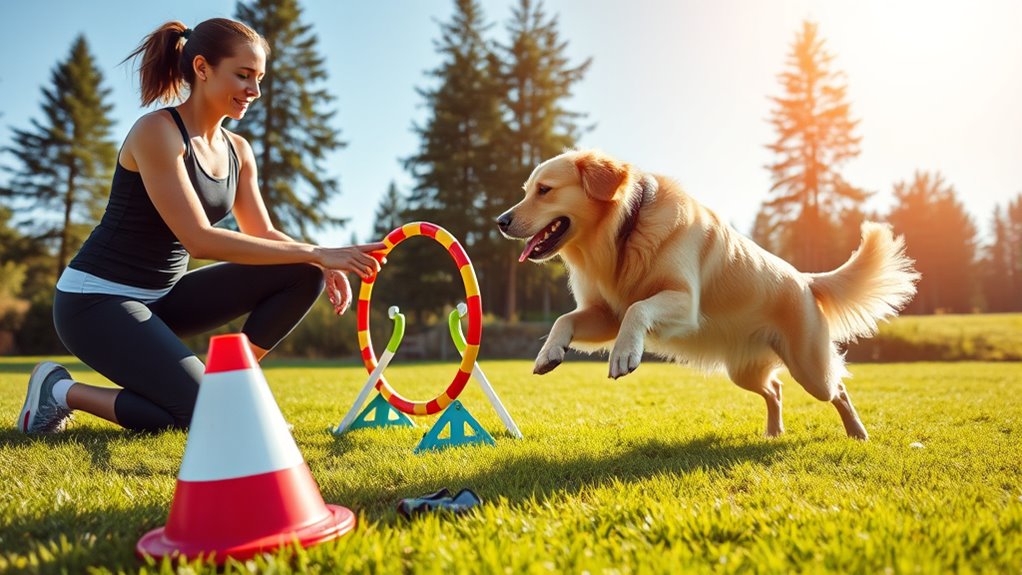

To build a custom training plan, start by understanding your dog’s breed traits, age, and individual behaviors. Set clear, realistic goals and break them into small steps, focusing on essential skills first. Use positive reinforcement and appropriate tools like treats and clickers, maintaining consistency. Track progress and adjust techniques as needed. Incorporate bonding activities and a steady schedule. Keep exploring these steps to develop an effective plan tailored uniquely to your dog.
Open a free Amazon Business account
Business pricing, bulk buying and tax-exempt orders.
As an affiliate, we earn on qualifying purchases.
Key Takeaways
- Assess your dog’s breed, age, temperament, and individual needs to tailor training goals effectively.
- Set clear, achievable milestones and break behaviors into manageable steps to track progress.
- Prioritize essential skills like commands and leash manners, adjusting based on responsiveness and environment.
- Use positive reinforcement tools such as treats, clickers, and consistent cues to motivate and reinforce learning.
- Regularly monitor responses, adjust techniques as needed, and incorporate bonding activities to ensure ongoing success.
As an affiliate, we earn on qualifying purchases.
Assessing Your Dog’s Unique Needs and Characteristics
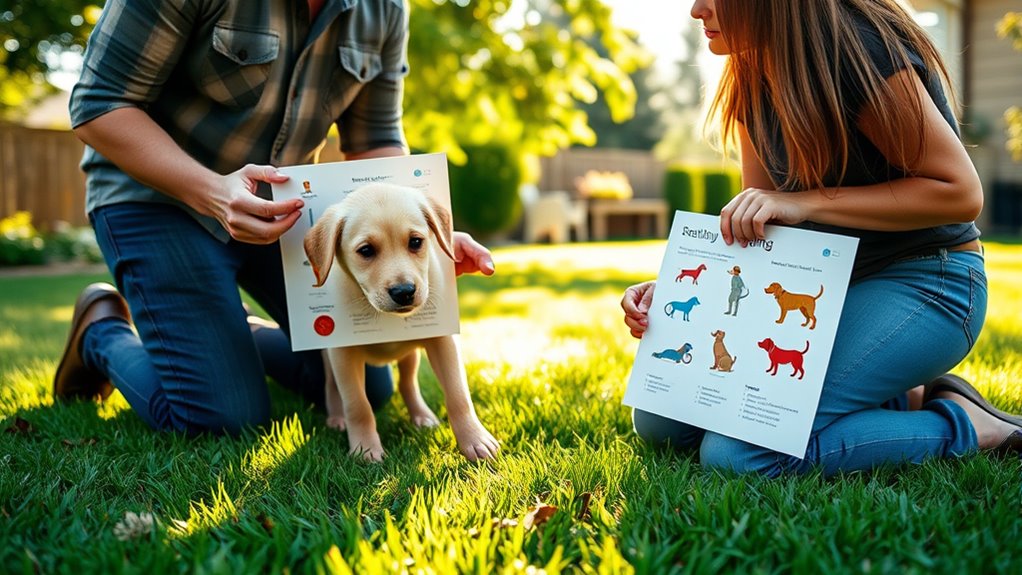
Before creating a training plan, understanding your dog’s individual needs and characteristics is essential. Breed-specific traits influence how your dog learns, responds to commands, and interacts with its environment. For example, herding breeds may need more mental stimulation, while retrievers might thrive on active play. Age-related needs also matter; puppies require gentle, short sessions focused on basic skills, whereas older dogs may need adjusted routines to accommodate health or mobility issues. Observe your dog’s natural behaviors, energy levels, and temperament to identify strengths and challenges. Recognizing these factors helps you tailor training strategies that suit your dog’s unique makeup, ensuring your approach is both effective and compassionate. Additionally, considering dog socialization experiences and exposures can significantly impact your dog’s confidence and behavior. Understanding your dog’s learning style and how it processes information is also crucial in developing a personalized, successful training approach. This understanding forms the foundation for a successful, personalized training plan. Incorporating knowledge about vibrational energy can further enhance your training outcomes, as your dog responds to your emotional state and energy levels, creating a more harmonious learning environment. Acknowledging your dog’s sensory preferences and motivation cues can further enhance training efficiency and enjoyment for both of you.
As an affiliate, we earn on qualifying purchases.
Setting Clear and Achievable Training Goals

To create effective training goals, you need to establish specific behaviors you want your dog to learn. Setting realistic milestones helps you track progress and stay motivated. Prioritizing your objectives ensures you focus on what matters most for your dog’s development. Additionally, understanding training job roles can provide insights into effective techniques and best practices for successful training. Recognizing professional recommendations for training strategies can enhance your approach and improve your dog’s learning experience. Awareness of breed-specific traits, like those found in the Black Golden Retriever, can also guide tailored training methods suited to your dog’s unique needs. Incorporating educational toys into training routines can make learning more engaging and effective.
Define Specific Behaviors
Setting clear and achievable training goals is essential for guiding your dog’s progress effectively. To define specific behaviors, consider your dog’s breed, temperament, and the training environment. Identify what behaviors you want to see, such as sitting on command or walking without pulling. Be precise about these behaviors to avoid confusion. Recognizing behavioral expectations can help tailor your training plan to your dog’s unique needs. Focus on behaviors that are relevant and realistic for your dog’s age and skill level. Break down complex behaviors into smaller steps for easier learning. Remember, consistency is key to reinforcing these behaviors. Additionally, understanding relationship dynamics can improve your approach by fostering trust and cooperation during training. Incorporating noise levels of modern heat pumps into your training space can help create a comfortable environment, especially if your dog is sensitive to sounds.
Set Realistic Milestones
Establishing realistic milestones keeps your training on track and prevents frustration for both you and your dog. It’s essential to set achievable goals that match your dog’s age, breed, and temperament. Avoid falling for training myths that suggest rapid results or overtraining. Instead, focus on gradual progress, celebrating small victories along the way. Good dog nutrition plays a role too, as a well-fed dog has better focus and energy for training sessions. Breaking larger behaviors into manageable steps, making milestones clear and attainable, is crucial for steady development. This approach helps maintain motivation and confidence, ensuring consistent improvement. Remember, patience and realistic expectations are key to building a solid foundation for your dog’s ongoing training success. Incorporating training myths and understanding what is realistic can help set appropriate expectations. Additionally, understanding training milestones can guide you in measuring your dog’s progress effectively. Recognizing the importance of home security systems can also provide peace of mind, allowing you to focus more fully on your training efforts.
Prioritize Training Objectives
Prioritizing training objectives helps you focus your efforts and achieve meaningful progress with your dog. Clear goals guide your training sessions, ensuring you’re consistent and effective. When setting objectives, consider your dog’s training environment and overall dog nutrition, as these influence learning ability. Focusing on essential skills first, like basic commands or leash manners, which are fundamental to a well-behaved dog, before moving to advanced tricks. Regularly monitor training progress to adapt your goals and methods for better results. Additionally, understanding your dog’s training responsiveness can help tailor the approach for optimal learning and engagement. Being aware of your region’s divorce statistics can also remind you of the importance of patience and clear communication, which are key in successful training.
dog training leash and collar set
As an affiliate, we earn on qualifying purchases.
As an affiliate, we earn on qualifying purchases.
Choosing the Right Training Techniques and Tools

To effectively train your dog, you need to select techniques that motivate and encourage good behavior. Using positive reinforcement strategies and the right equipment makes training clearer and more consistent. Remember, sticking to consistent commands helps your dog understand what you expect from them. Incorporating a growth mindset approach can also help you stay patient and adaptable as you progress in training. Additionally, understanding the benefits of airless paint sprayers can inspire you to choose tools that make tasks more efficient and enjoyable, much like selecting effective training methods for your dog.
Positive Reinforcement Strategies
Choosing the right training techniques and tools is essential for effectively using positive reinforcement. When focusing on puppy socialization and leash training, select methods that encourage good behavior without causing stress. Use treats, praise, and play as rewards to motivate your dog. Consistency helps reinforce learning and builds trust. Remember, timing is critical—reward immediately after the desired behavior. Incorporate gentle techniques for leash training, like rewarding calm walking and ignoring pulling. Keep training sessions short and positive to maintain your pup’s interest. Indoor air quality can be up to 5 times worse than outdoor air, making a calm and healthy environment even more important during training. Proper training techniques are vital for success and should be tailored to your puppy’s temperament. Use high-value treats for new or challenging skills — Be patient and consistent in your approach — Avoid punishment, focusing instead on rewarding progress. Additionally, understanding effective leadership qualities can help you establish a confident and calm trainer presence, which positively influences your puppy’s behavior. Developing a clear training plan helps ensure your efforts are organized and goal-oriented, increasing the likelihood of success.
Effective Training Equipment
Selecting the right training equipment is essential for effective dog training, as the tools you use can influence your dog’s behavior and your ability to communicate clearly. Proper equipment helps reinforce positive habits, considering breed-specific traits and dog nutrition needs. For example, a harness suits strong breeds, while a gentle muzzle may be necessary for anxious dogs. Using the right tools minimizes frustration and promotes cooperation.
| Equipment Type | Purpose | Best For |
|---|---|---|
| Clicker | Marking good behavior | All breeds, especially intelligent breeds |
| Harness | Control and safety | Pulling or energetic dogs |
| Treat Pouch | Easy access to rewards | Training sessions on the go |
| Leash | Guidance and control | Basic obedience training |
Consistent Command Usage
Consistent command usage is essential for dog training because it helps your dog understand expectations and reduces confusion. Using the same words for commands across different training sessions reinforces learning and builds reliability. Whether you’re practicing clicker training or crate training, consistency is key. Be sure to use clear, distinct commands and stick to them. This prevents your dog from getting mixed signals and accelerates progress.
- Use the same command words each time for commands like “sit,” “stay,” or “come.”
- Pair commands with cues, such as a hand signal or clicker sound, to reinforce understanding.
- Avoid changing commands or training techniques mid-session to maintain clarity and focus.
educational dog toys for training
As an affiliate, we earn on qualifying purchases.
As an affiliate, we earn on qualifying purchases.
Designing a Consistent Training Schedule
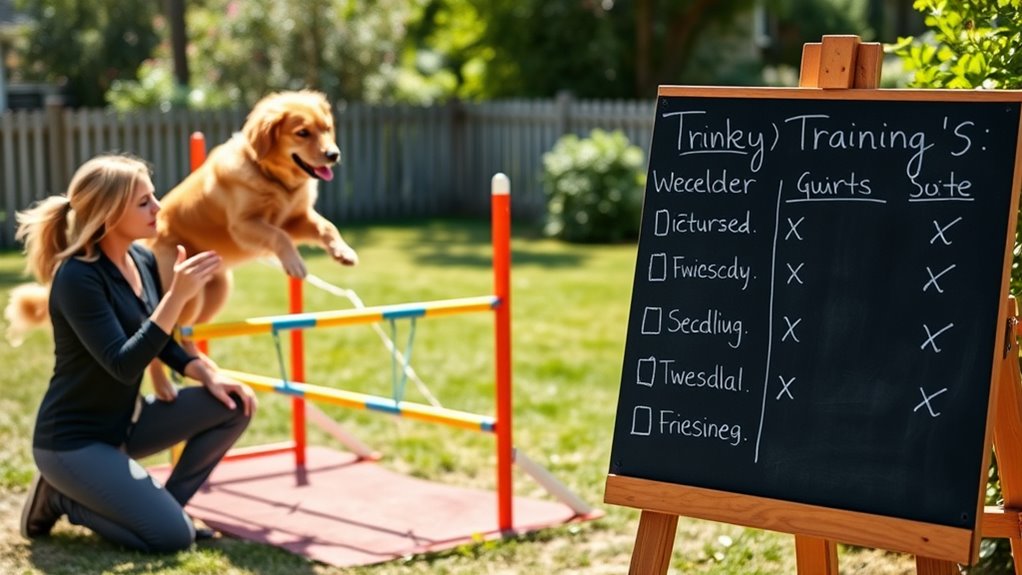
Establishing a steady training routine is essential for your dog’s progress and behavior. Consistency helps your dog understand what to expect and reinforces good habits. Schedule regular training sessions, ideally at the same times each day, to build familiarity. Incorporate activities like leash training during daily walks to develop proper walking manners. Also, include crate training sessions to create a safe space for your dog and promote housebreaking. Keep sessions brief but frequent, around 10-15 minutes, to maintain your dog’s focus and prevent frustration. Be patient and stick to your schedule, so your dog knows when to expect training. By maintaining consistency, your dog will learn faster and develop confidence in new commands and routines.
Monitoring Progress and Making Adjustments

To guarantee your training is effective, you need to regularly monitor your dog’s progress and be ready to make adjustments as needed. Keep an eye on how your dog responds within the training environment, noting improvements or setbacks. Tracking changes helps you identify whether techniques are working or if modifications are necessary. Additionally, consider your dog’s nutrition, as it influences energy and focus during sessions. Adjustments might include altering training intensity or timing, or improving your dog’s diet for better results. Remember, consistency is key, but flexibility ensures progress.
Monitor your dog’s progress regularly and adapt training methods and diet for optimal results.
- Observe your dog’s behavior after each session
- Adjust training methods based on responsiveness
- Ensure proper dog nutrition to support training efforts
Incorporating Positive Reinforcement and Bonding Activities

Incorporating positive reinforcement and bonding activities into your dog’s training creates a supportive environment that encourages learning and trust. Use treats and toys to reward good behavior, making training sessions enjoyable and motivating. Consistently praising your dog with treats during commands reinforces desired actions. Incorporate socialization activities like meeting new people and other dogs to build confidence and strengthen your bond. These interactions help your dog associate positive experiences with different environments and stimuli. Engage in activities that promote trust, such as gentle grooming or play, to deepen your connection. By combining treats, toys, and socialization, you create a positive, engaging training atmosphere that fosters a strong, respectful relationship with your dog.
Frequently Asked Questions
How Do I Handle My Dog’S Training Setbacks or Regressions?
When your dog experiences training setbacks or regressions, stay patient and avoid punishment. Use positive reinforcement to reward small improvements and maintain consistent routines to provide stability. Revisit basic commands, keep training sessions short and engaging, and celebrate progress, no matter how small. Remember, setbacks are normal, so stay positive and persistent, and your dog will regain confidence and continue learning effectively.
What Are Common Signs of Stress or Anxiety During Training?
Think of your dog’s signals during training as a secret language. Signs of stress or anxiety include tense body language, such as stiff posture or lip licking, and subtle vocal cues like whimpering or growling. You might notice your dog avoiding eye contact or trying to escape. Recognizing these signs lets you adjust your approach, ensuring training remains positive and your dog feels safe and confident.
How Can I Adapt the Plan for Multiple Dogs?
When training multiple dogs, you should adapt your plan to balance group training and individual attention. Use group sessions to promote social skills, but also dedicate time for one-on-one training to address each dog’s unique needs. Keep sessions engaging and consistent, and observe each dog’s responses. By blending these approaches, you guarantee effective training while fostering strong bonds with all your dogs.
What Should I Do if My Dog Loses Interest in Training?
If your dog loses interest in training, think of it like a flickering light—bright but easily dimmed. You should try new motivational techniques, like treats or praise, to reignite their enthusiasm. Keep training consistent but fun, mixing up activities to prevent boredom. Short, frequent sessions work best, and always end on a positive note. This approach helps maintain your dog’s focus and keeps their interest alive.
How Do I Modify Training for Senior or Special Needs Dogs?
When training a senior dog or one with special needs, you should adapt your approach. Use shorter, more frequent sessions to match their energy levels, and choose gentle, positive reinforcement methods. Be patient and focus on their unique abilities. Adjust commands to their capabilities, and guarantee comfort and safety at all times. Tailoring your training helps your senior or special needs dog stay engaged and builds trust.
Conclusion
Your training journey is like planting a seed that blooms into lifelong trust and understanding. By nurturing your dog’s unique needs and consistently tending to their growth, you cultivate a bond that’s stronger than words. Remember, each small step is a drop of water that nourishes your shared future. As your efforts blossom, you’ll see your relationship flourish into a beautiful, enduring garden of companionship and love.
Fall Picks
fall essentials
As an affiliate, we earn on qualifying purchases.