TL;DR
A Thanksgiving dog treat jar is a reusable container filled with treats chosen for the recipient dog, such as a suitable dog treat made with plain pumpkin. Check every ingredient, label the contents and storage instructions, and keep the jar somewhere the dog cannot knock it over or chew it. Homemade treats may need refrigeration, and a veterinarian can advise about new foods for dogs with health conditions.
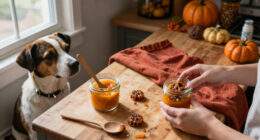
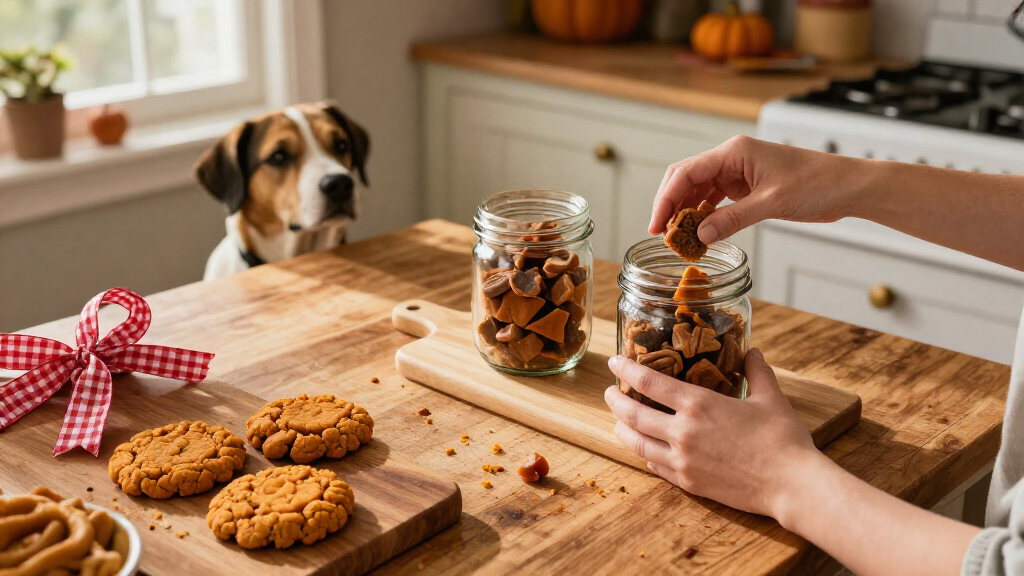
A jar of dog treats can sit beside the Thanksgiving centerpiece, its orange ribbon catching the light, while the turkey and pie stay on the human menu. That small distinction matters: holiday food can hide ingredients dogs should avoid, even when a bite looks harmless.

Get pet supplies delivered free with Prime
- Fast, free delivery on millions of items
- Prime Video, Amazon Music and more included
- Member-only deals all year
A Thanksgiving dog treat jar is a festive container filled with treats selected for a particular dog. You can make one at home or assemble it from packaged treats, then give it as a seasonal gift, a host present, or a treat station for your own dog.
This guide shows you how to pick suitable contents, store them with care, choose a practical container, and label a gift so the recipient knows what is inside. You’ll also see why plain pumpkin in a dog-safe recipe is different from pumpkin pie filling, and why a jar should never become a shortcut for sharing seasoned leftovers.
Choose treats suited to the individual dog; plain unsweetened pumpkin in a dog-safe recipe differs from pumpkin pie filling.
Keep chocolate, grapes, raisins, macadamia nuts, xylitol, onions, garlic, and heavily seasoned holiday dishes out of the jar.
Let homemade baked treats cool fully before sealing, then follow the recipe’s storage directions and label the preparation date.
List ingredients, storage instructions, and the dog’s name on a gift so the recipient can check the treats against the dog’s diet.
Keep glass jars and decorative parts away from dogs that may knock them over, chew them, or pull at dangling ties.
What makes a Thanksgiving dog treat jar a thoughtful gift?
A Thanksgiving dog treat jar is a reusable, festive container holding treats selected for a dog’s needs and made easy for its person to identify. People often use these jars as seasonal gifts, host presents, or countertop treat stations. The best ones pair a cheerful look with practical details: known ingredients, sensible storage directions, and a container that can be put away safely.
That practical side is what makes the gift feel personal. Imagine you’re bringing dinner to a friend who has a small dog named Maple. A jar of small, clearly labeled treats says you remembered Maple, while a note listing ingredients lets your friend check the label against Maple’s diet before opening it.
Presentation can be simple: a washable fabric tie, a paper tag shaped like a leaf, or a warm amber-colored container. Jars are festive, but their charm doesn’t depend on glass. A sturdy food-safe container may suit a household where an excited dog jumps at the counter or investigates anything that smells like peanut butter.
You can fill the container with homemade treats or use packaged treats that remain in their original packaging, if that makes ingredients and dates easier to verify. In either case, tell the recipient the jar is for the dog. That prevents a sweet-looking container from being mistaken for cookies meant for guests.
Products Worth Considering

PetSafe Guardian GPS 2.0 Dog Fence and Tracking Collar

PETLIBRO Automatic Pet Feeder with Camera, Dual Bowls, 5L, Black

Fi Series 3+ Smart GPS Dog Collar and Health Tracker, Pink, Medium
As an affiliate, we earn on qualifying purchases.
Which treats belong in the jar—and which holiday foods should stay out?
Choose treats made from ingredients suitable for the individual dog, and keep human Thanksgiving dishes out of the jar. Plain, unsweetened pumpkin can appear in dog-safe treat recipes, but pumpkin pie filling is different: it may include sugar and spices. A recipe designed for dogs is a clearer starting point than adapting a slice of dessert.
Common foods to keep away from dogs include chocolate, grapes and raisins, macadamia nuts, and xylitol. Avoid onions and garlic, too, along with foods heavily seasoned with salt or spices. Holiday dishes can combine several ingredients in one serving, so a spoonful of stuffing or gravy is hard to assess by appearance alone.
For example, a plain piece of turkey may seem like an easy addition, but seasoned turkey skin, bones, gravy, and rich drippings raise separate concerns. Don’t use leftovers as jar filler. Packaged dog treats or homemade treats from a dog-specific recipe give you a more predictable list of ingredients.
Before giving a new treat, check the full ingredient list and think about the dog who will eat it. Dogs with allergies, pancreatitis, diabetes, or other health conditions may need tailored advice from a veterinarian before trying new foods. When you’re unsure about an ingredient, leave it out and ask the dog’s person or veterinarian instead of guessing.
A holiday treat is only thoughtful when the dog can safely have it. Keep people food and dog treats separate, even when their seasonal flavors look similar.
How can you assemble a jar that’s easy to give and easy to use?
To assemble a Thanksgiving dog treat jar, start with the recipient dog’s needs, choose verified treats, add a complete label, and store the finished jar as directed. This simple order helps you avoid a common gifting snag: a pretty container that arrives without enough information to tell whether the dog can have its contents.
- Ask the dog’s person about allergies, dietary restrictions, and whether the dog already eats a particular treat.
- Choose the contents. Use dog-specific packaged treats or a recipe with ingredients suited to that dog. Keep treats small and occasional, with portions guided by the dog’s diet and the product or recipe directions.
- Check storage guidance. Note whether the treats need a cool, dry place, refrigeration, or freezing.
- Prepare a clean, dry container. Let baked treats cool fully before sealing them so trapped warmth or moisture doesn’t undermine storage.
- Label the gift with the dog’s name, ingredients, preparation date, and storage instructions. Make it clear that the contents are for dogs.
- Place it somewhere secure. Keep glass out of reach, particularly around dogs who may chew or bump the jar.
Each step resolves a different uncertainty for the recipient. Checking the dog’s needs prevents a gift from becoming unusable; checking storage keeps the treats in suitable conditions; and the label lets the recipient make an informed choice later, even if the original conversation has been forgotten. A jar that is easy to identify and store is more useful than one that simply looks polished.
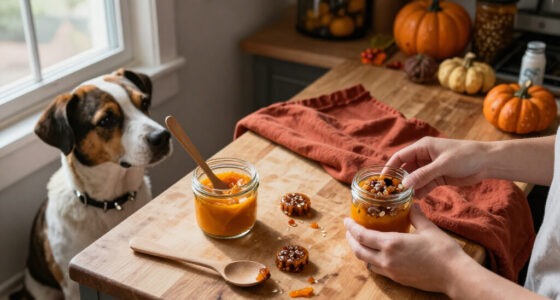
Say you bake a small batch of crisp pumpkin biscuits for your sister’s terrier. Once the biscuits cool completely, you can place them in a clean container and attach a tag reading, “For Otis: ingredients, baked date, store airtight; follow recipe storage directions.” If they need refrigeration, write that plainly rather than assuming the recipient knows.
There’s no need for elaborate decoration. A tag that’s easy to read and a jar that’s easy to open with clean hands will help more than a ribbon that slips off or covers the label.
What jar and storage plan keep treats in good shape?
Use a clean, food-safe container that closes securely, then follow the storage directions for the specific treats inside. Glass can work on a high shelf, but it can break if a dog knocks it down or chews it. If that seems possible in your home, choose a durable container and keep it beyond the dog’s reach.
Moisture changes how homemade treats store, so don’t assume an airtight seal makes every recipe safe on the counter. A dry, crisp biscuit and a soft treat with moist ingredients may need different storage. Let baked treats cool fully before sealing, and use the recipe’s instructions to decide whether to refrigerate or freeze them.
For instance, if you bake soft treats with pumpkin on Sunday and plan to bring them to Thanksgiving dinner on Thursday, check the recipe’s storage guidance before you choose the packaging. Refrigerate or freeze them when directed, and tell the recipient how to store them after the meal. A sealed jar can keep out dust, but it cannot replace safe storage.
Include a preparation date and storage instructions on the tag. If you’re using packaged treats, keep their packaging or copy the useful storage details onto the gift label. When the storage guidance is missing or unclear, choose a different product or recipe rather than inventing a shelf life.
Packaging can become part of the presentation: a small, clean container nestled in a reusable cloth bag looks finished without complicated craft supplies. Just make sure ties, tags, and decorations don’t end up within the dog’s reach when the jar is opened.
What should your gift label tell the dog’s person?
A good dog treat gift label tells the recipient what the treats contain, when they were prepared, how to store them, and whether they’re meant for a dog. These details help the dog’s person decide whether the treats fit the dog’s diet and keep them in suitable conditions after opening.
Think of the label as a small handoff between the person who made the treat and the person who knows the dog best. If you baked biscuits with plain pumpkin, oats, and another ingredient, list each one; don’t rely on a cheerful name like “Harvest Bites” to explain what’s inside. Also mention common allergens when relevant, since even a familiar recipe can contain something that doesn’t suit a particular dog.
Clear labels make seasonal gifts easier to use. A note might read: “For Maple. Dog treats made with: [ingredient list]. Prepared: [date]. Store: [recipe instructions]. Check ingredients against Maple’s diet before serving.” Fill in the bracketed details from the recipe or package rather than guessing.
Ask the recipient to offer treats as occasional extras and to account for the dog’s usual diet. The right amount varies with the dog’s size, health, diet, and the treat’s calories. If the dog has a health condition or follows a therapeutic diet, its veterinarian can advise whether a new treat fits.
Labeling also helps prevent mix-ups when several guests bring snacks. A dog treat jar can be pretty enough for a holiday table, but its tag should make the intended eater unmistakable.
How can you make the jar festive without making it fussy?
You can make a Thanksgiving dog treat jar feel seasonal with a simple color, texture, or tag while keeping the treats and container practical. A rust-orange tie, a leaf-shaped paper label, or a reusable cloth wrap gives the gift a harvest look without disguising the contents or crowding the storage directions.
A useful approach is to treat decoration like a frame around a photograph: it draws your eye, but the important part remains easy to see. If you use a clear container, the treat shapes and label can do most of the work. If you prefer an opaque container, make the ingredient and storage tag especially easy to read.
For a host gift, place the jar in a small basket beside a card that says it’s for the household dog. For your own kitchen, keep the container on a shelf or counter where you can reach it and the dog cannot. That keeps the festive display from turning into an unsupervised buffet.
Use decorations that are easy to remove before opening and keep small parts away from curious noses. A long ribbon hanging from a low jar may invite tugging; a short tie secured to the lid is less likely to dangle. Reusable packaging adds value after the holiday, especially if the recipient can wash it and refill it with suitable treats later.
The goal isn’t to imitate a human cookie tin. It’s to create a gift that looks warm on the table, makes the dog’s person smile, and still communicates exactly what the dog can eat and how to keep it fresh.
Frequently Asked Questions
What can I put in a Thanksgiving dog treat jar?
Use packaged dog treats or treats made from a dog-safe recipe with ingredients suitable for that dog. Plain, unsweetened pumpkin may appear in some dog treat recipes, but pumpkin pie filling can contain sugar and spices. Check every ingredient and avoid seasoned leftovers.
Can dogs eat pumpkin pie?
Pumpkin pie isn’t a good choice for a dog treat jar. It often contains added sugar, spices, and rich ingredients, and pumpkin pie filling differs from plain pumpkin. Choose a treat made with ingredients appropriate for the dog instead.
How long do homemade dog treats last in a jar?
It depends on the recipe’s ingredients and moisture, so don’t assume a sealed jar makes treats shelf-stable. Follow the recipe’s storage directions, let baked treats cool fully before sealing, and label the preparation date. Refrigerate or freeze treats when the recipe calls for it.
Can I give Thanksgiving dog treat jars as gifts?
Yes. Include the ingredient list, preparation date, and storage instructions, and make clear that the treats are for dogs. The recipient can then check whether the contents suit their dog’s allergies, diet, and health needs.
Are Thanksgiving leftovers safe to put in a dog treat jar?
Don’t use leftovers as jar filler. Holiday dishes may contain unsafe seasonings, rich fats, bones, or ingredients such as onions and garlic, and a mixed dish can be hard to assess. Use treats with a clear ingredient list instead.
What kind of jar is safest for dog treats?
A clean, food-safe container that closes securely is useful. Glass can break if a dog knocks it over or chews it, so store glass out of reach and consider a sturdy alternative in homes with curious dogs. Keep ribbons and small decorations away from the dog, too.
Conclusion
Make the jar festive, but let ingredient checks and clear storage directions do the important work. Choose treats for the individual dog, label every homemade batch, and ask a veterinarian about new foods when health conditions or dietary needs make the choice less straightforward.
A good treat jar leaves the dog’s person informed and the dog’s tail thumping. Set it safely out of reach, and let the little harvest-colored gift wait for its proper moment.