
TL;DR

Get pet supplies delivered free with Prime
- Fast, free delivery on millions of items
- Prime Video, Amazon Music and more included
- Member-only deals all year
A report by veterinary specialist Peter S. Chapman describes how advanced imaging and AI can support veterinary care, while emphasizing that clinicians must interpret results and decide whether they will help an individual patient. Two cases at Red Bank Veterinary Hospital show PET/CT informing both timely treatment and a decision to avoid a high-risk procedure. The report also cites a 2026 survey finding that many veterinary workers have received little or no formal AI training.
A report by veterinary specialist Peter S. Chapman describes how advanced imaging and artificial intelligence can inform veterinary care while leaving treatment decisions to clinicians and pet owners. Two cases at Red Bank Veterinary Hospital in New Jersey illustrate the point: PET/CT imaging helped identify a small tumor in one dog and supported avoiding a high-risk biopsy and surgery for another.
Chapman’s report focuses on PET/CT, which combines computed tomography’s detailed images of anatomy with positron emission tomography’s measurement of activity using a radiopharmaceutical tracer. The combined information can help veterinarians assess an abnormality’s location and biological activity. The report says the technology is used especially in oncology and may also help investigate issues such as fever of unknown origin or unexplained lameness.
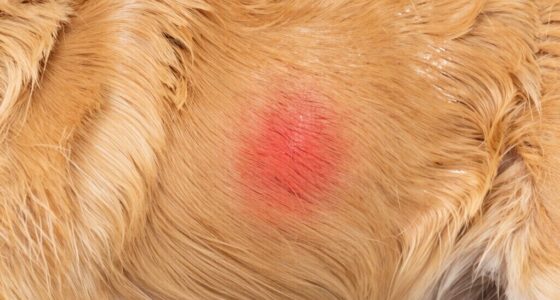
In the first hospital case, a dog received PET/CT for an unrelated reason. The scan revealed a previously unrecognized subcutaneous lesion; an excisional biopsy identified it as a mast cell tumor. The report says finding the tumor before it progressed or caused clinical signs allowed the veterinary team to provide timely treatment that was likely curative.
In the second case, PET/CT was used to assess an atypical cystic lesion in a dog’s liver. The lesion showed no uptake of the radiopharmaceutical tracer, which, according to Chapman, suggested a low likelihood of aggressive disease. The team avoided a high-risk liver biopsy and surgery. Subsequent ultrasound examinations found the lesion stable, supporting that course of action, the report says. The cases show how a test can contribute to different choices—not only whether to intervene, but whether a risky intervention may be unnecessary.
How Imaging Shapes Treatment Choices
The cases matter because advanced tests can add information without settling every clinical question. Chapman cautions that an imaging finding alone will rarely establish a diagnosis and may lead to further testing, including for incidental findings. For veterinary teams, the central question is whether a result is likely to change care for that patient, rather than what a machine is capable of detecting.
That distinction affects pets and the people making decisions for them. A proposed test can involve financial costs, anesthesia, travel and other burdens. Its value also depends on whether the result clarifies prognosis or quality of life and whether there is a treatment the family would choose. The report argues that diagnostics should support shared decision-making, not determine it automatically.
Chapman also describes AI as a potential aid for diagnostic support, medical documentation, client communication and administrative work. If it reduces time spent organizing information or completing records, it may leave clinicians more time with patients and owners. But AI output can be incomplete, biased or wrong. Human review and accountability remain necessary, especially when results could affect diagnosis or treatment.
Products Worth Considering

iRobot Roomba Max 775 Pet Robot Vacuum and Mop Combo

iRobot Roomba Max 715 Pet Robot Vacuum

Fi Series 3+ GPS Dog Collar & Tracker, Membership Required, Gray Large
As an affiliate, we earn on qualifying purchases.
The Limits Behind New Diagnostic Tools
Chapman places the technologies within two decades of rapid change in veterinary medicine, including growth in advanced diagnostics, AI and minimally invasive procedures. The report notes that roughly one in four dogs will develop cancer during their lifetime, giving earlier and more precise assessment particular relevance in veterinary oncology. That figure describes lifetime risk; it does not establish that screening every dog with advanced imaging is appropriate.
The report’s examples come from two patients at one hospital, not a controlled study demonstrating how PET/CT performs across a wider population. They illustrate possible effects on care, while broader questions about diagnostic accuracy, patient selection, cost and outcomes require evidence beyond the cases described. Chapman’s account also stresses that two animals with the same diagnosis may receive different plans because of age, temperament, expected quality of life and the family’s circumstances.
A 2026 study cited in the report surveyed 673 veterinary workers. Chapman says 72.3 percent believed AI would change the profession, while 90.5 percent reported receiving little or no formal AI training. The report does not provide further study details in the supplied material, so those percentages should be read as findings from that survey rather than as a measure of every veterinary workforce.
What These Cases Cannot Establish
The report does not provide the full imaging records, diagnostic performance data or long-term outcomes needed to determine how often PET/CT would produce similar results in other patients. In the liver case, stable ultrasound findings support the decision described, but they do not by themselves establish a general rule for interpreting absent tracer uptake. The report also does not specify the costs, risks or availability of PET/CT at different veterinary practices.
For AI, the supplied report does not identify specific products or describe their error rates, privacy protections or clinical validation. The 2026 survey figures are reported without details about the survey’s sample composition or methods. It is also unclear what formal training or practice policies veterinary workplaces will adopt. These gaps matter because performance and appropriate use may differ between tools and clinical settings.
Questions Before the Next Test
Chapman recommends that veterinary teams discuss whether a test is likely to alter treatment, clarify prognosis or quality of life, and justify its financial and practical burdens. They should also explain what a result can and cannot show before a client agrees to testing. The report does not announce a new clinical guideline or a scheduled follow-up study; its next step for practice is careful, case-by-case use of the available tools.
For AI adoption, the report points to the need for staff training and clear policies covering data privacy, appropriate use, human oversight and verification. How quickly practices establish those policies, and whether training addresses the gaps reported in the 2026 survey, remain open questions. Until then, the report’s stated approach is to treat technology as support for veterinary expertise and communication, not as a substitute for either.
Key Questions
What is PET/CT in veterinary medicine?
PET/CT combines two imaging methods: CT shows detailed anatomy, while PET uses a radiopharmaceutical tracer to show metabolic activity. Together, the images can help clinicians assess both the structure and activity of an abnormality.
What did PET/CT reveal in the two cases?
One scan identified a small lesion that a biopsy showed was a mast cell tumor. In another dog, no tracer uptake in an atypical liver lesion suggested a low likelihood of aggressive disease; the team avoided a high-risk biopsy and surgery, and later ultrasound examinations found the lesion stable.
Does the report recommend PET/CT for every dog?
No. Chapman says teams should consider whether results are likely to change care and whether anticipated benefits justify costs and other burdens. The two cases illustrate possible uses; they do not establish that PET/CT is appropriate for every dog or situation.
Can AI make veterinary decisions without a clinician?
The report says AI can assist with tasks such as documentation and diagnostic support, but its output may be incomplete, biased or incorrect. Veterinary professionals must evaluate it within the patient’s clinical picture and remain accountable for decisions.
Source: veterinarypracticenews.com