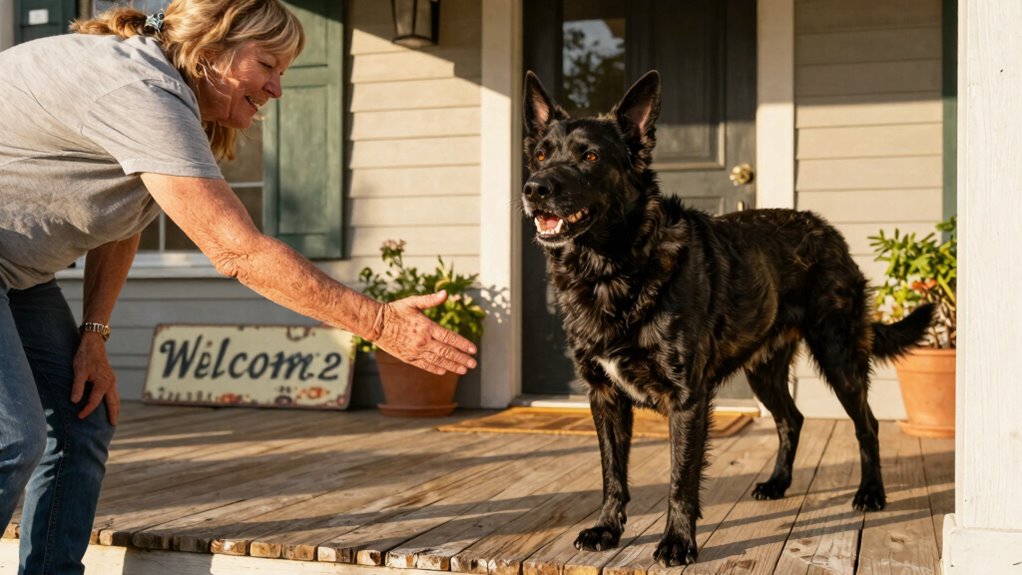

Allowing your dog to freely bark or jump at porch greetings trains them to be overly reactive and develop bad barking habits quickly. Without proper boundaries and control, your dog may become excited or aggressive when visitors arrive, leading to constant nuisance barking. This often stems from a lack of socialization or inconsistent training. To prevent this, you need to set clear limits and teach calm greetings. Keep going to discover simple steps to curb this behavior effectively.

Get pet supplies delivered free — and shop member deals
- Fast, free delivery on millions of items
- Access to Prime Big Deal Days deals on October 6–7
- Prime Video, Amazon Music and more included
Key Takeaways
- Allowing dogs to freely bark and jump during porch greetings reinforces attention-seeking barking habits.
- Ignoring signs of overexcitement can lead to habitual barking whenever visitors or neighbors pass by.
- Inconsistent training on greeting manners encourages dogs to bark excessively to get noticed.
- Using uncontrolled, spontaneous greetings without boundaries can condition dogs to bark for attention.
- Neglecting proper socialization increases the likelihood of reactive barking during porch encounters.
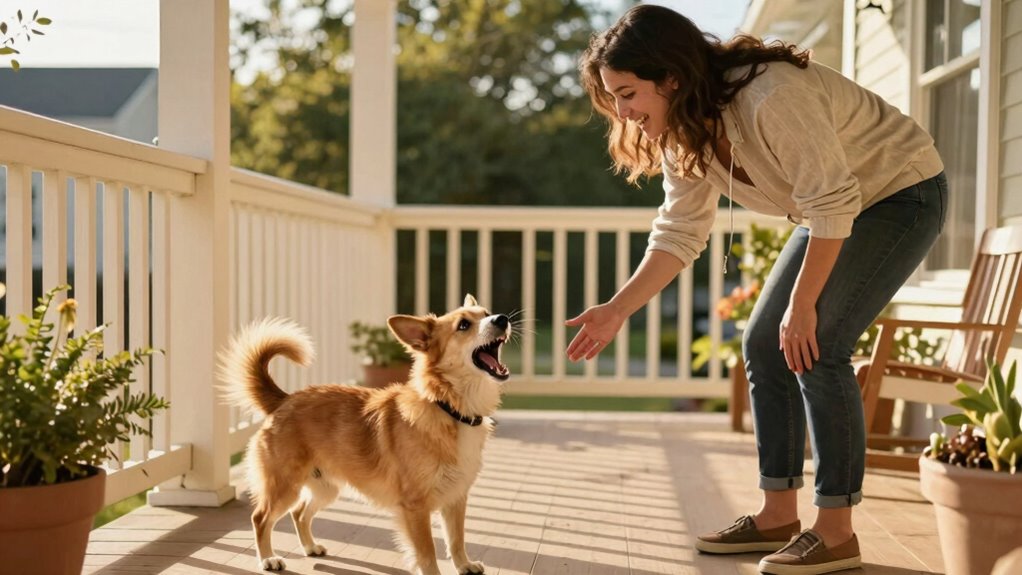
Many communities have a simple yet meaningful tradition known as the porch greeting habit, where neighbors casually wave or chat as they pass by each other’s homes. This small act of friendliness helps build a sense of community and trust. But if you’re a dog owner, this tradition can also influence your pet’s behavior, especially when it comes to dog socialization and greeting etiquette. How you manage these interactions can make a big difference in your dog’s response to strangers and other dogs.
Porch greetings foster community and trust, but managing dog interactions ensures polite, confident, and calm behavior during these friendly exchanges.
When you’re out on your porch, it’s tempting to let your dog greet everyone freely. However, this can quickly turn into a problem if your dog isn’t properly socialized or if you’re not attentive to greeting etiquette. Dogs that aren’t used to meeting new people or animals may become overly excited, nervous, or even aggressive. To prevent this, you need to be deliberate about how your dog interacts with passersby. Teaching your dog proper socialization skills guarantees they’re comfortable and polite during these encounters. This means exposing them gradually to different people, animals, and environments, so they learn appropriate behavior. Proper dog socialization is essential in helping your pet manage their reactions during porch greetings.
Greeting etiquette also plays an essential role. You should control the situation, keeping your dog at a manageable distance until you’re confident they’re calm. When someone approaches, use a calm voice to introduce your dog, and encourage gentle behavior. If your dog gets too excited or pulls on the leash, it’s a signal that they need more training or socialization before joining these porch greetings. Remember, you’re setting the tone—not only for your dog’s behavior but also for how neighbors interact with your pet. When you model polite greeting etiquette, you teach your dog to remain relaxed and respectful, reducing the chances of bad barking or unwanted jumping.
Additionally, using smart home technology such as cameras or remote training devices can help monitor and manage your dog’s behavior during social interactions, especially if you’re not always able to be physically present. These tools can provide valuable feedback and help reinforce training cues from afar. Proper training your dog and establishing clear boundaries are key to maintaining a peaceful and friendly neighborhood environment. If you neglect consistent training, your dog may develop bad barking habits that can quickly become ingrained and difficult to correct later.
As an affiliate, we earn on qualifying purchases.
Frequently Asked Questions
How Can I Prevent My Dog From Barking Excessively During Porch Greetings?
To prevent your dog from barking excessively during porch greetings, start with leash training to keep control and prevent jumping. Teach your dog to stay calm by practicing calm greetings—reward quiet behavior and ignore barking. Use a firm but gentle voice to reinforce that barking isn’t acceptable. Consistent routines, patience, and positive reinforcement help your dog associate calm behavior with praise, reducing excessive barking over time.
Are Certain Breeds More Prone to Barking During Porch Visits?
Yes, certain breeds are more prone to barking during porch visits due to breed tendencies and barking triggers. For example, terriers and hounds often bark more because they’re naturally alert and protective. To manage this, you can train your dog to stay calm and ignore barking triggers. Consistent socialization and positive reinforcement help reduce excessive barking, regardless of breed. Understanding your dog’s breed tendencies allows you to address specific barking triggers effectively.
What Training Techniques Work Best to Reduce Porch Barking?
Imagine turning porch barking into calm greetings — it’s possible! You can accomplish this by observing your dog’s body language and recognizing signs of excitement or anxiety. Then, use positive reinforcement to reward quiet behavior just before barking starts. Consistently applying these techniques helps your dog associate calm porch greetings with praise, reducing barking over time. Patience and persistence are key to transforming porch visits into peaceful, enjoyable moments.
How Does Porch Greeting Behavior Affect Neighborhood Relations?
Your porch greeting behavior considerably impacts neighborhood harmony and social boundaries. When your dog barks excessively or jumps at visitors, neighbors may feel uncomfortable or annoyed, straining relationships. Conversely, calm and controlled greetings help establish positive interactions and respect boundaries. By managing your dog’s behavior during porch greetings, you promote a friendly environment, prevent misunderstandings, and foster a sense of community, ensuring everyone feels comfortable and respected nearby.
Can Porch Greeting Habits Influence a Dog’s Overall Behavior at Home?
Think of your porch as a stage where your dog learns to socialize. If you greet visitors calmly, your dog sees this as a positive cue, reducing barking triggers and encouraging good behavior at home. But if you rush to greet everyone excitedly, it signals chaos, increasing barking triggers and fostering overexcitement. Consistent, calm porch greetings help your dog develop balanced socialization skills, leading to better behavior inside your home.
As an affiliate, we earn on qualifying purchases.
Conclusion
By greeting your neighbors on the porch, you foster friendliness and build community. But beware—the habit of quick, frequent greetings can inadvertently encourage your dog to bark more. It’s a cycle that repeats, a pattern that deepens, a habit that grows. To break it, you must recognize the trigger, set boundaries, and choose calmer interactions. Because in building good habits, you create a peaceful environment, a welcoming atmosphere, and a quieter home—for both you and your dog.
As an affiliate, we earn on qualifying purchases.
As an affiliate, we earn on qualifying purchases.
Halloween Picks
halloween
As an affiliate, we earn on qualifying purchases.