
Some dogs struggle more in busy neighborhoods because they’re sensitive to loud noises like traffic, sirens, and construction that cause distress. They may feel overwhelmed by social stimuli, such as crowds, pedestrians, or other dogs, which triggers fear and anxiety. Signs like hiding, cowering, or destructive behaviors show their discomfort. Understanding these triggers can help you better support your dog. Keep going to learn more about how to help your furry friend feel safer.

Get pet supplies delivered free — and shop member deals
- Fast, free delivery on millions of items
- Access to Prime Big Deal Days deals on October 6–7
- Prime Video, Amazon Music and more included
Key Takeaways
- Dogs with noise sensitivity are more distressed by loud sounds common in busy neighborhoods.
- Social anxiety causes fear of unfamiliar people, pets, and crowds, increasing stress outdoors.
- Unpredictable stimuli like sirens and traffic heighten anxiety for sensitive dogs.
- Early recognition of signs such as hiding or barking helps manage and reduce stress.
- Dogs with heightened sensitivities often withdraw or exhibit destructive behaviors in busy areas.
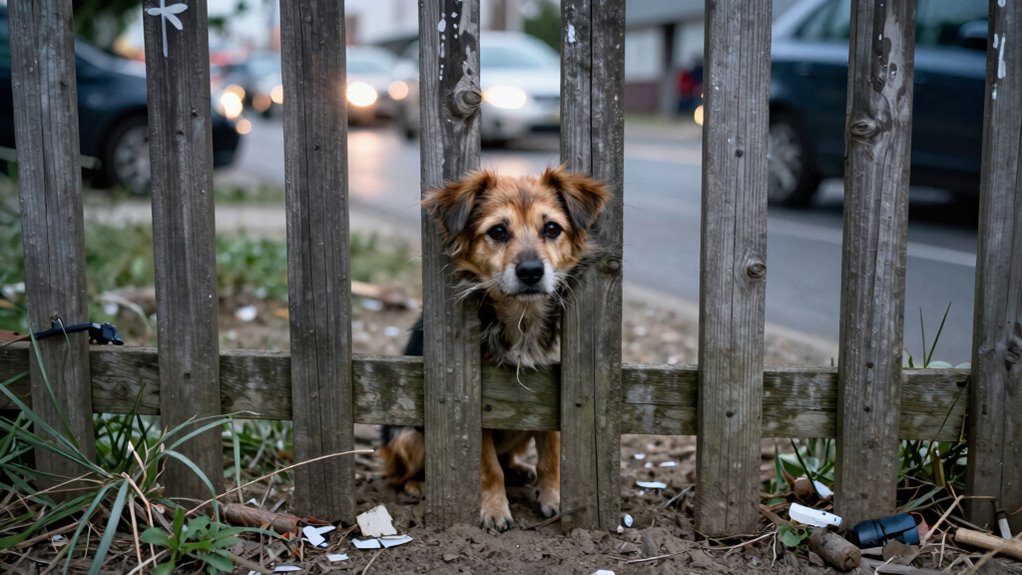
Living in a busy neighborhood can be overwhelming for some dogs, especially those sensitive to loud noises and constant activity. Dogs with noise sensitivity often find the loud sounds of traffic, sirens, construction, and even bustling crowds distressing. These noises can trigger anxiety and make it difficult for your dog to relax or feel secure outdoors. If your dog cowers or seeks shelter whenever they hear loud sounds, they’re likely experiencing noise sensitivity. This heightened sensitivity can lead to constant stress, which may result in destructive behaviors or withdrawal from social interactions. It’s important to recognize these signs early so you can help your dog cope better. Recognizing the signs of anxiety early can facilitate targeted interventions that improve your dog’s quality of life.
Loud noises and busy streets can overwhelm sensitive dogs, causing stress, anxiety, and withdrawal.
Social anxiety also plays a significant role in why some dogs struggle more in busy neighborhoods. Dogs with social anxiety tend to be fearful or wary of unfamiliar people, other dogs, or large groups of strangers. In a lively neighborhood, the constant influx of pedestrians, delivery people, and pets can overwhelm your dog, making walks stressful rather than enjoyable. Instead of approaching new people or animals with curiosity, your dog might freeze, bark, or try to hide. This reaction isn’t about being unfriendly—it’s a natural response to feeling vulnerable or threatened in unpredictable environments. For dogs with social anxiety, the chaos and unpredictability of busy streets can heighten their fears, leading to increased tension and avoidance behaviors. Understanding dog behavior can help owners better interpret these responses and respond appropriately. Additionally, environmental stimuli such as unpredictable sounds and sights can intensify these sensitivities and should be managed carefully. Being attentive to subtle cues can help prevent escalation of stress and ensure your dog’s comfort. Recognizing and addressing these behavioral responses early on is crucial for helping your dog adapt more comfortably to their environment.
As an affiliate, we earn on qualifying purchases.
Frequently Asked Questions
How Can I Tell if My Dog Is Stressed by Neighborhood Noise?
You can tell your dog is stressed by neighborhood noise if you notice increased dog vocalization, like barking or whining, especially during loud times. Watch for signs like trembling, pacing, or trying to hide. Leash training can help you manage their reactions calmly. If your dog seems overwhelmed, it’s a sign to gradually expose them to noise, using positive reinforcement to reduce their stress and build confidence.
Are Certain Breeds More Affected by Busy Environments?
Some breeds are definitely more affected by busy environments because of breed sensitivity and environmental impact. You might notice that high-strung breeds like Chihuahuas or terriers practically tremble at every honk or siren, while calmer breeds handle noise better. Your dog’s reaction depends on their genetic makeup, making certain breeds more vulnerable to overstimulation and stress in chaotic, bustling neighborhoods. Recognizing this helps you better support their emotional well-being.
What Training Methods Help Dogs Adapt to Noisy Areas?
You can help your dog adapt to noisy areas by using positive reinforcement, rewarding calm behavior around sounds and busy scenes. Incorporate desensitization techniques by gradually exposing your dog to these noises at a low volume, then slowly increasing intensity as they stay relaxed. Consistency is key; praise and treats reinforce calm responses, making your dog more comfortable over time and easing their anxiety in busy neighborhoods.
How Does My Dog’s Age Influence Its Reaction to Traffic?
Your dog’s age considerably influences its reaction to traffic. Puppies, during socialization, are more adaptable and less overwhelmed by sensory overload, helping them build confidence around busy streets. Older dogs might be more sensitive, reacting strongly to noise and movement. To ease their reactions, gradually expose your dog to traffic, ensuring positive experiences. Consistent socialization at a young age helps them better cope with sensory overload and noise, making them feel safer in busy neighborhoods.
Can Environmental Modifications Reduce Stress for Anxious Dogs?
Yes, environmental modifications can reduce stress for anxious dogs. You can implement calming techniques like gentle music or aromatherapy, which help soothe your dog. Creating safe spaces, such as a quiet corner or a cozy crate, provides a retreat where your dog feels secure. Regularly using these strategies helps your dog build confidence and cope better with busy surroundings, ultimately easing their anxiety and improving their overall well-being.
dog anxiety vest for busy streets
As an affiliate, we earn on qualifying purchases.
As an affiliate, we earn on qualifying purchases.
Conclusion
Living in a busy neighborhood can be tough on some dogs, especially since nearly 60% of dogs show signs of stress in noisy environments. You can help by providing a safe space and gradually exposing your pup to the hustle and bustle. Remember, patience makes a difference. By understanding their needs and calming environments, you can make your neighborhood a more comfortable place for your furry friend, helping them thrive amidst the chaos.
dog calming collar for noise sensitivity
As an affiliate, we earn on qualifying purchases.
As an affiliate, we earn on qualifying purchases.
As an affiliate, we earn on qualifying purchases.
Fall Picks
fall essentials
As an affiliate, we earn on qualifying purchases.