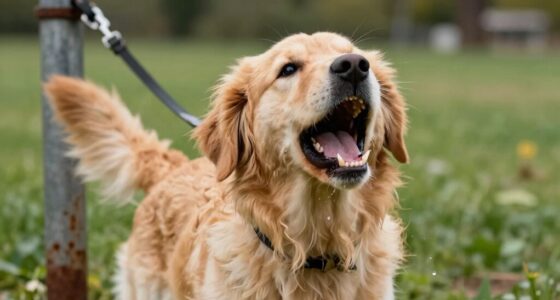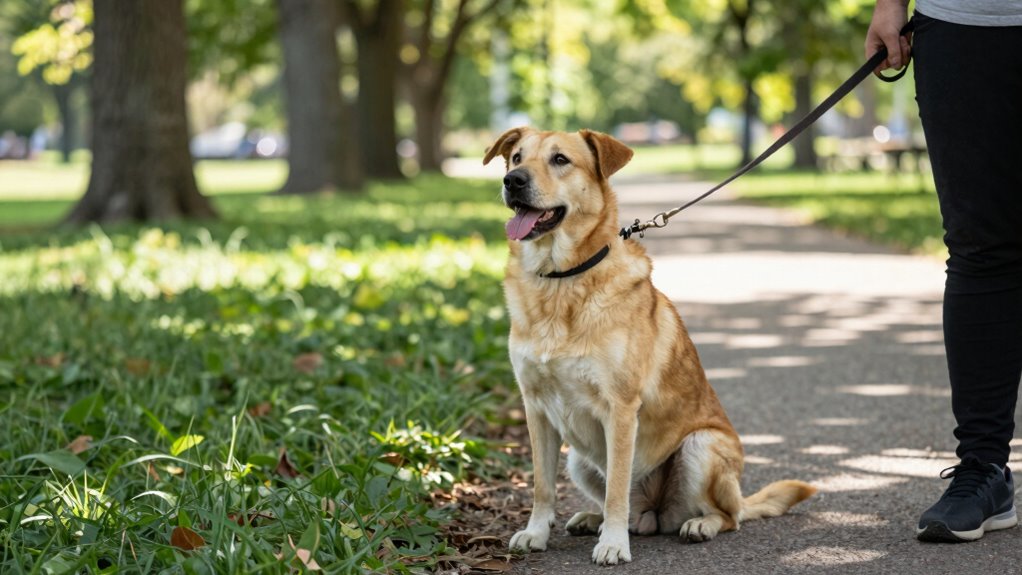

The trigger distance rule helps you keep your reactive dog comfortable by maintaining a safe distance from potential triggers like other dogs or people. You’ll want to observe your dog’s body language to spot early signs of discomfort and adjust your distance accordingly. Practice in calm environments, use treats to reward relaxation, and increase distance if your dog shows signs of stress. Keeping this balance can prevent reactive episodes—if you explore further, you’ll discover how to fine-tune this approach effectively.

Get pet supplies delivered free with Prime
- Fast, free delivery on millions of items
- Prime Video, Amazon Music and more included
- Member-only deals all year
Key Takeaways
- Maintaining a safe distance prevents over-stimulation and reduces reactive behaviors in dogs.
- Observe and interpret body language to identify early signs of stress or discomfort.
- Gradually decrease distance only when the dog remains calm to build confidence safely.
- Use environmental management, like route adjustments, to avoid trigger points during walks.
- Reinforce calm behavior with treats and praise, ensuring positive associations at appropriate distances.
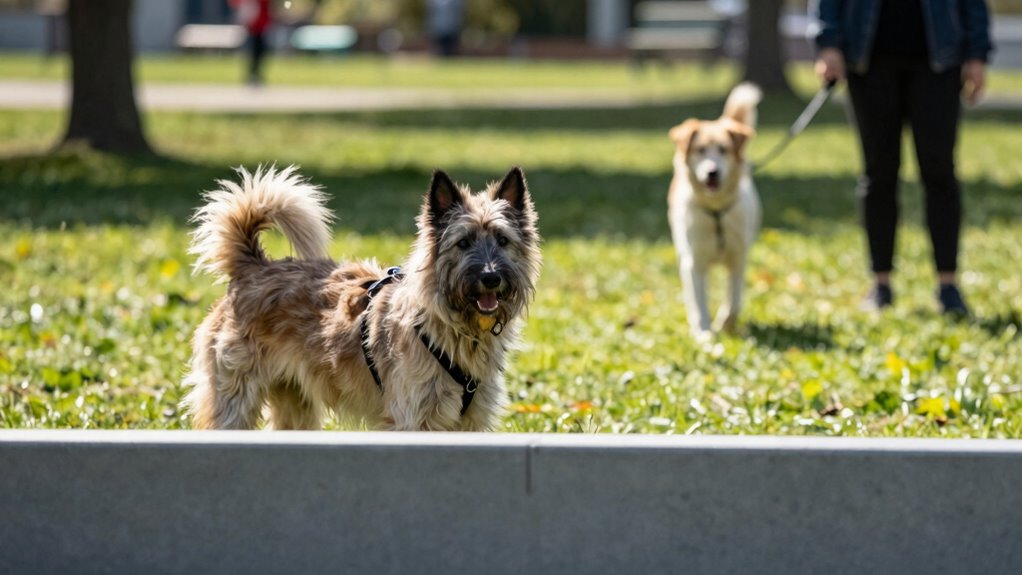
If your reactive dog tends to bark, lunge, or become anxious around other dogs or people, understanding the trigger distance rule can make a big difference. This rule helps you determine the minimum distance your dog needs to stay comfortable and focused during walks or training sessions. This approach emphasizes the importance of respecting your dog’s boundaries to promote emotional well-being and reduce stress. When you respect this distance, you give your dog space to stay calm, which reduces the likelihood of reactive behaviors. Implementing this rule involves a combination of training techniques and environmental management. You’ll need to observe your dog closely to identify what distances trigger their reactions and then adjust your approach accordingly. Recognizing reactive behaviors early can help you intervene before your dog becomes overwhelmed, making management more effective. Training techniques are essential for helping your dog learn that staying calm at a safe distance results in positive experiences. You can start by practicing distance control in controlled environments, such as your backyard or quiet park, where distractions are minimal. Use treats and praise to reward your dog whenever they remain relaxed as other dogs or people appear at a distance. Gradually decrease the distance over time, only when your dog remains calm, and avoid pushing them past their comfort zone. This gradual approach helps build confidence and reduces reactivity. Consistency is key, so make sure to practice regularly and keep sessions short and positive. Environmental management plays a vital role in maintaining the trigger distance. When you’re out walking, keep a close eye on the surroundings so you can anticipate encounters with other dogs or people. Cross the street, take a detour, or increase your distance if you see a potential trigger approaching. Carrying high-value treats can also be helpful; use them to reinforce calm behavior when your dog notices triggers from a safe distance. Being aware of trigger points and managing your dog’s environment accordingly can prevent reactive episodes and support their emotional well-being. Additionally, understanding dog body language can give you early warning signs of stress or agitation, allowing you to adjust your approach proactively. If your dog encounters a trigger that’s too close, don’t punish — simply increase the distance and wait until they’re relaxed before moving closer again. This proactive management prevents escalation and helps your dog associate new experiences with safety and reward. Recognizing the importance of environmental cues can further enhance your ability to prevent reactive episodes before they begin. Being attentive to dog body language signals can help you catch signs of stress early and respond appropriately.
dog training treats for reactive dogs
As an affiliate, we earn on qualifying purchases.
As an affiliate, we earn on qualifying purchases.
Frequently Asked Questions
How Long Does It Typically Take to See Progress With the Rule?
You might see progress within a few weeks, but it varies based on your training consistency and owner patience. If you stick to the rule daily and remain calm, your dog will gradually learn to manage reactivity. Remember, every dog responds differently, so don’t get discouraged if results take longer. Stay committed, be patient, and celebrate small victories along the way to build your dog’s confidence and reduce reactivity.
Can the Trigger Distance Be Adjusted for Different Dogs?
You can absolutely adjust the trigger distance for different dogs; it’s like tuning a musical instrument to get the perfect pitch. With consistent training and owner patience, you’ll find the right distance that helps your dog stay calm. Every dog is unique, so regularly reassess and modify the distance as needed. This tailored approach guarantees progress and keeps your training effective and positive.
What Equipment Is Best for Maintaining Proper Distance?
You should choose equipment like a sturdy leash, such as a leather or nylon type, to maintain proper distance effectively. A harness, especially a front-clip or no-pull design, gives you better control and prevents pulling, helping keep your reactive dog at a safe distance. Avoid retractable leashes, as they can be unpredictable. Proper equipment guarantees safety and helps you manage your dog’s reactions more confidently during walks.
Is This Rule Effective for All Reactive Dog Breeds?
You might think all reactive dogs respond the same, but breed variations make a big difference. The Trigger Distance Rule isn’t a one-size-fits-all solution; some breeds require more nuanced approaches. Training consistency is key, regardless of breed. While the rule can help, it’s essential to tailor your strategy to your dog’s specific needs. Ironically, what works for one breed might not work for another, highlighting the importance of personalized training.
How Should I Handle Emergencies if My Dog Reacts Unexpectedly?
In emergencies, stay calm and use quick dog training techniques to redirect your dog’s attention, helping prevent escalation. Maintain a safe distance and use a calm voice to soothe your dog. Focus on behavior modification strategies you’ve practiced, like commands or distraction methods, to regain control. Always carry treats or toys for immediate redirection, and consider consulting a professional for ongoing guidance on managing unexpected reactions effectively.
As an affiliate, we earn on qualifying purchases.
Conclusion
Think of the trigger distance rule as your reactive dog’s safety bubble, like a clear glass shield that keeps both of you safe and calm. When you respect this space, you’re guiding your dog through a maze of triggers without getting lost or overwhelmed. Remember, patience and consistency are your compass, helping your dog navigate this journey with confidence. With time, that glass shield can become a sturdy, invisible force field—protecting and empowering both of you every step of the way.
dog distance control training collar
As an affiliate, we earn on qualifying purchases.
As an affiliate, we earn on qualifying purchases.
calm environment dog training aids
As an affiliate, we earn on qualifying purchases.
As an affiliate, we earn on qualifying purchases.
Halloween Picks
halloween
As an affiliate, we earn on qualifying purchases.