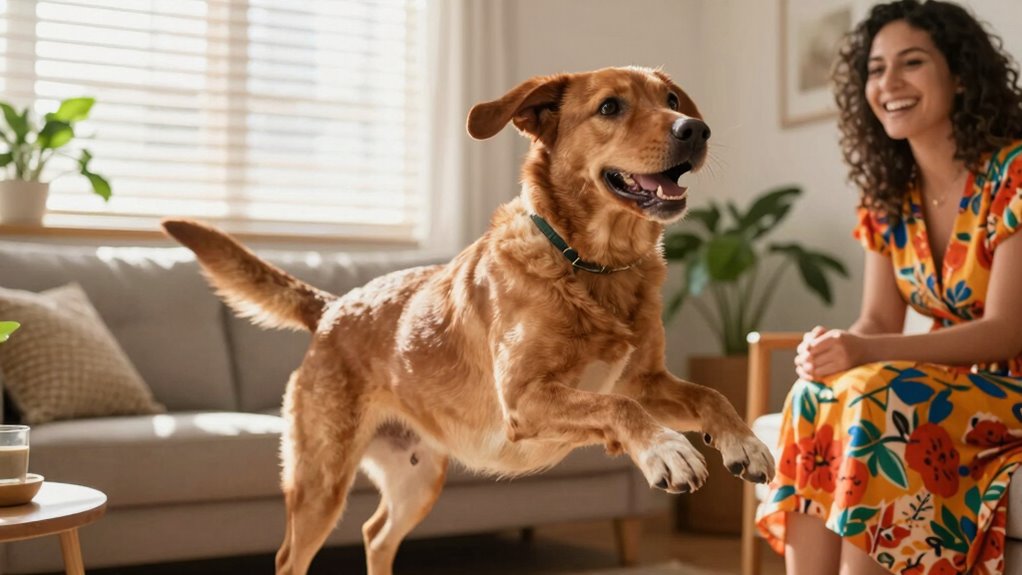

When guests talk to your dog, they often seem more excited, which dogs interpret as a sign of fun or attention. Dogs are sensitive to body language and signals, so lively talking and gestures can trigger their desire to jump closer. They see this energetic interaction as an invitation to engage or seek attention. If you want to understand how to stop this behavior, keep exploring for more tips and strategies.

Get pet supplies delivered free with Prime
- Fast, free delivery on millions of items
- Prime Video, Amazon Music and more included
- Member-only deals all year
Key Takeaways
- Dogs interpret talking as an exciting or stimulating activity, prompting them to jump for attention.
- Vocal interaction increases a dog’s arousal, making jumping more likely as a response.
- Guests talking to dogs reinforce the behavior by giving attention when dogs jump.
- Dogs may see talking as an invitation to engage, leading to more jumping.
- Increased excitement from conversation triggers heightened energy, resulting in more jumping.
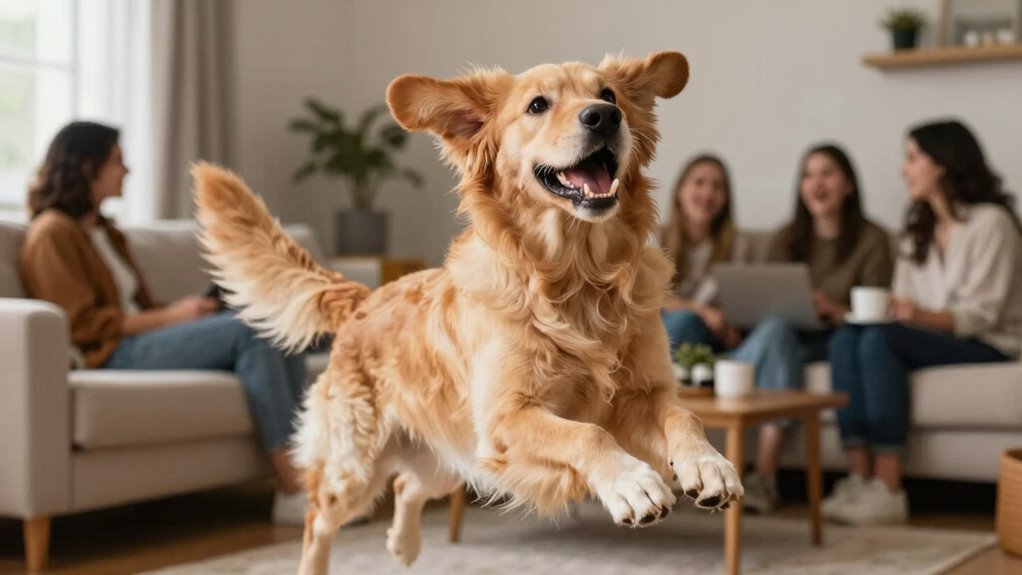
Have you ever noticed your dog jumping more when guests arrive and start talking to them? It’s a common behavior, and understanding why can help you manage it better. Dogs are highly attuned to human body language, and when guests enter, your dog quickly picks up on their signals. If the guests are animated or enthusiastic, your dog might interpret that as excitement or an invitation to engage. As a result, they often jump as a way to get closer, greet, or seek attention. To address this behavior, it’s essential to understand your dog’s body language and how it signals their feelings and intentions. Dogs communicate a lot through tail wagging, posture, and facial expressions, so paying attention to these cues can help you recognize when they’re overly excited or anxious.
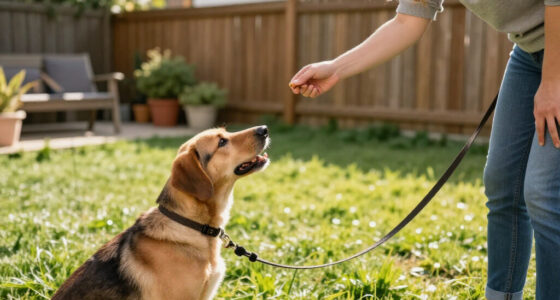
Guest training techniques can be very effective in curbing jumping behavior. When visitors arrive, instruct them to avoid direct eye contact or overly enthusiastic gestures that might excite your dog further. Instead, ask them to stand still and turn their bodies slightly to the side, which reduces the energy your dog might interpret as an invitation to jump. Reinforcing calm greetings can help your dog learn that polite behavior gets attention, while jumping does not. You can also teach your dog an alternative behavior, like sitting or offering a paw, before they receive any attention from guests. Consistently rewarding calm behavior reinforces the idea that staying composed leads to positive interactions. Additionally, understanding your dog’s body language and dog communication cues can enhance your ability to interpret their emotional state and respond appropriately. Recognizing these cues can also prevent situations where your dog becomes overwhelmed or anxious, which often leads to jumping or other unwanted behaviors. Developing a consistent training routine focused on calm greetings can make a significant difference over time. By observing and responding to your dog’s body language signals, you can better manage their reactions and reduce the likelihood of jumping. Incorporating positive reinforcement techniques can further encourage your dog to remain calm when greeting guests. Over time, guest training techniques like these teach your dog that calm, polite greetings are what get rewarded, not jumping or jumping up. Remember, patience and consistency are key. If you respond to jumping with attention or excitement, your dog will learn that this behavior works for them.
dog training clicker for behavior correction
As an affiliate, we earn on qualifying purchases.
As an affiliate, we earn on qualifying purchases.
Frequently Asked Questions
Do Certain Dog Breeds Jump More Than Others?
Yes, certain dog breeds tend to jump more than others. Breed tendencies influence jumping habits; for example, terriers and retrievers are often more energetic and prone to jumping. These breeds may see jumping as a way to greet or seek attention. If you want to reduce this behavior, consistent training and socialization are key, regardless of your dog’s breed. Understanding their tendencies helps you manage their jumping habits effectively.
How Can I Train My Dog to Stop Jumping?
You can train your dog to stop jumping with consistent behavior modification. Start by teaching your dog to sit calmly when greeting people, rewarding good behavior. Use dog training techniques like positive reinforcement and ignore jumping attempts. An interesting statistic shows that dogs trained with positive methods are 60% less likely to jump. Be patient and persistent, and your dog will learn that calm greetings earn praise, reducing jumping over time.
Does a Dog’s Age Affect Its Jumping Behavior?
Yes, a dog’s age affects its jumping behavior. As dogs reach maturity, their energy levels and excitement tend to decrease, leading to less jumping. Younger dogs, especially puppies, often jump more due to curiosity and exuberance, while older dogs might jump less because of age-related behavior changes. Understanding your dog’s maturity helps tailor training techniques, encouraging calmness regardless of age and reducing unwanted jumping.
Are There Health Issues That Cause Increased Jumping?
Jumping can sometimes be your dog’s way of sounding the alarm, so health concerns like pain or discomfort might be behind it. Behavioral causes, such as excitement or anxiety, also play a big role. If your dog suddenly jumps more often, it’s wise to check for health issues with your vet. Addressing these concerns helps your furry friend stay happy and healthy, rather than just reacting to every new face like a pinball.
How Does the Dog’s Socialization Impact Jumping Tendencies?
Your dog’s socialization plays a big role in their jumping tendencies. When they’re well-socialized, they understand social interaction cues and dog body language better, making them more comfortable around guests. If they’re shy or poorly socialized, they might jump more to seek attention or express excitement. Proper exposure helps your dog learn appropriate responses, reducing unnecessary jumping and making guests feel more at ease during visits.
As an affiliate, we earn on qualifying purchases.
Conclusion
So, next time your dog leaps like they’ve spotted a squirrel on espresso, just remember—they’re auditioning for ‘Best Guest-Greeting’ and your hosting skills are clearly at the top of the list. Maybe they’re just practicing for their future career as a social butterfly or a canine stand-up comedian. Either way, you’ve got a furry little hype man that’s more excited than a kid in a candy store—proof that sometimes, dogs just can’t help themselves!
As an affiliate, we earn on qualifying purchases.
positive reinforcement dog training treats
As an affiliate, we earn on qualifying purchases.
As an affiliate, we earn on qualifying purchases.
Halloween Picks
halloween
As an affiliate, we earn on qualifying purchases.