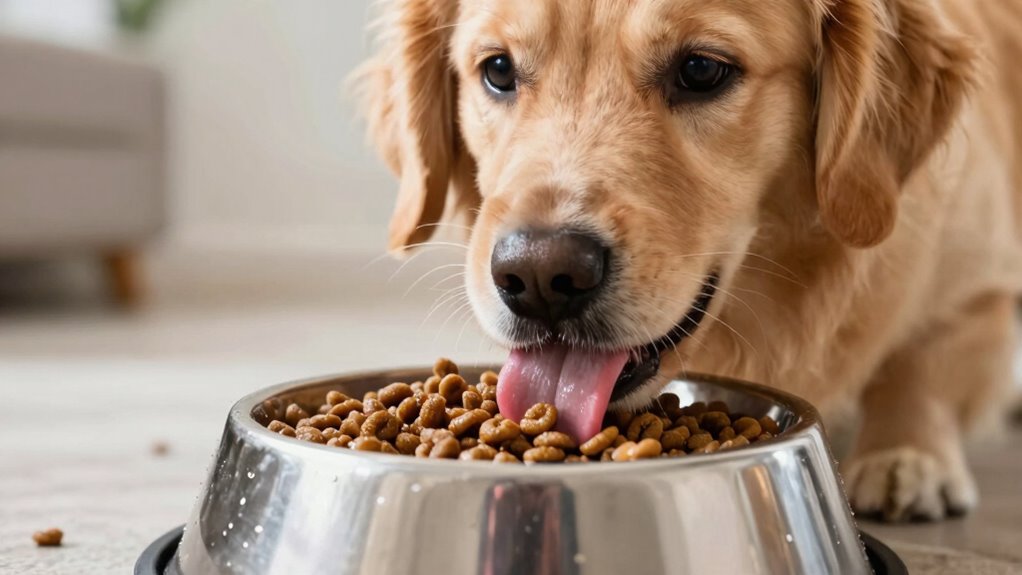

Your dog eats fast even when food’s always available because natural instincts from their wild ancestors still influence them. They may have learned to eat quickly to avoid food theft or scarcity, or they might find certain textures or smells more tempting. Environmental factors like noisy or chaotic feeding areas can also encourage rushing. Over time, these habits become ingrained. If you keep exploring, you’ll uncover effective strategies to help your dog eat more calmly and safely.

Get pet supplies delivered free with Prime
- Fast, free delivery on millions of items
- Prime Video, Amazon Music and more included
- Member-only deals all year
Key Takeaways
- Dogs have natural instincts to eat quickly to prevent food theft or loss, regardless of food availability.
- Preference for highly palatable or textured foods can lead to rapid eating.
- Stressful or noisy feeding environments may trigger hurried consumption.
- Fast eating can be a learned behavior reinforced by owner routines.
- Health risks like choking or digestive issues motivate the need to manage rapid eating.

Many dogs eat their food quickly, and understanding why can help you address any potential health concerns. If your dog consistently gobbles up meals in a matter of seconds, it’s natural to wonder what’s driving this behavior. It could be related to their dog eating habits, which are influenced by instinct, environment, and their individual canine food preferences. Recognizing these factors can help you determine whether your dog’s fast eating is harmless or something that needs intervention.
Understanding why dogs eat quickly helps you address health concerns and promote healthier, calmer eating habits.
One common reason dogs eat so quickly is rooted in their natural instincts. In the wild, canines often had to compete for food and eat quickly to avoid theft or losing their meal to other animals. This instinct can carry over into domestic life, making your dog rush through their food even if it’s always available. Even if your dog’s environment is safe and stress-free, their innate behavior might still drive them to eat rapidly as a survival trait. Natural instincts often shape many behavioral patterns in dogs, including their eating habits.
Another factor to contemplate is their canine food preferences. Some dogs prefer certain textures or flavors that make them enthusiastic to finish fast, especially if they’ve learned that food is limited or that mealtime is a rare event. If your dog’s diet includes highly palatable or smell-rich food, they might be more inclined to eat quickly because they find it especially appealing. Additionally, if they’ve learned that eating fast results in getting their food sooner or avoiding competition with other pets, they may develop a habit of rushing through their meals. Moreover, a variety of food textures can influence their eagerness to consume meals rapidly.
Your dog’s environment and routine can also influence their eating speed. For instance, if they’re used to eating in a noisy or chaotic setting, they might eat quickly out of excitement or anxiety. Conversely, some dogs develop fast eating habits because they’re often fed in a hurry—perhaps because you’re busy or they’ve been fed in a rush. These behaviors can become ingrained over time, making fast eating a default. Furthermore, understanding dog food preferences can help you choose a diet that encourages more relaxed eating.
It’s important to observe whether your dog’s fast eating is causing issues like choking, vomiting, or signs of digestive discomfort. If so, you should think about ways to slow them down, such as using puzzle feeders or spreading out their food to make eating less of a race. Recognizing the core reasons behind their rapid eating—whether rooted in instinct, preferences, or environment—can guide you in managing their behavior effectively. Remember, knowing why your dog eats fast helps you find the best solutions to promote healthier and more relaxed eating habits.
As an affiliate, we earn on qualifying purchases.
Frequently Asked Questions
Can Eating Quickly Cause Health Issues in Dogs?
Eating quickly can cause health issues in your dog. Rapid eating often leads to poor digestion and increases the risk of choking or bloating, which can be dangerous. This behavior impacts their dietary habits and digestive health negatively, possibly resulting in discomfort or more severe complications. To protect your dog, encourage slower eating and monitor their mealtime habits, ensuring they chew thoroughly and digest food properly.
Do Certain Breeds Tend to Eat Faster Than Others?
Yes, breed differences considerably influence your dog’s eating speed. Smaller breeds or those bred for rapid consumption, like Beagles or Dachshunds, tend to eat faster than larger breeds. Some breeds naturally have a quicker eating speed due to their instincts or physical traits. Understanding these breed tendencies helps you manage their eating habits better, possibly preventing health issues related to fast eating, like choking or bloat.
How Can I Train My Dog to Eat Slower?
To train your dog to eat slower, start by using a puppy feeding bowl designed for slow eating, which makes them work around obstacles. Incorporate consistent meal timing so they associate specific times with eating, reducing rushing. You can also pause during meals to encourage mindful eating and reward calm behavior. Over time, these techniques help your dog develop patience and enjoy their food at a healthier, slower pace.
Does Eating Fast Affect My Dog’s Behavior?
Eating fast can impact your dog’s behavior, especially during puppy development, as it may lead to anxiety or overeating. Coincidentally, a busy feeding routine helps establish calmness and control. When your dog rushes through meals, it might become more excitable or possessive over food. Slowing down the eating process promotes better digestion, reduces behavioral issues, and fosters a healthier relationship with food, supporting your dog’s overall well-being and development.
Is There a Connection Between Fast Eating and Anxiety?
Yes, there’s a connection between fast eating and anxiety. When your dog eats quickly, it often stems from stress-related behaviors or a stressful feeding environment. Your dog might feel the need to eat fast to secure food or because of past experiences. Creating a calm feeding environment, offering smaller, more frequent meals, and avoiding competition can help reduce anxiety and slow down their eating pace.
As an affiliate, we earn on qualifying purchases.
Conclusion
So, if you notice your dog devouring food at a dizzying dash, don’t dismiss the behavior. Recognize the reasons behind the rapid eating—rushing, anxiety, or appetite—and address them with patience and persistence. Providing plenty of play, a peaceful environment, and structured feeding can slow your pup’s pace and promote better digestion. Remember, a calm, composed canine correlates with a contented, cared-for creature, creating a caring, calming connection that benefits both you and your beloved dog.
As an affiliate, we earn on qualifying purchases.
As an affiliate, we earn on qualifying purchases.
Halloween Picks
halloween
As an affiliate, we earn on qualifying purchases.