
To train senior dogs gently, be patient and use positive reinforcement like treats, praise, or affection to encourage good behavior. Keep training sessions short and consistent, using the same words and gestures to avoid confusion. Focus on gentle guidance and avoid punishment or harsh corrections, which can cause anxiety. Building trust is key, so create a calm environment and celebrate small successes. If you keep applying these kind methods, you’ll discover even more ways to make training enjoyable for your dog.
Key Takeaways
- Use positive reinforcement like treats, praise, and affection to encourage desired behaviors.
- Keep training sessions short, consistent, and patient to match the dog’s learning pace.
- Use clear commands and gestures consistently to help the dog understand and remember.
- Avoid punishment; focus on gentle guidance and redirection to prevent anxiety or resistance.
- Build trust through calm, enjoyable interactions to foster a positive training environment.

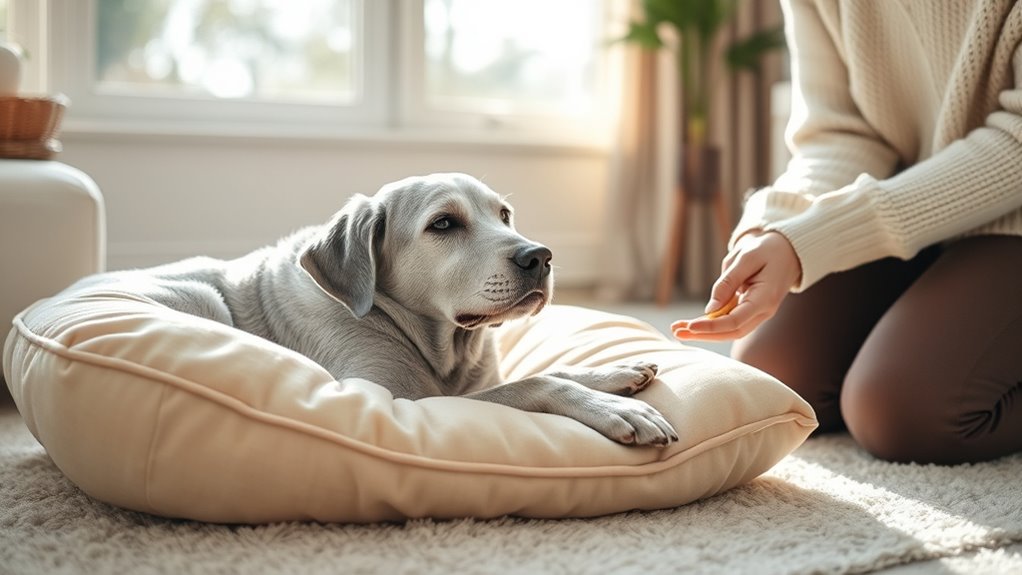
Training senior dogs requires patience and understanding, as older dogs often have ingrained habits and may learn more slowly than puppies. When working with an older dog, your approach should focus on gentle guidance, making each step clear and rewarding. Positive reinforcement becomes your best tool, as it encourages your dog to repeat desirable behaviors without fear or confusion. Instead of punishment, offer treats, praise, or affection whenever your dog responds correctly. This builds trust and makes training sessions enjoyable, helping your senior dog stay motivated to learn.
Patience and consistency are essential. Recognize that your dog might take longer to grasp new commands or adjust to routines. Don’t rush the process; instead, set small, achievable goals for each session. Repeated, calm practice helps your dog understand what’s expected. Keep training sessions brief—around five to ten minutes—so your dog doesn’t become overwhelmed or fatigued. Consistency in commands and routines also reinforces learning. Use the same words and gestures each time, so your dog isn’t confused by mixed signals. This steady approach makes it easier for your dog to associate commands with actions, especially when they’ve had a lifetime of habits.
Incorporate positive reinforcement consistently to reinforce good behavior. When your dog sits on command, give a treat immediately. If they come when called, praise them warmly. Over time, these positive associations strengthen your dog’s willingness to obey and learn. Avoid harsh corrections or punishment, as senior dogs can become anxious or resistant if they feel threatened or punished. Instead, focus on redirecting unwanted behaviors gently and rewarding the behaviors you want to see. This creates a positive learning environment and strengthens your bond with your dog. Understanding canine learning is key to training senior dogs effectively and compassionately.
Frequently Asked Questions
How Do I Adapt Training Methods for Deaf or Blind Senior Dogs?
You adapt training for deaf or blind senior dogs by using visual cues and tactile signals. For deaf dogs, rely on gentle touches or vibrations to get their attention, and use hand signals they can see. For blind dogs, incorporate scent cues and gentle guiding touches. Stay patient, use consistent signals, and create a calm environment to help your senior dog learn and feel secure.
What Are Signs My Senior Dog Is Stressed During Training?
You’ll notice signs like whining, panting, pacing, or lip licking when your senior dog is stressed during training. To help, use calming techniques such as gentle voice, slow movements, and short, positive sessions. Focus on stress reduction by providing a quiet environment and plenty of praise. Watch for these cues and adjust your approach to keep training comfortable and enjoyable, ensuring your dog feels safe and relaxed.
How Can I Motivate a Disinterested Senior Dog to Learn?
Think of your senior dog as a slow-burning candle—patience and positive reinforcement reignite their interest. To motivate them, use treats, praise, and gentle encouragement consistently. Keep training sessions short and fun, gradually building their confidence. Stay patient when progress is slow, remembering that consistency and kindness are your best tools. Over time, your dog will rediscover curiosity, motivated by your gentle guidance and unwavering support.
Are There Specific Rewards Suitable for Elderly Dogs?
You should use treat alternatives like soft, easily chewable snacks or calming rewards such as gentle praise and petting. These options are suitable for elderly dogs because they’re less likely to cause discomfort or dental issues. Focus on rewards that promote relaxation and comfort, helping your senior dog feel safe and appreciated during training. Always choose rewards that match your dog’s preferences and health needs for the best results.
How Do I Handle Accidents During Gentle Training Sessions?
Think of accidents as tiny speed bumps on your training journey. When they happen, stay calm and avoid punishment. Focus on accident prevention by closely supervising your senior dog and using consistent cues. If an accident occurs, gently clean up the mess with enzymatic cleaner to eliminate odors, preventing repeat offenses. Remember, patience and compassion are your best tools to help your dog succeed during gentle training sessions.
Conclusion
Remember, training your senior dog with gentleness and patience is like tending a delicate garden—each act of kindness helps them flourish in their golden years. Their wisdom and love deserve respect, and your gentle guidance can strengthen the bond you cherish. By approaching training with compassion, you nurture trust that lasts a lifetime. After all, isn’t the deepest joy found in the quiet moments of understanding and love we share with those who’ve been with us through it all?