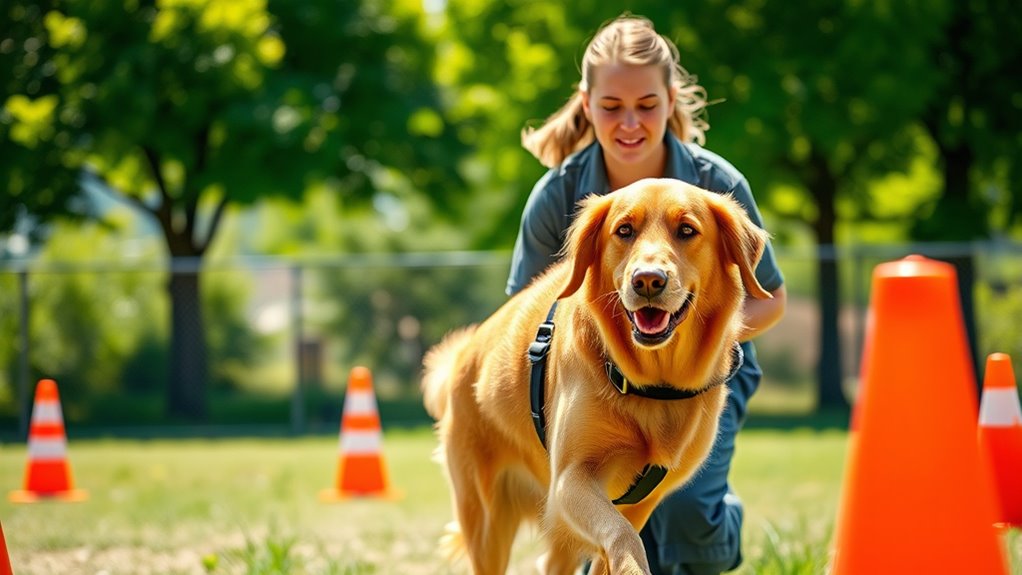

To train your rescue dog, start by building trust through patience and understanding, recognizing their past trauma. Focus on socializing your dog gradually with positive reinforcement like treats and praise to reduce fear and increase confidence. Use crate training effectively to create a safe space, and always keep sessions short and consistent. By combining gentle socialization and trust-building techniques, you’ll help your dog become more comfortable and obedient—continue for more tips on success.
Key Takeaways
- Build trust through patience, gentle handling, and positive reinforcement tailored to the dog’s past experiences.
- Gradually introduce socialization with people, other animals, and new environments to reduce fear and aggression.
- Use crate training to create a safe space, encouraging voluntary use and associating it with positive experiences.
- Keep training sessions short, consistent, and positive to promote learning and confidence.
- Observe the dog’s comfort level during activities and adjust approaches to accommodate trauma or anxiety.
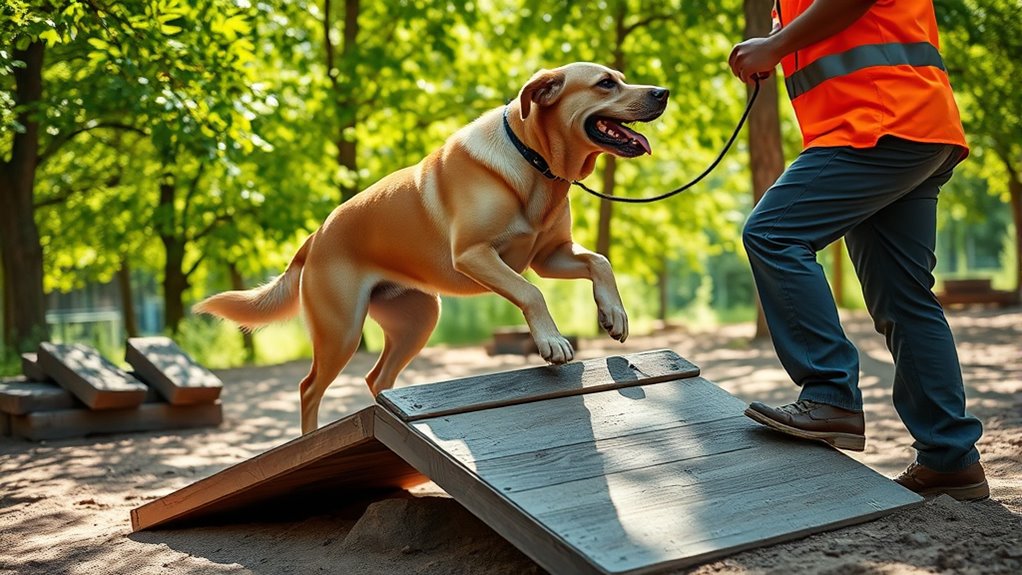
Training rescue dogs requires patience, consistency, and an understanding of their unique backgrounds. Many rescue dogs have experienced trauma or neglect, which can influence how they respond to training. To help them adapt and thrive, you need to focus on foundational skills like dog socialization and crate training techniques. These steps lay the groundwork for a well-behaved and confident companion.
Dog socialization is essential, especially for rescue dogs that may have had limited positive interactions with people or other animals. You want to introduce your dog gradually to new environments, people, and other pets, always observing their comfort level. Start with calm, controlled encounters in familiar settings, and use positive reinforcement—praise, treats, or play—to encourage good behavior. Socialization helps reduce fear and aggression, making your dog more open to training and new experiences. Keep sessions short and frequent, and avoid overwhelming your rescue dog. Patience is key, as some dogs may need extra time to build trust and confidence. Over time, socialization will help your dog become more adaptable and less anxious in various situations.
Gradually socialize rescue dogs with positive reinforcement to reduce fear and build confidence over time.
Crate training techniques are also crucial. A crate can serve as a safe space for your rescue dog, providing comfort and security. When introducing the crate, make it inviting by placing soft bedding, toys, and treats inside. Encourage your dog to explore the crate voluntarily without forcing them. Use positive reinforcement to associate the crate with good things, and gradually increase the time they spend inside. Remember, never use the crate as a punishment; it should be a space your dog looks forward to. Consistency in crate training helps your rescue dog develop good habits, such as not barking excessively or having accidents indoors. It also provides a controlled environment for training and managing your dog’s behavior. If your dog shows signs of anxiety or reluctance, take it slow, and be patient. Over time, crate training becomes a tool that fosters independence and reduces stress. Additionally, understanding special occasions and how they can impact your dog’s emotional state can help you plan positive experiences during celebrations or stressful times.
Both dog socialization and crate training are ongoing processes that require gentle persistence. As you work through these techniques, pay attention to your rescue dog’s cues and progress. Celebrate small victories, and don’t get discouraged by setbacks. Building trust and establishing routines are critical steps in transforming a rescue dog into a well-adjusted, happy member of your family. With patience, consistency, and a compassionate approach, you’ll help your rescue dog overcome challenges and develop the skills needed for a happy life together.
Frequently Asked Questions
How Long Does It Typically Take to Train a Rescue Dog?
You can expect to see progress in your rescue dog’s training within a few weeks, but complete socialization and crate training may take several months. Consistent socialization techniques help your dog become comfortable around people and other animals, while crate training builds trust and provides a safe space. Patience and regular practice are key. Remember, every dog learns at its own pace, so stay positive and persistent.
What Are Common Behavioral Issues in Rescue Dogs?
Like a hero in an old film, you might face common behavioral issues with rescue dogs, such as fearfulness, biting, or separation anxiety. These often stem from lack of dog socialization or improper crate training. To help, create a calm environment, establish routines, and gradually expose your pup to new experiences. Patience and consistency will turn these challenges into positive growth, transforming your rescue into a loyal companion.
How Can I Motivate a Reluctant Rescue Dog?
You can motivate a reluctant rescue dog by using positive reinforcement, like clicker training, to reward desired behaviors. Keep sessions short and fun, and gradually introduce socialization techniques to build confidence. Show patience and consistency, giving plenty of praise and treats. This approach encourages your dog to engage more willingly, making training enjoyable and strengthening your bond as they learn to trust you.
What Supplies Are Essential for Training Rescue Dogs?
You need a sturdy dog leash and plenty of training treats to effectively train rescue dogs. The leash helps you guide and control your dog during walks and training sessions, ensuring safety and focus. Use the treats as positive reinforcement to motivate and reward good behavior. Additionally, consider getting basic supplies like a collar, chew toys, and a crate to create a comfortable, structured environment that encourages learning and trust.
Is Professional Help Necessary for Training Rescue Dogs?
You don’t always need professional help for training rescue dogs, but it can be highly beneficial. A trainer skilled in training techniques and behavior modification can tailor approaches to your dog’s specific needs, speeding up progress and addressing issues effectively. If you’re new to training or facing persistent challenges, seeking professional guidance guarantees you’re using the right methods, making the process smoother for both you and your rescue dog.
Conclusion
Training rescue dogs is like nurturing a fragile seed into a strong, vibrant plant. With patience and love, you’ll help your furry companion blossom into a loyal, confident friend. Every command you teach is a drop of sunlight, fueling their growth and trust. Remember, your dedication is the gentle rain that transforms their past fears into a bright, hopeful future. Together, you’ll write a beautiful story of healing, trust, and unbreakable bond.