
When moving house with a nervous dog, start preparing early by gradually introducing new sights, sounds, and routines to build their confidence. Create a quiet space with familiar items and calming products to help them feel safe. Keep routines steady and introduce new areas slowly. Use calming techniques like gentle massage or soothing music to ease anxiety. To learn more ways to help your dog adjust smoothly, explore these helpful tips further.
Key Takeaways
- Start preparing early by gradually introducing new environments, scents, and routines to reduce your dog’s anxiety.
- Create a dedicated quiet space with familiar items and calming aids to provide a safe retreat during the move.
- Maintain consistent routines, including feeding and walks, and introduce new areas gradually to foster familiarity and confidence.
- Keep familiar belongings like bedding and toys in the new home to support routine and emotional stability.
- Use calming techniques such as pheromone diffusers, soothing music, and gentle reassurance to ease your dog’s transition.

TheraPetMD 60-Day Dog Calming Diffuser Kit – Dog Pheromone Diffuser for Stress, Destructive Behavior, Pee Accidents, Separation Anxiety, Barking, Aggression & Chewing – 60-Day Refills Included
Revolutionary Dual-Pheromone Blend Stops Stress Peeing & Barking – Only Dog Pheromone Diffuser combining mother-comfort AND territorial-peace pheromones…
As an affiliate, we earn on qualifying purchases.
As an affiliate, we earn on qualifying purchases.
Preparing Your Dog for the Move
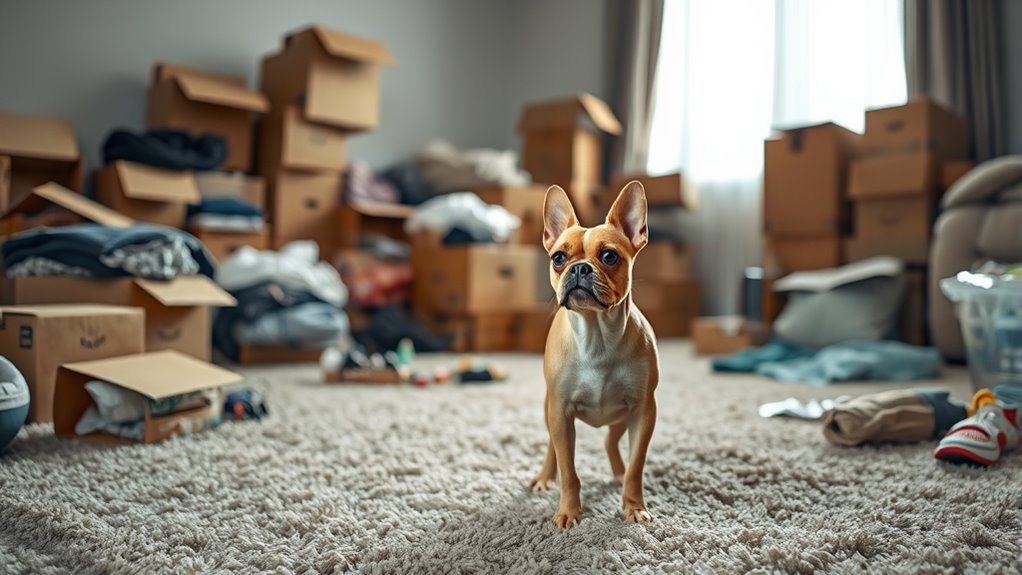
To help your nervous dog adjust smoothly to the upcoming move, start preparing them early. Focus on dog socialization by gradually introducing new environments, sounds, and people to reduce anxiety. This growth mindset can help your dog become more comfortable with change. Additionally, reinforce crate training, making the crate a safe haven, not a punishment. Encourage your dog to spend time in the crate with treats and praise, so they associate it with positive experiences. Consistent routines and gentle exposure to new sights and smells will build their confidence. Keep training sessions short and positive, avoiding stress. The goal is to create a sense of familiarity and safety, easing their shift when the move finally happens. Early preparation reduces anxiety and helps your dog feel more secure during this big change. Proper socialization is essential to help them develop confidence and adapt more easily to new environments. Understanding animal behavior patterns can further assist in addressing your dog’s specific anxieties and responses during this transitional period. Recognizing sleep cycles and establishing a calming bedtime routine can also support your dog’s comfort during the stressful time of moving.

Dog Beds Crate Pad for Medium/Large Dogs Fit Metal,Ultra Soft, Washable & Anti-Slip Kennel Pad for Dogs Cozy Sleeping Mat,Gray 36inch
SIZE GUIDE: Ideal dog bed for wire dog crates.This pad measures approximately 36inch*23inch.Fit for dogs weighing 40 to…
As an affiliate, we earn on qualifying purchases.
As an affiliate, we earn on qualifying purchases.
Creating a Safe and Comfortable Space During Transition
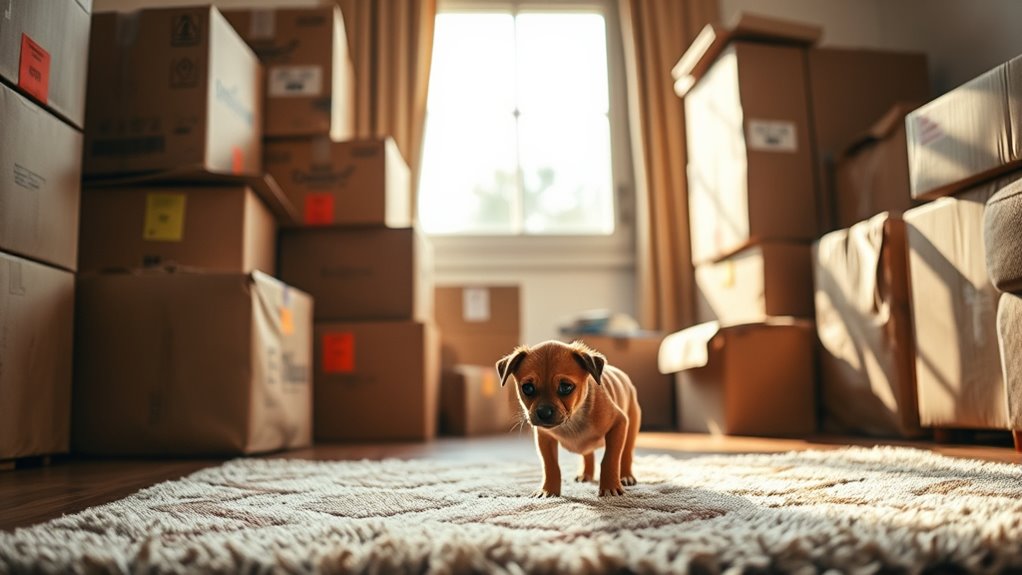
Set up a quiet, protected area where your dog can retreat when everything feels overwhelming. Keep familiar items like blankets and toys nearby to offer comfort and familiarity. This space will help ease your dog’s anxiety during the busy moving process creating a calming environment. Additionally, maintaining a consistent routine around feeding and walks can provide a sense of stability amidst the change routine consistency. Incorporating calming aids such as pheromone diffusers or soothing music can further support your dog’s relaxation calming techniques. Practicing mindful decluttering of your living space can also reduce overall chaos, making the environment more predictable and less stressful for your pet mindful decluttering. Understanding your dog’s behavioral responses to change can help you tailor these strategies more effectively.
Designate a Quiet Area
When moving house with a nervous dog, creating a designated quiet area can make a significant difference in helping your pet feel safe. This space should prioritize noise reduction to minimize outside disturbances and loud sounds from the move. Choose a corner or room that’s away from busy activity, and keep it calm and cozy. Use familiar scents to help your dog feel more at ease; placing a blanket or bed with their scent can aid scent familiarization. Consider incorporating calming features like a HEPA air purifier, which can reduce airborne allergens and pollutants that might contribute to your dog’s discomfort air quality. Avoid unnecessary stimuli, and keep this space consistent throughout the passage. Maintaining a calm environment in this area can help your dog feel more secure. Creating a dedicated space can also help in managing your dog’s stress levels by providing a predictable retreat during the chaos of moving. This designated area gives your dog a retreat where they can relax and feel secure amidst the chaos of moving. It’s a simple step that can greatly reduce stress and promote a sense of stability.
Maintain Familiar Items
Maintaining familiar items in your dog’s designated space provides a comforting link to their routine and reduces anxiety during the move. Bring along familiar objects like their bedding, blankets, and favorite toys to create a sense of familiarity. These items carry your dog’s scent and help them feel secure amid the chaos. Placing favorite toys nearby encourages play and comfort, easing their transition into the new environment. Keep these items in the same spot in your new home to reinforce routine and familiarity. By surrounding your dog with familiar objects, you help reduce stress and create an environment where they feel safe. Additionally, understanding the importance of color accuracy in home environments can help you choose calming decor and lighting that support your dog’s comfort. Using space-saving options can make the most of your new layout and prevent clutter, which can be unsettling for nervous dogs. Consistent placement of these items further reinforces routines, making the transition smoother. Creating a calming environment with soft textures and gentle lighting can also promote relaxation for your nervous dog. Incorporating elements that promote mental well-being can also aid your dog’s adjustment during this stressful time. This simple step can make a significant difference in helping your nervous dog adjust smoothly to the new surroundings.

Dog Music Playlist 2018: Calming Music for Dogs
As an affiliate, we earn on qualifying purchases.
As an affiliate, we earn on qualifying purchases.
Maintaining Routine and Consistency
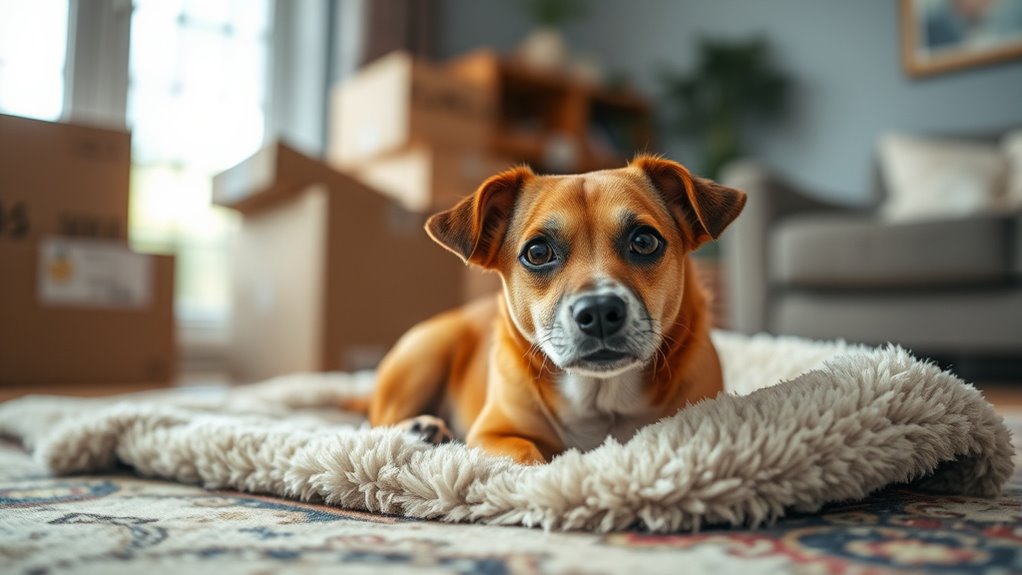
Keeping your dog’s routine consistent during the move helps reduce their anxiety and provides a sense of security. Stick to regular exercise routines, even if your schedule shifts slightly, to help burn off nervous energy and maintain familiarity. Keep feeding times steady and offer dietary adjustments gradually if needed, avoiding sudden changes that could upset their digestion or comfort. Continuity in daily activities reassures your dog that life remains stable despite the upheaval. Maintain familiar walk times and play sessions, and communicate calmly to reinforce routines. By providing predictable structure, you help your dog feel safe and grounded during this stressful transition. Incorporating sound healing science techniques, such as calming music or vibrations, can also help soothe anxious pets during this time. Additionally, maintaining a consistent environment minimizes stress responses and supports your dog’s emotional well-being throughout the moving process. Creating a familiar environment can further ease their adjustment and foster confidence, especially when combined with understanding of how creativity can be harnessed to develop comforting routines.

Emotional Support Blanket for Dogs, Yellow Blanket for Dog, Washable High Visibility Dog Blankets, for Help Reduce Pet Separation Anxiety (Yellow-L, 1Pcs)
【Calming Support for Dog Anxiety】Help your dog feel safe and relaxed even when you're away. This dog calming…
As an affiliate, we earn on qualifying purchases.
As an affiliate, we earn on qualifying purchases.
Using Calming Techniques and Products
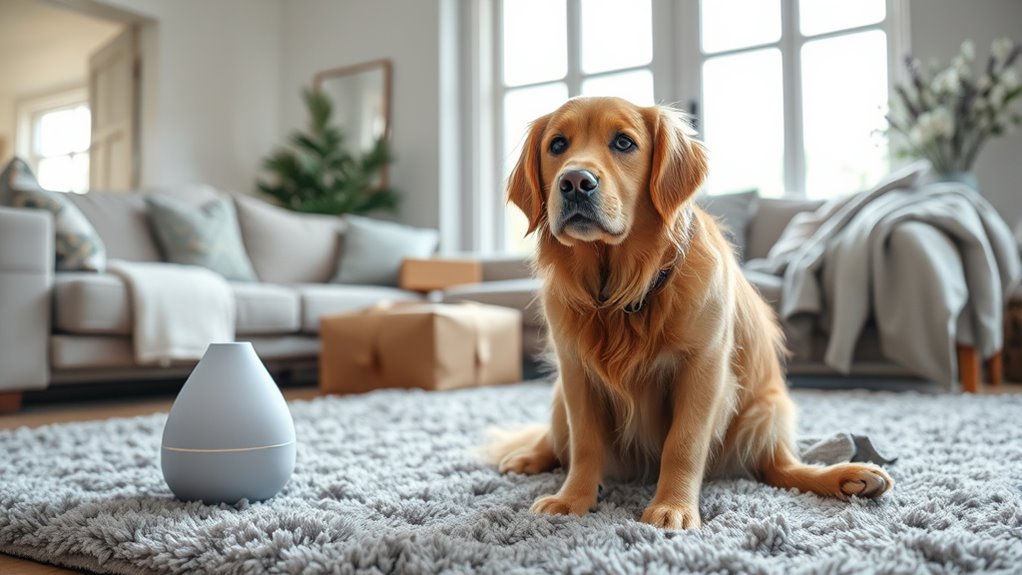
Using calming techniques and products can considerably ease your dog’s anxiety during the move. Calming products, like pheromone diffusers or calming treats, help reduce stress and promote relaxation. Consider using relaxation techniques such as gentle massage, soothing voice commands, or playing calming music to create a peaceful environment. These tools work together to help your dog feel safer and more secure amidst the chaos. Apply calming products ahead of time to familiarize your dog with the sensations, and incorporate relaxation techniques regularly to establish a sense of routine. Consistent use of essential oils in a safe and diluted manner can also enhance the calming effect. Incorporating calming environments that mimic familiar settings can further help reduce anxiety. Creating a predictable routine during the move can help your dog feel more in control and less anxious. Developing a comprehensive plan for the move can also minimize stress and help your dog adjust more smoothly. Keep in mind that consistency is key, and combining multiple approaches will give your dog the best chance of staying calm throughout the moving process.
Gradually Introducing the New Environment
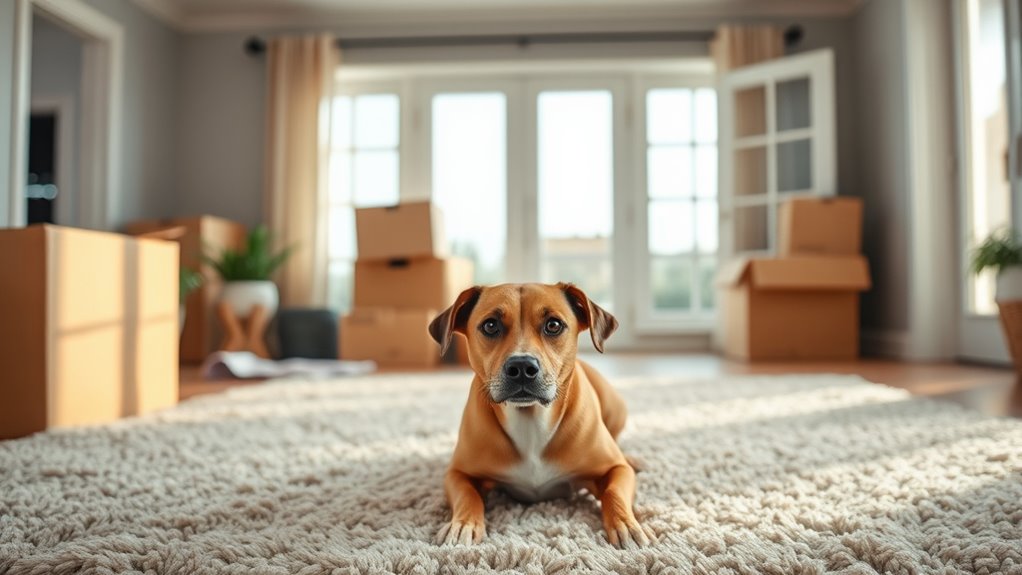
Introducing your dog gradually to the new environment helps prevent overwhelm and builds confidence. Start by showing them one room at a time, allowing plenty of positive reinforcement and treats. Keep their feeding schedule consistent to provide stability and reduce anxiety during the move. As your dog adjusts, slowly introduce new areas, maintaining familiar routines like grooming to create a sense of normalcy. Stick to familiar commands and routines wherever possible, so your dog feels secure. Avoid rushing and give your dog time to explore at their own pace. Consistency is key; a predictable environment helps ease their nervousness. By gradually introducing these changes, you build trust and help your dog settle comfortably into their new home.
Managing Stress During the Unpacking Process
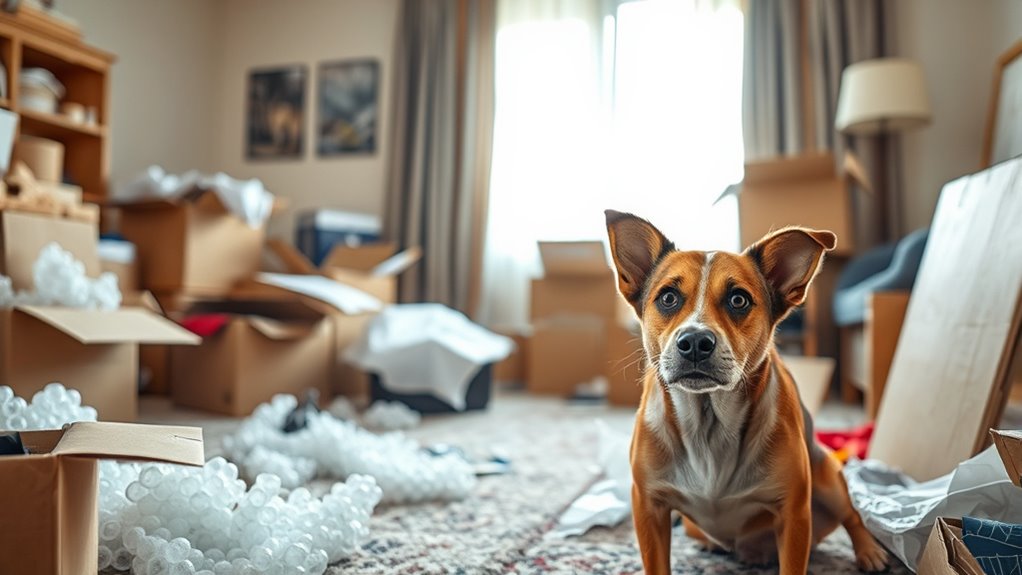
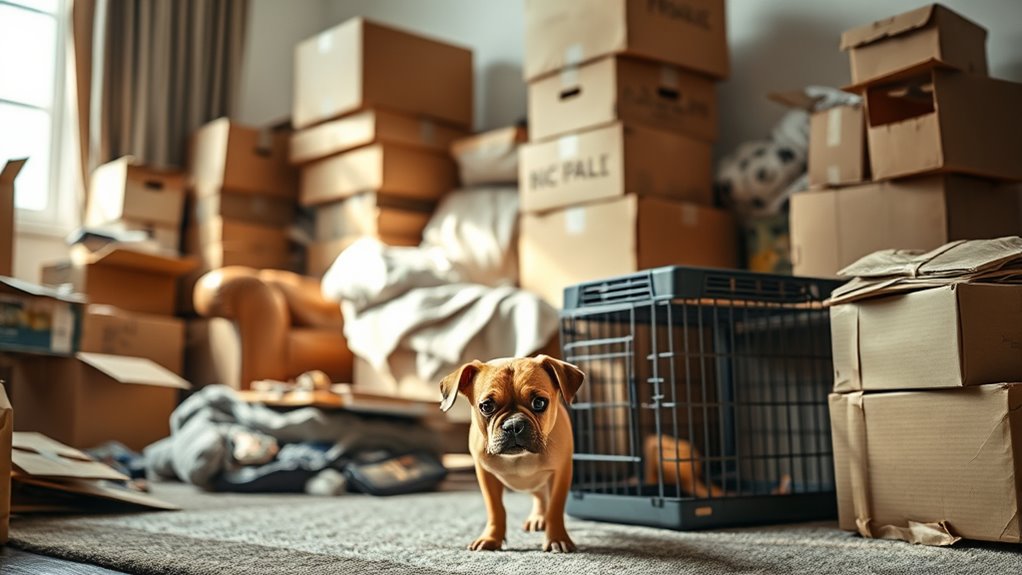
As you begin unpacking, your dog may become more anxious due to the increased activity and unfamiliar sights and sounds. To manage this stress, keep routines consistent and provide a safe space, like a crate, to help your dog feel secure. Use crate training to reinforce this safe zone, making it a comforting retreat during chaos. Incorporate gentle pet socialization by gradually introducing new objects and sounds, helping your dog adapt without overwhelming them. Avoid sudden movements or loud noises, which can heighten anxiety. Maintain calm energy and speak softly to reassure your dog. Remember, a steady environment helps reduce stress and encourages your dog’s confidence during the hectic unpacking process.
Monitoring Behavior and Signs of Anxiety
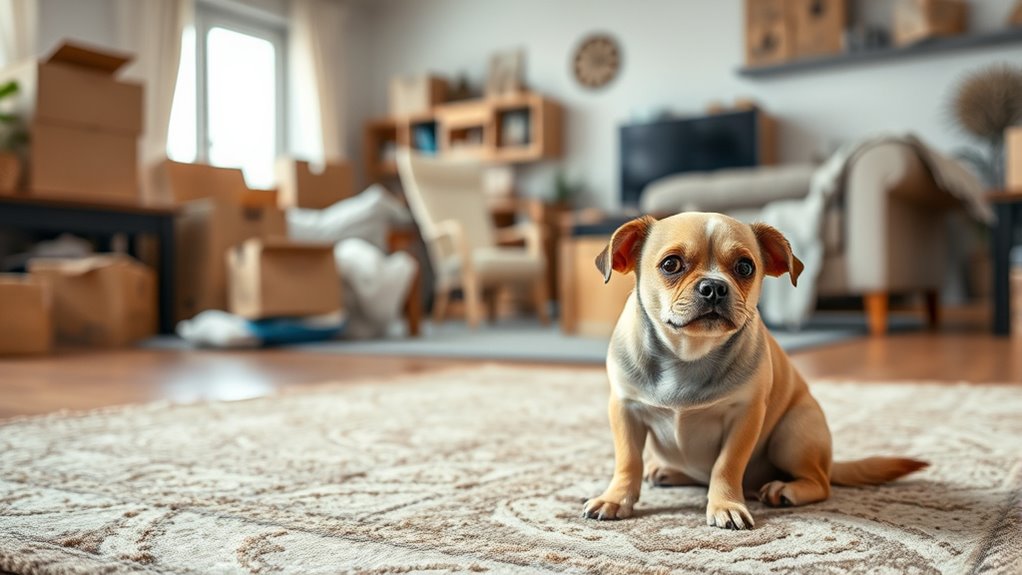
Monitoring your dog’s behavior closely is essential during the move, as subtle signs of anxiety can indicate they’re overwhelmed or stressed. Pay attention to dog body language, such as flattened ears, tucked tail, or avoiding eye contact, which often signal discomfort. Watch for signs of stress like excessive panting, yawning, or lip licking, even if they seem minor. Changes in behavior, such as hiding, clinginess, or restlessness, also point to anxiety. By staying alert to these signals, you can address your dog’s needs promptly. Recognizing these cues early helps you intervene with calming techniques or reassurance, preventing their stress from escalating. Being attentive to your dog’s behavior ensures you support them during this challenging transition.
Helping Your Dog Adjust Long-Term
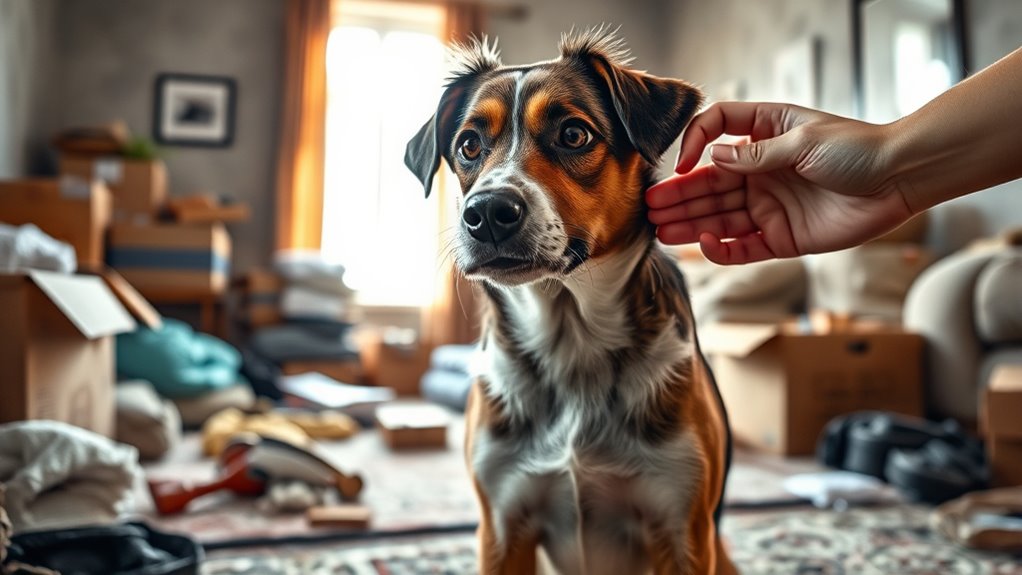
Helping your dog adjust long-term requires patience and consistent routines to rebuild their sense of security. Start by making small diet adjustments gradually, ensuring their nutrition supports emotional stability. A steady feeding schedule helps create predictability, easing anxiety. Incorporate socialization strategies that gradually reintroduce your dog to new environments and people, reinforcing positive experiences. Regular walks, playtime, and gentle interactions build confidence and trust over time. Keep routines predictable and avoid sudden changes that could unsettle them. Providing a quiet, safe space at home allows your dog to retreat when overwhelmed. Consistency and patience are key—over time, these strategies help your dog feel more secure and comfortable in their new environment.
Frequently Asked Questions
How Can I Tell if My Dog’S Anxiety Is Worsening During the Move?
You can tell if your dog’s anxiety worsens by observing their behavior—more pacing, whining, or hiding are signs. Use dog calming techniques like calming sprays or gentle massages, and keep a detailed moving checklist to stay organized. If you notice increased distress despite these efforts, it might mean their anxiety is escalating. Monitoring these signs helps you adjust your approach and seek professional advice if needed.
Are There Specific Breeds More Prone to Stress During Relocation?
Some breeds are more prone to stress during relocation due to breed sensitivity and stress triggers. For example, herding and terrier breeds often experience higher anxiety levels, while more laid-back breeds tend to adapt better. You should observe your dog’s reactions and behaviors, regardless of breed, and create a calm environment. Understanding your dog’s specific stress triggers helps you manage their anxiety and make the move smoother for them.
What Are the Signs of Separation Anxiety in a Moving Dog?
Think of your dog’s separation anxiety like a storm cloud hanging overhead. Signs include excessive barking, destructive behavior, and clinginess. To ease this, use dog calming techniques like soothing words, gentle petting, and familiar scents. Crate training tips can help your pup feel secure. Gradually increase time apart, creating a safe space that comforts them, so they learn to stay calm even when you’re not around.
Should I Consult a Veterinarian Before or After the Move?
You should schedule a pre-move consultation with your veterinarian before the move. This allows you to discuss your dog’s anxiety and get advice on calming strategies or medications if needed. After the move, a post-move checkup can help address any ongoing stress or health concerns. Acting proactively guarantees your dog feels safe and supported throughout the transition, making the process smoother for both of you.
How Long Does It Typically Take for a Dog to Settle Into a New Home?
It usually takes a dog a few weeks to settle into a new home, but it varies. During this time, focus on dog socialization and gentle pet training to help your pup feel secure. Keep routines consistent, provide plenty of comfort, and give your dog patience and reassurance. With time, your dog will adapt and start to feel more relaxed and confident in their new environment.
Conclusion
Moving can be stressful for your nervous dog, but with patience and preparation, you can make the process smoother. For example, imagine a dog named Max who gradually adjusted by staying in his familiar crate during the move. Over time, he grew comfortable exploring his new home. Remember, your calm and consistent approach helps your furry friend feel secure. With time and care, your dog will settle happily into the new space.