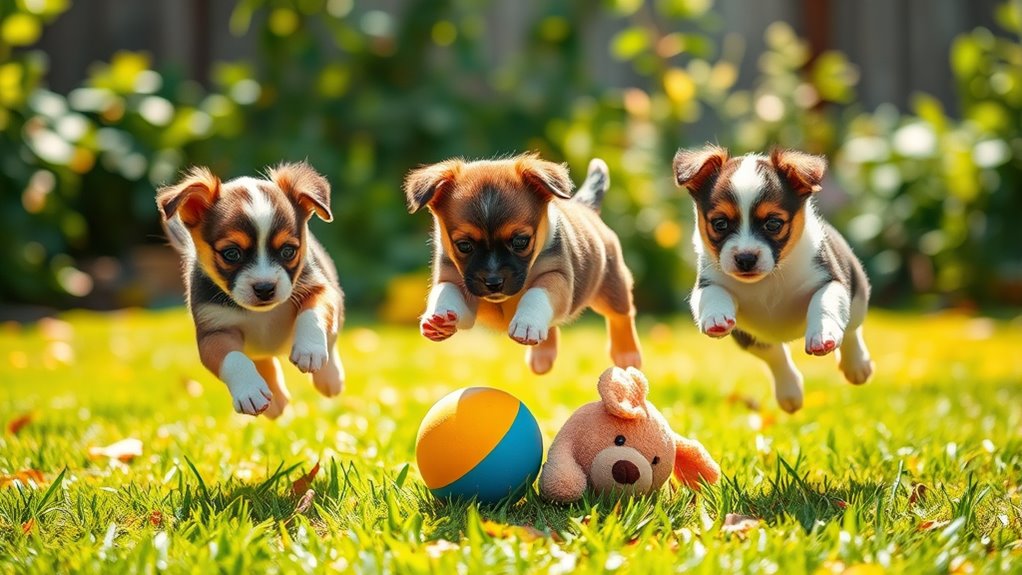

To manage hyperactive puppies, guarantee they get plenty of physical activity through daily walks, play sessions, and interactive toys. Incorporate mental stimulation with puzzle games to tire their mind and reduce acting out. When your puppy gets overly excited, calmly redirect them to a quiet space or a favorite toy, reinforcing calm behavior with treats and praise. Consistent routines and gentle calming techniques will help, and if you keep exploring, you’ll discover more ways to keep your pup balanced.
Key Takeaways
- Provide daily structured exercise and play to burn off excess energy and reduce hyperactivity.
- Use mental stimulation toys and games to keep the puppy engaged and prevent boredom.
- Establish a consistent routine for activities, rest, and training to promote calmness and predictability.
- Practice calming techniques like gentle petting and designated quiet spaces to soothe overexcitement.
- Redirect hyperactive behaviors with calm commands and reward relaxation to reinforce self-control.
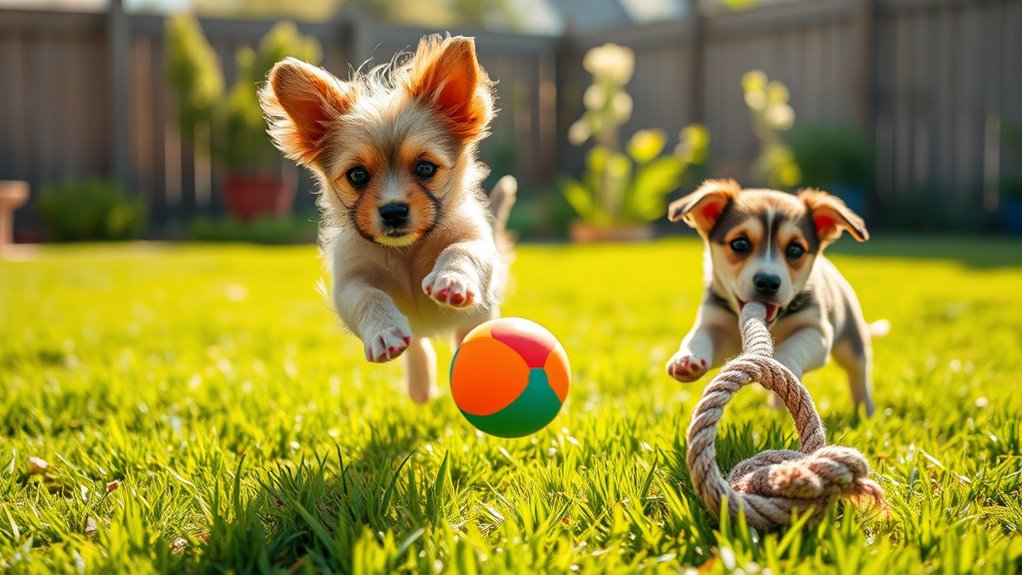
Dealing with a hyperactive puppy can be challenging, but understanding how to channel their energy effectively is key. Hyperactivity often stems from excess energy that needs an outlet. To help your puppy settle down, incorporating calming techniques alongside structured exercise routines can make a big difference. Calming techniques, such as gentle petting, soft speaking, or providing a quiet space, can help soothe your pup when they become overly excited. These methods teach your puppy to associate calmness with certain behaviors, gradually reducing their impulsiveness. When your puppy starts to bounce or bark excessively, calmly guiding them to a designated calm spot or offering a favorite chew toy can redirect their focus and promote relaxation.
Exercise routines are essential in managing hyperactivity. Puppies have a lot of energy packed into small bodies, and without enough physical activity, they tend to become more hyper. Daily walks, play sessions, and interactive toys burn off excess energy and help prevent destructive behaviors caused by boredom. It’s best to set a consistent schedule—morning, afternoon, and evening—so your puppy learns when to expect playtime and rest. During play, incorporate activities like fetch, tug-of-war, or agility exercises to challenge their bodies and minds. These routines not only tire them out physically but also mentally engage them, reducing hyperactivity over time.
In addition to physical activity, mental stimulation is equally important. Puzzle toys or treat-dispensing games challenge your puppy’s brain and keep them occupied, decreasing their tendency to act out due to boredom. Combining these with calming techniques creates a balanced approach: exercise routines drain physical energy, while calming methods help manage heightened excitement or anxiety. When your puppy starts to get overly energetic, intervene early with a short walk or a calm command, then reward them for settling down with treats or praise. Consistency is essential; over time, your puppy will learn how to self-regulate and transition smoothly between bursts of activity and calmness.

QGI Interactive Dog Toys, Random Path Electric Automatic Moving and Rolling Dogs Toy with Rope for Small Medium Large Dogs, Motion-Activated Dog Stimulation Toy for Boredom Relief (Orange)
【Irregular Rolling】This interactive dog ball features an irregular rolling design and a rope attachment that enhances its appeal…
As an affiliate, we earn on qualifying purchases.
As an affiliate, we earn on qualifying purchases.
Frequently Asked Questions
How Can I Tell if My Puppy’s Energy Is Excessive?
You can tell if your puppy’s energy is excessive by observing their behavior during daily activities. If they constantly bark, jump, or seem unable to settle down, it’s a sign of high energy. Conduct a thorough energy assessment by noting how long they can focus during play and training. If they seem overly restless or exhausted easily, their puppy behavior indicates more energy than typical, and you might need to adjust their routines.
Are There Specific Breeds More Prone to Hyperactivity?
Some breeds are definitely more prone to hyperactivity, almost like they have endless energy reserves. Breeds like Border Collies, Jack Russell Terriers, and Siberian Huskies have strong breed tendencies and activity predispositions that make them naturally more energetic. If you have one of these breeds, expect lots of playtime and mental stimulation. You can manage their energy better with regular exercise and engaging activities, helping them stay balanced and happy.
What Are the Best Calming Techniques for Hyperactive Puppies?
To calm your hyperactive puppy, try incorporating puppy relaxation techniques and calming exercises into your daily routine. Use gentle massages, soft music, or a calming voice during playtime to help soothe them. Consistent training, regular exercise, and creating a quiet, cozy space also promote relaxation. Be patient and gentle, offering praise and treats to reinforce calm behavior, which gradually helps your puppy settle down more easily.
How Does Diet Influence a Puppy’s Activity Levels?
Your puppy’s activity levels are greatly influenced by diet, as balanced puppy nutrition provides essential nutrients for energy regulation. Avoid high-calorie or filler-heavy foods that can lead to hyperactivity. Incorporate dietary supplements like omega-3 fatty acids to promote calmness and brain health. By choosing the right foods and supplements, you help your puppy maintain stable energy levels, reducing hyperactivity and encouraging a calmer, happier demeanor.
When Should I Seek Professional Help for Hyperactivity?
You should seek professional help when your puppy shows persistent signs of anxiety or hyperactivity that disrupt daily life, despite consistent training and environmental adjustments. Don’t worry—behavioral therapy options can effectively address these issues. If you notice excessive barking, destructive behavior, or difficulty calming down, consulting a veterinarian or animal behaviorist is crucial. Early intervention guarantees your puppy develops healthy habits and reduces long-term behavioral challenges.
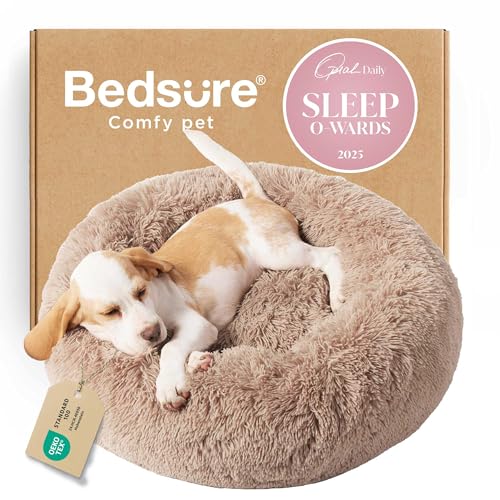
Bedsure Calming Dog Bed for Small Dogs – Donut Washable Small Puppy Bed, 23 inches Anti-Slip Round Fluffy Plush Faux Fur Large Cat Bed, Fits up to 25 lbs Pets, Camel
Oprah Daily Award-Winning Comfort:Recognized by Oprah Daily as the perfect donut dog bed for curl-up sleepers, this round…
As an affiliate, we earn on qualifying purchases.
As an affiliate, we earn on qualifying purchases.
Conclusion
Managing your hyperactive puppy takes patience, consistency, and plenty of play. Remember, even in this fast-paced world, taking time to train and bond helps channel their energy positively. Think of it as tending to a well-loved garden—pruning and watering daily guarantees it blooms beautifully. With your dedication, your pup will grow into a well-behaved companion, ready to face any challenge. Stay committed, and you’ll find harmony in your bustling, lively household.
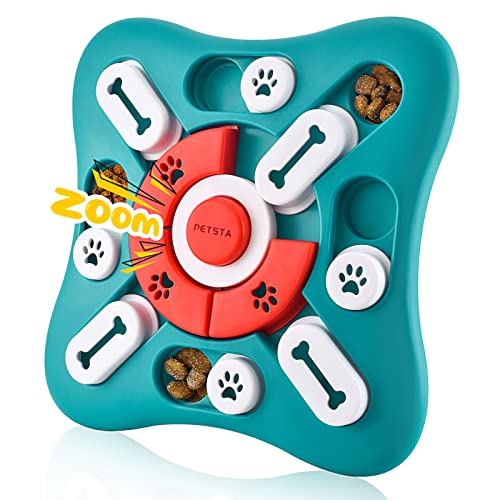
PETSTA Dog Puzzle Toys, Treat Dispensing Dog Enrichment Toys for IQ Training and Brain Stimulation, Interactive Mentally Stimulating Toys as Gifts for Puppies, Cats, Dogs
【PRODUCT SIZE】10 inch*10 inch*1.3 inch.
As an affiliate, we earn on qualifying purchases.
As an affiliate, we earn on qualifying purchases.

BSISUERM Dog Puzzle Toy Adjustable Treat Dispensing Ball Food Dispenser Tough Slow Feeder Puppy Enrichment Training Toy Pet Interactive Chase Toys for Small Medium Large Dogs to Keep Them Busy, Green
[Treat Distribution] Our food dispenser has differently sized spheres at both ends. As dogs push the toy, it…
As an affiliate, we earn on qualifying purchases.
As an affiliate, we earn on qualifying purchases.