
Understanding canine learning stages helps you train and bond better with your dog by showing how they develop skills, socialize, and build confidence over time. During early stages, puppies learn from socialization and scent training, which set the foundation for more advanced commands. Using positive reinforcement keeps training fun and effective while shaping your dog’s behavior. Keep exploring these stages to discover how to support your dog’s growth and ensure a happy, well-rounded companion.
Key Takeaways
- Dogs learn through various stages, starting with socialization and scent training during early development.
- Recognizing these stages guides effective training and prevents behavioral issues.
- Positive reinforcement is essential throughout all learning stages to build confidence and motivation.
- Early training focuses on building trust, interpreting the environment, and establishing foundational skills.
- Proper management and tailored experiences during sensitive periods support advanced learning later.
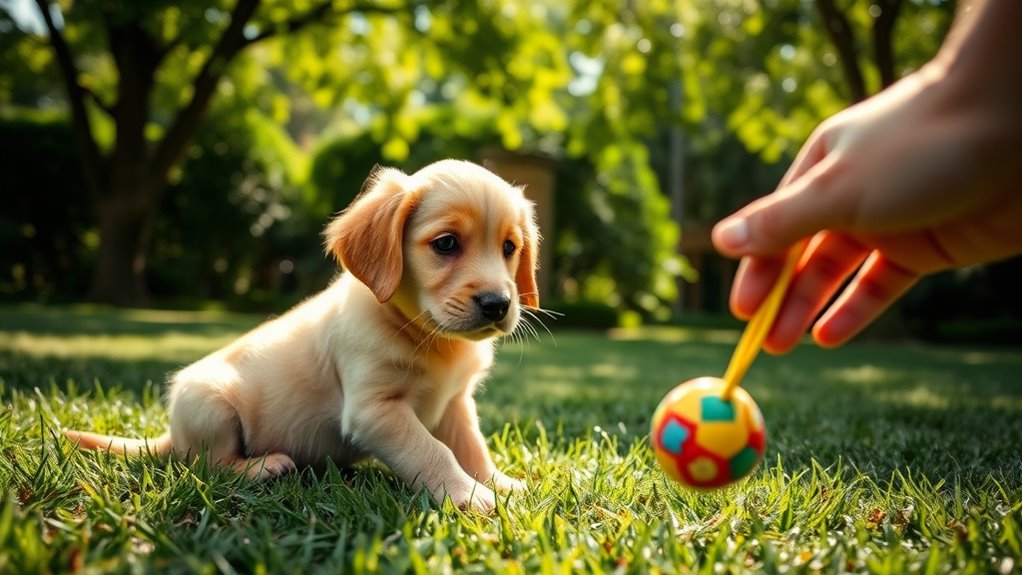
Understanding how dogs learn is essential for effective training and building a strong bond. When you grasp the basics of canine learning stages, you can better guide your dog through new experiences and help them develop important skills. One of the earliest and most vital aspects of learning for your dog is socialization. During this stage, usually between 3 and 14 weeks of age, your puppy is highly receptive to new sights, sounds, smells, and interactions. You want to expose them to different people, other animals, environments, and stimuli in a positive, controlled manner. Proper socialization helps prevent behavioral problems later in life and makes your dog more confident and adaptable. It’s important to remember that this period is sensitive, so if your puppy encounters frightening or overwhelming situations, it could lead to fearfulness or aggression. Accordingly, socialization should be gradual and always involve positive reinforcement, like treats or praise, to create positive associations with new experiences.
Alongside socialization, scent training is a beneficial activity early in your dog’s learning process. Scent training taps into your dog’s natural sniffing instincts and sharpens their ability to focus on a specific smell. This form of training is not only fun but also stimulates their mind and enhances their confidence. You can start scent training by hiding treats or toys around your home or yard and encouraging your dog to find them. As they get better, you can increase the difficulty by using different scents or hiding items in more challenging locations. Scent training is particularly useful because it leverages your dog’s natural ability to use their nose, which is far more powerful than their eyesight. It also helps establish a strong communication channel between you and your dog, making future training and commands more effective.
Additionally, understanding the importance of positive reinforcement during training can significantly impact your dog’s learning success. When combined with socialization, scent training provides a well-rounded foundation for your dog’s learning journey.
Understanding these initial stages—dog socialization and scent training—sets the groundwork for more advanced commands and behaviors. You’re teaching your dog how to interpret their environment and how to respond appropriately, which lays the foundation for trust and cooperation. Remember, patience and consistency are key. Your dog learns best when training sessions are positive, fun, and tailored to their developmental stage. By focusing on these early learning experiences, you’ll help your dog become a well-rounded, confident, and happy companion.
Frequently Asked Questions
How Long Does Each Canine Learning Stage Typically Last?
Each canine learning stage varies but generally lasts a few weeks to several months. During puppy socialization, you should focus on consistent training, which helps your dog adapt faster. The initial socialization stage might last around 3 to 16 weeks, while the training phase continues as your pup matures. Keep training consistent, patient, and positive, so your dog progresses smoothly through each stage and learns effectively.
Can Older Dogs Still Learn New Behaviors Effectively?
Like a sturdy oak that still bends with the wind, older dogs can certainly learn new behaviors. Age-related learning doesn’t shut the door on training; it just means you might need to be more patient and adapt your methods. With consistent effort and positive reinforcement, your dog’s training adaptability shines through, proving that new tricks are possible at any age. Embrace the journey, and watch your seasoned companion thrive.
What Are Signs of Frustration During Training?
You notice signs of frustration in your dog through body language and emotional cues. They may show tense muscles, lip licking, yawning, or avoiding eye contact. Your dog might also become restless, paws pawing at the ground, or turn away from your commands. These signals indicate they’re overwhelmed or confused. Recognizing these cues helps you adjust your training approach, ensuring a positive experience and preventing further frustration.
How Does Breed Influence Learning Stages?
Breed differences are like unique musical instruments, each with its own tone and rhythm, shaping how your dog learns. Some breeds, like Border Collies, thrive on mental challenges, while others, like Bulldogs, take a more relaxed pace. Personality impacts learning too, influencing how quickly your dog picks up commands. Recognizing these nuances helps you tailor training, turning your dog’s individual traits into harmonious progress, rather than obstacles.
Are There Specific Training Methods Best for Each Stage?
Yes, certain training methods suit each stage better. During early stages, use positive reinforcement and clicker training to build trust and encourage desired behaviors. As your dog progresses, adapt techniques to challenge them without frustration. Consistently applying positive methods keeps learning enjoyable and effective. Tailoring your approach guarantees your dog stays motivated and engaged, helping them master new skills smoothly at each stage.
Conclusion
As you observe your dog progress through these learning stages, you realize that patience and consistency are more than just training tools—they’re the keys to building trust. Sometimes, it’s almost like your own understanding deepens just as your canine companion’s does. In those quiet moments of connection, you’ll see that learning isn’t just about commands, but about forming a bond. Coincidentally, as your dog learns, so do you—about patience, love, and the true meaning of companionship.