TL;DR

Get pet supplies delivered free with Prime
- Fast, free delivery on millions of items
- Prime Video, Amazon Music and more included
- Member-only deals all year
A report by veterinarian Chelsea McGivney describes how veterinary practices can build a more consistent care pathway for aging pets. It recommends identifying patients who have stopped coming in, asking caregivers about barriers, and tailoring visits and care plans to the pet and family.
A report in Veterinary Practice News outlines ways veterinary practices can keep senior pets connected to care, including reaching out to patients who have stopped attending appointments and adapting visits to their needs. Veterinarian Chelsea McGivney argues that a planned pathway can help families address changes earlier, rather than returning only when a pet’s condition becomes urgent.
McGivney describes several reasons caregivers may delay veterinary visits as pets age, including rising costs discussed in guidance on saving money on vet care. They may assume changes in mobility, appetite, sleep or behavior are inevitable, worry about the cost of tests, or fear that a visit will lead to pressure to make an end-of-life decision. Transport can also become difficult, particularly when a large dog cannot easily get into a car or a cat is distressed by travel. Caregivers’ own health, mobility and schedules may add further obstacles.
The report recommends that clinics use their records to identify older dogs and cats who have not had an examination within a chosen period. That search is a way to find patients for supportive outreach, not a substitute for an individual assessment or a fixed definition of when an animal becomes senior. A clinic can review records for chronic conditions, missed rechecks, discontinued medications and earlier concerns, then contact the caregiver to ask what would make a visit easier.
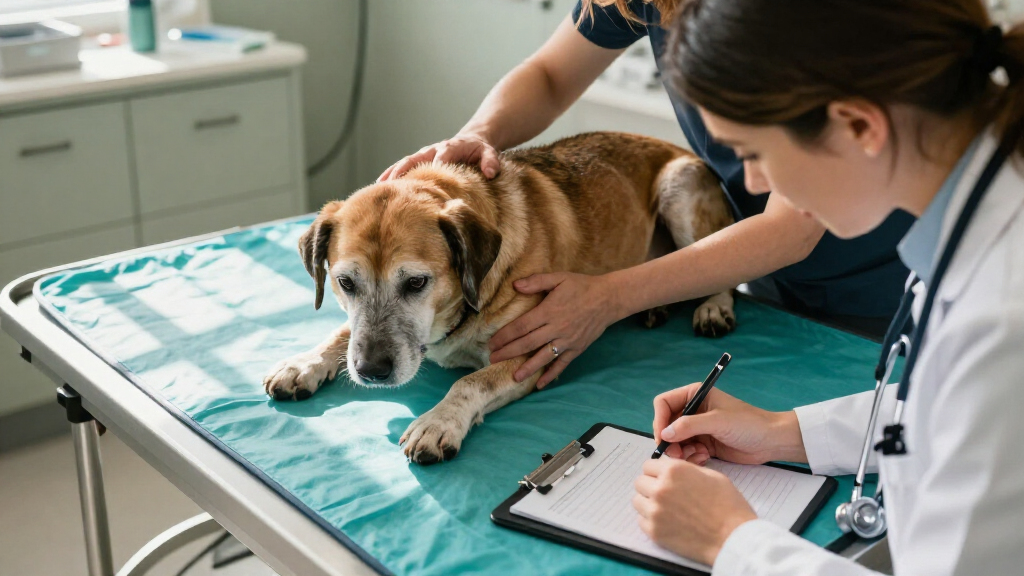
For appointments, McGivney suggests allowing more time, arranging a quieter setting and using a pre-visit questionnaire about daily life at home, approaches that can help clinics provide thoughtful pet care. Caregivers may be invited to share videos of activities such as walking, climbing stairs or using a litter box. Clinics can then discuss options suited to the animal and household, such as help getting from the car, low-stress handling, staged care when cost is a concern, or a mobile provider when travel is a barrier. The report also says telehealth may be an option when legally and clinically appropriate.
Keeping Aging Pets in Routine Care
The central concern is a possible gap between gradual changes in an older pet and the point when a caregiver seeks help. If changes are accepted as unavoidable or the practical burden of an appointment feels too high, a pet may miss preventive visits and follow-up. The report says the animal may not return until a more serious problem, such as pain, loss of appetite or breathing distress, prompts a visit.
A planned pathway could make contact with the clinic easier before that point. It also gives caregivers an opportunity to discuss what they are seeing and weigh care choices against their goals and resources. The report frames this as a continuing relationship, not a promise that every age-related change can be reversed or that every recommended intervention will be affordable or appropriate.
For practices, the approach treats access as more than appointment availability. Asking directly about transport, cost, fear and scheduling may help a team identify practical adjustments. The source notes that barriers can also involve geography, communication, staffing and equipment, so a single outreach method is unlikely to work for every family.
Products Worth Considering

PetSafe Microchip Cat Door, Interior/Exterior, Multi-Pet, 4-Way Lock

Shark Pet Cordless Stick Vacuum, 40-Minute Runtime, Grey, IX141

PETLIBRO Automatic Cat Feeder for Two Cats with AI Recognition Camera
As an affiliate, we earn on qualifying purchases.
Senior Care as a Life Stage
McGivney’s report draws on the 2023 American Animal Hospital Association Senior Care Guidelines, which she says do not set one age that applies to every senior patient. Species, breed, size, expected lifespan, health and functional changes all inform how an individual animal should be assessed. The guidelines describe senior care as a broad area that includes preventive screening, pain management, nutrition, dental health, behavior, environmental changes and care for concurrent diseases, alongside support for caregivers.
The report recommends describing aging as a life stage rather than treating it as a disease or automatically equating it with terminal illness. That framing can help a clinic invite families to plan for comfort and function without implying that a particular diagnosis or end-of-life decision is inevitable. McGivney also cites a 2024 scoping review that identified affordability, geography, transportation, communication, personnel and equipment among barriers to veterinary care. The article does not provide study results or clinic-level outcome data establishing how much a senior-pet program changes access or health outcomes.
“We have not seen Bella recently, and we would love to help you plan for her changing needs.”
— Suggested outreach wording in McGivney’s report
Program Outcomes Still Unreported
The source describes recommended practice changes, but it does not report a trial, adoption figures or measured outcomes from a specific senior-pet program. It is therefore unclear whether these steps reduce emergency visits, improve health or comfort, increase routine attendance, or change costs for clinics and families. The report also does not give a single age threshold or time period for identifying patients as senior or overdue; those decisions are left to individual practices and patient circumstances.
Some suggested options depend on local rules and clinical judgment. McGivney qualifies telehealth as appropriate only when it is legally and clinically suitable, and the source does not describe availability of mobile care or transport assistance in particular regions. No single accommodation will address every caregiver’s circumstances.
How Clinics Can Build the Pathway
The report’s proposed next steps begin with a practice reviewing its records to identify older patients who have not returned within a chosen interval. Teams can then make personal, non-alarmist contact, ask about obstacles and offer a visit designed around the pet’s needs. A pre-visit questionnaire and videos from home may give clinicians more information about daily function before or during the appointment.
From there, the clinic and caregiver can set priorities, consider practical accommodations and plan follow-up based on the animal’s health and the family’s goals. The source gives no implementation timetable or formal evaluation milestone. Whether the approach leads to better access or outcomes will require evidence from practices that adopt it, rather than assumption from the recommendations alone.
Key Questions
What is the report recommending for senior pets?
It recommends a defined care pathway that includes early identification of patients who have stopped attending, supportive outreach, tailored appointments and planning based on the pet’s needs and the caregiver’s circumstances.
Does the report set one age at which a pet becomes senior?
No. The report cites the 2023 AAHA Senior Care Guidelines and says age should be considered alongside species, breed, size, expected lifespan, health and changes in function.
What can caregivers do if getting a pet to the clinic is difficult?
The report suggests discussing options with the veterinary team. Depending on the situation, these may include help from the car, a quieter appointment, low-stress handling or referral to a mobile provider. Telehealth may be considered when legally and clinically appropriate.
Are the recommendations proven to improve health outcomes?
The source presents practical recommendations but does not provide measured results from a program showing effects on health, emergency visits, attendance or cost. Those outcomes remain unclear.
Source: veterinarypracticenews.com