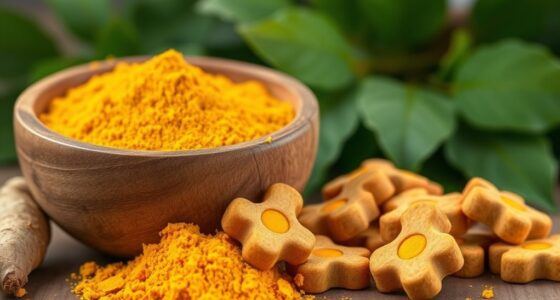

If your dog is allergic to peanuts, consider using safe alternatives like sunflower seed butter or coconut butter, which are often free from harmful additives. You can also pureé fruits or vegetables such as bananas, pumpkin, or applesauce to make tasty spreads or treats. Tahini made from sesame seeds is another option if your dog isn’t allergic. These alternatives are healthy, flavorful, and versatile—exploring them can help you find the perfect fit for your furry friend.
Key Takeaways
- Use pure fruit purees like banana, pumpkin, or applesauce as safe, allergen-free spread options.
- Consider coconut butter or sunflower seed butter, ensuring they are free from added sugars, salt, or harmful additives.
- Opt for tahini made from pure sesame seeds as a nut-free, safe alternative if your dog is not allergic.
- Always check ingredient labels to avoid potential allergens and harmful ingredients like xylitol or added preservatives.
- Use homemade spreads to control ingredients, providing safe, flavorful options for dogs with nut or seed allergies.
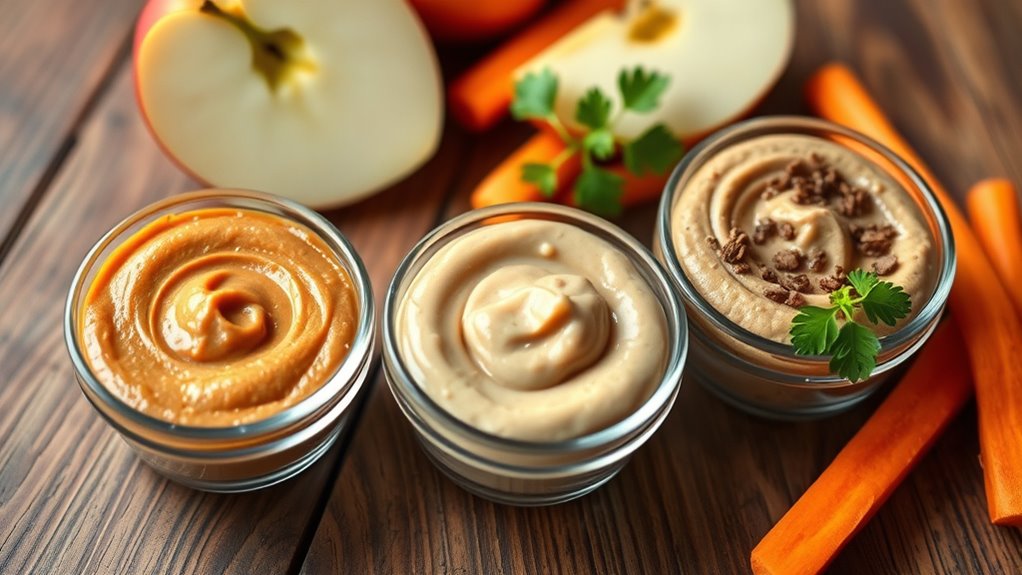
If your dog is allergic to peanuts, finding safe and tasty alternatives to peanut butter is essential. Dogs love the taste and texture of peanut butter, but allergies mean you need to explore other options that won’t cause discomfort or health issues. Luckily, there are plenty of homemade treats and safe spread options you can turn to, ensuring your pup still gets a delicious and nutritious snack.
One of the easiest solutions is to make homemade treats using dog-friendly ingredients. For example, you can blend bananas, pumpkin puree, or applesauce into a smooth paste. These natural, sweet options are not only safe but also provide added health benefits like fiber and vitamins. You can freeze small portions in ice cube trays, creating easy-to-serve treats that your dog will love. Additionally, mixing these purees with oats or rice flour creates a spreadable consistency, perfect for stuffing into Kong toys or spreading onto dog biscuits. Making your own treats allows you to control the ingredients, avoiding additives or preservatives often found in commercial products.
Homemade dog treats with fruit purees and oats for healthy, safe snacks.
When it comes to safe spread options, consider using coconut butter or sunflower seed butter. Both are excellent alternatives to peanut butter and are generally safe for dogs, provided they don’t have nut allergies or sensitivities. Coconut butter has a rich flavor and smooth texture, making it a great spread for treats or to fill toys. Sunflower seed butter is another popular choice; it’s packed with healthy fats and often comes in varieties free from added sugars or salt. Just make sure to choose brands that are specifically formulated for pets or are free from xylitol, which is toxic to dogs.
You can also experiment with other nut and seed butters like tahini, which is made from sesame seeds. While it’s not as common as sunflower seed butter, many dogs enjoy its nutty flavor. Always check the ingredients list to ensure there are no added harmful ingredients. If your dog has a seed or nut allergy, stick with simple options like pureed vegetables or fruit spreads. These can be easily spread on treats or used as toppings for homemade dog biscuits, adding flavor without risking allergic reactions.
Frequently Asked Questions
Can Dogs With Peanut Allergies Eat Sunflower Seed Butter?
Yes, dogs with peanut allergies can usually eat sunflower seed butter, but you should check for nut-free spreads that are specifically made for pets. Sunflower seed butter is a safe alternative because it’s free from peanuts and other common allergens. Always read labels carefully to verify there are no added sugars or harmful ingredients. Before giving it to your dog regularly, consult your vet to confirm it’s suitable for their dietary needs.
Are There Natural Sweeteners to Avoid in Dog-Safe Spreads?
Imagine a garden where every bloom is carefully chosen; similarly, avoid natural sweeteners with hidden risks. Some, like xylitol, are toxic to dogs. Always read ingredient labels closely—look for safe options like honey or pure fruit purées. These natural sweeteners, when used wisely, add just enough sweetness without risking your pup’s health. Stay vigilant, and choose spreads with transparent, dog-safe ingredients to keep your furry friend happy and healthy.
How Do I Identify Hidden Allergens in Alternative Spreads?
To identify hidden allergens in alternative spreads, always check ingredient labeling carefully for known allergens like nuts, soy, or grains. Look for any mention of cross contamination risks or shared facilities, as this can cause allergic reactions in sensitive dogs. If you’re unsure, consult your vet or choose products specifically labeled as allergen-free. Being vigilant helps you keep your dog safe and avoid unexpected allergic responses.
What’s the Safest Way to Introduce New Treats to Allergic Dogs?
Ever wonder how to keep your dog safe while trying new treats? You should start by introducing treats gradually, observing for any allergic reactions. Focus on treats that support dental health and match their flavor preferences. Consult your vet beforehand to guarantee safety, and always offer small amounts initially. Isn’t it better to be cautious and protect your pup’s health while exploring tasty options?
Are Homemade Peanut Butter Substitutes Nutritionally Complete for Dogs?
Homemade peanut butter substitutes can be nutritionally complete for dogs if you focus on proper nutritional balance and ingredient sourcing. Use dog-safe ingredients like mashed sweet potatoes, pumpkin, or cottage cheese, and guarantee they provide essential nutrients. Consult your vet to confirm the recipe meets your dog’s dietary needs. By choosing high-quality, fresh ingredients and avoiding harmful additives, you can create a healthy, balanced treat tailored to your dog’s allergy needs.
Conclusion
If your dog is allergic to peanut butter, exploring safe alternatives is essential for their health and happiness. Did you know that nearly 10% of dogs have food allergies, often including peanuts? By choosing allergy-friendly spreads like pumpkin or sunflower seed butter, you can keep your furry friend safe while still satisfying their treat cravings. Remember, always check ingredients and consult your vet before introducing new foods to your dog’s diet.