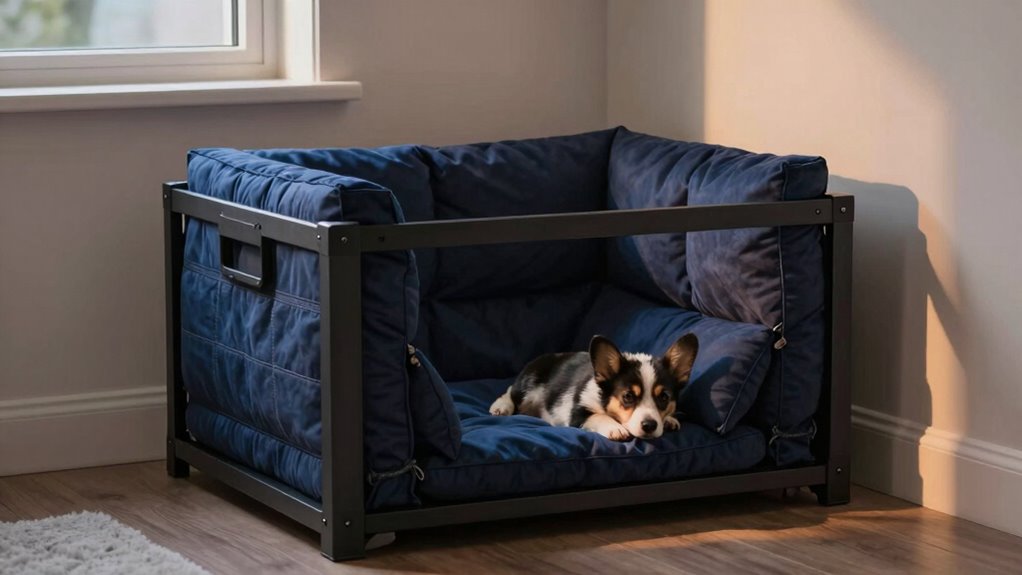

To stop your dog’s 3 a.m. whining, establish a consistent bedtime routine, including a walk or play session before bed, and offer a small meal or treat to signal winding down. Make the crate cozy with familiar toys, bedding, and your scent, placed in a quiet spot. When whining begins, resist responding immediately; wait briefly before checking, then respond calmly if needed. Keep a steady schedule and patience will help your dog learn to settle. Keep going, and you’ll discover more tips to ensure peaceful nights.
Key Takeaways
- Establish a consistent bedtime routine with regular walks, feeding, and calming activities before bed.
- Use a cozy, inviting crate with familiar toys and owner’s clothing to promote comfort and security.
- Resist responding immediately to 3 a.m. whining; wait a few moments to encourage self-soothing.
- Keep nighttime interactions calm and minimal to reinforce that the crate is a sleep-only space.
- Gradually increase the time between whining and response, adjusting bedtime if necessary to reduce early-morning disturbances.
If you’re struggling with crate training your dog overnight, the Overnight Crate Plan offers a simple, effective solution. Many pet owners face the challenge of their dogs whining around 3 a.m., disrupting both the dog’s rest and your sleep. The key to stopping this pattern lies in establishing a consistent sleep schedule and using crate training strategically. Your goal is to help your dog feel secure in the crate while also understanding that nighttime is for sleep, not play or bathroom breaks.
Start by setting a fixed bedtime that fits your dog’s age and energy level. Consistency is essential. If you feed and walk your dog at the same times each day, their body will naturally get used to a routine, making it easier for them to settle down at night. Before bed, take your dog for a walk or play session to burn off excess energy, then avoid engaging in stimulating activities. Afterward, feed a small meal or treat to signal that it’s time to wind down. When you place your dog in the crate, make it a cozy, inviting space—use soft bedding, familiar toys, and perhaps a piece of your clothing for comfort.
Establish a consistent bedtime with walks, play, and cozy crate setup for smoother overnight crate training.
The sleep schedule plays a key role in reducing nighttime whining. If your dog starts to whine around 3 a.m., resist the temptation to immediately respond or let them out. Instead, wait a few moments before checking on them, giving your dog the chance to self-soothe. When you do respond, keep interactions calm and minimal. If your dog needs to go outside, take them out briefly and return them to the crate. Avoid turning the bathroom break into a play session; the goal is to reinforce that nighttime is for sleeping, not entertainment. Establishing a consistent routine can help your dog understand what to expect and reduce anxiety that causes whining.
As days go by, you’ll notice your dog gradually settling down earlier in the night and waking up less to whine. The key is patience and consistency. If your dog has a tendency to whine at 3 a.m., tweak the schedule slightly by adjusting bedtime earlier or later, depending on your dog’s needs. Over time, your dog will learn that the crate is a safe space, and the designated sleep hours are for rest, not attention.
Frequently Asked Questions
How Long Does It Take to See Results With the Plan?
You’ll typically start seeing results within a week or two of implementing the crate training and adjusting your dog’s sleep schedule. Consistency is key, so stick to the plan and keep routines predictable. As your dog adapts to the new schedule and learns to settle in the crate, nighttime whining should decrease markedly. Patience and persistence will help your pup develop healthy sleep habits quickly.
Can This Plan Work for Puppies of Any Breed?
Yes, this plan can work for puppies of any breed, but you should consider their temperament and individual needs. Some breeds adapt faster to crate training techniques, while others may require more patience. Tailor your approach based on your puppy’s temperament, ensuring consistency and positive reinforcement. With persistence and proper techniques, you’ll help your puppy develop good habits and reduce overnight whining effectively.
What if My Dog Refuses to Stay in the Crate?
If your dog refuses to stay in the crate, stay patient and consistent with your crate training and bedtime routines. You can make the crate more inviting by adding comfy bedding and a favorite toy. Gradually increase crate time, rewarding your dog for calm behavior. Avoid forcing your dog, and instead, encourage positive associations with the crate, helping them feel safe and secure overnight.
Is There a Recommended Age to Start the Plan?
You can start crate training your dog around 8 to 12 weeks old, aligning with their developing sleep schedule. Early training helps your pup associate the crate with comfort, making them more likely to stay peacefully overnight. Consistency and patience create a positive sleep routine, easing the progression into longer rest periods. Starting at this age sets a solid foundation for a well-adjusted, happy dog who sleeps soundly through the night.
How Do I Handle Emergencies or Nighttime Needs?
When emergencies or nighttime needs arise, stay calm and respond quickly. Keep a flashlight nearby for safety, and have a designated spot for your dog to relieve themselves, like a pee pad or outdoor area. Incorporate crate training into your nighttime routines so your dog feels secure. This consistency helps them understand what to do during emergencies, making nighttime handling smoother and less stressful for both of you.
Conclusion
Stick to the Overnight Crate Plan, and you’ll soon enjoy peaceful, uninterrupted nights. Consistency and patience are key—remember, Rome wasn’t built in a day. By following these steps, you’ll break the 3 a.m. whining cycle and create a calm, secure space for your pup. Keep in mind, the journey of a thousand miles begins with a single step. Stay committed, and restful nights will become your new normal.