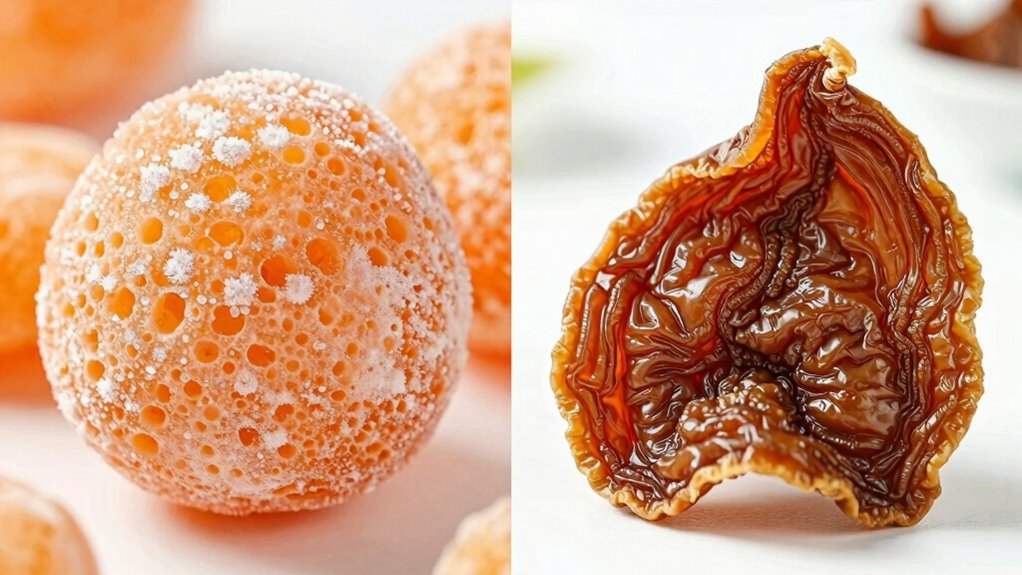
If you’re looking to keep your food nutrient-dense, freeze-drying is your best bet. It preserves most vitamins and minerals because it uses low temperatures and avoids heat, unlike dehydrating, which can cause nutrient loss—especially of heat-sensitive nutrients like vitamin C and B vitamins. With freeze-drying, you’ll get longer shelf life, better flavor, and more nutrients retained. To discover more about how these methods impact your food’s health benefits, keep exploring the details below.
Key Takeaways
- Freeze-drying preserves most nutrients due to low-temperature sublimation, minimizing heat-sensitive vitamin loss.
- Dehydrating may cause nutrient degradation, especially of heat-sensitive vitamins like C and B vitamins.
- Freeze-dried foods maintain higher nutrient density over extended storage periods.
- Dehydration’s heat exposure can reduce the nutritional content of certain vitamins and minerals.
- Overall, freeze-drying better retains the original nutrient profile of foods.
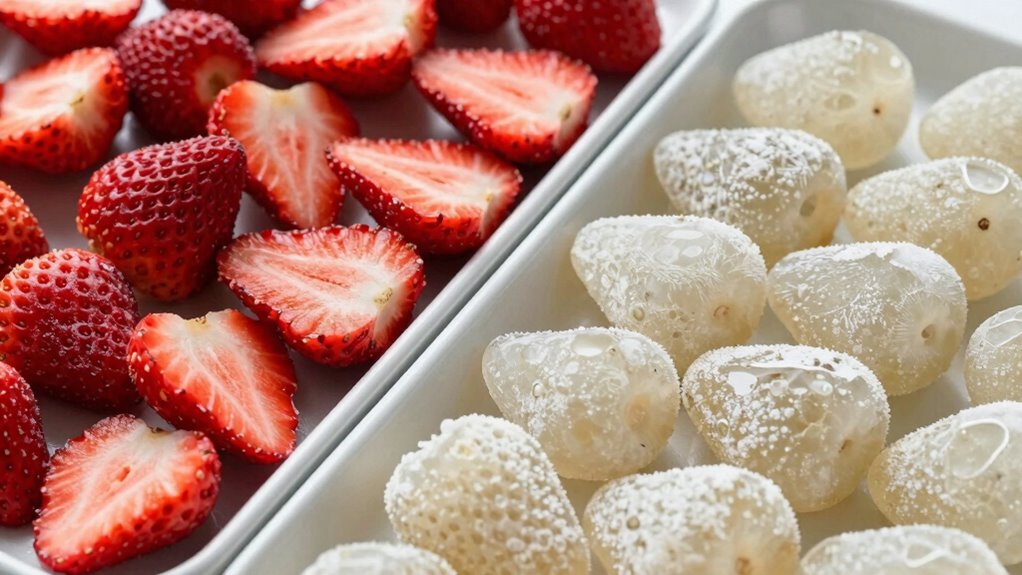
When it comes to preserving food, freeze-drying and dehydrating are two popular methods, each offering distinct benefits and drawbacks. If you’re looking to extend shelf life, both techniques do an excellent job, but they do so in different ways. Freeze-drying generally results in a longer shelf life because it removes nearly all moisture, creating an environment where bacteria and mold can’t thrive. Dehydrating, on the other hand, reduces moisture considerably but may leave behind a tiny amount that can affect how long your food stays good. So, if your priority is maximum shelf life, freeze-dried foods tend to be more reliable over extended periods, especially if stored properly in airtight containers.
Flavor retention is another key difference between these two preservation methods. Freeze-drying preserves the original flavor much better because it involves sublimation—turning ice directly into vapor without passing through a liquid stage. This process helps maintain the natural taste and aroma of fruits, vegetables, and even cooked meals. Dehydrating, however, exposes food to heat over a period of time, which can cause some loss of flavor and nutrients. You might notice that dehydrated fruits taste a bit more concentrated or sometimes slightly different from fresh ones, and certain delicate flavors might fade. If keeping the authentic flavor profile is essential, freeze-drying generally offers superior flavor retention.
Another factor to weigh is how each method impacts texture. Freeze-dried foods tend to be light, crispy, and retains a structure close to fresh, making them ideal for snacking or rehydrating for cooking. Dehydrated foods often become leathery or chewy, which can be desirable for certain recipes but less so if you’re after a crispy snack. Additionally, the process influences nutrient density. Freeze-drying preserves most nutrients because it occurs at low temperatures, avoiding heat degradation. Dehydrating, while still effective, can lead to some nutrient loss, especially of heat-sensitive vitamins like vitamin C and certain B vitamins.
Frequently Asked Questions
How Does Freeze-Drying Affect the Shelf Life of Foods?
Freeze-drying profoundly extends your food’s shelf life by improving storage stability and microbial safety. It removes almost all moisture, preventing bacteria, mold, and yeast growth. This process keeps foods lightweight and easy to store for years without losing quality. You can confidently store freeze-dried foods longer, knowing they remain safe to eat, retain their flavor, and maintain nutritional value, making them ideal for emergencies, camping, or daily use.
Which Method Better Preserves Natural Flavors and Aromas?
You’ll find freeze-drying better at preserving natural flavors and aromas because it maintains flavor retention and aroma preservation more effectively than dehydrating. The process removes moisture gently, locking in the delicate scent and taste molecules. As a result, foods retain their original flavor profiles and fresh aroma longer, making freeze-dried options ideal if your priority is enjoying the natural essence of your favorite foods in every bite.
Are There Specific Foods That Are Unsuitable for Dehydration or Freeze-Drying?
Certain foods are unsuitable for dehydration or freeze-drying due to food incompatibilities. For example, high-fat foods like avocados or oily nuts can become rancid or spoil faster during drying. Fresh herbs with high moisture content may not dry properly. Fruits high in water, such as melons, can be challenging for dehydration. Understanding these unsuitable produce types helps you choose the best preservation method and avoid spoilage or texture issues.
How Do Cost and Energy Consumption Compare Between the Two Methods?
You’ll find that dehydration generally costs less and consumes less energy compared to freeze-drying. Dehydrating uses heat and airflow, making it more energy-efficient and budget-friendly for everyday use. Freeze-drying, on the other hand, involves complex equipment, higher energy consumption, and greater costs. So, if you’re mindful of expenses and energy efficiency, dehydration offers a more accessible option, while freeze-drying provides superior preservation at a higher cost.
Can Nutrients Be Fully Restored After Rehydration of Dried Foods?
Nutrients can’t be fully restored after rehydration of dried foods because some nutrient loss occurs during drying. Rehydration improves texture and flavor, but it doesn’t bring back all nutrients, especially heat-sensitive vitamins. The effectiveness of rehydration varies based on the drying method used; freeze-dried foods generally retain more nutrients and rehydrate better than dehydrated ones. So, while rehydration helps restore some nutrients, it doesn’t completely restore their original levels.
Conclusion
So, when it comes to preserving nutrients, freeze-drying is like having a time machine that keeps your food bursting with vitamins and flavor, while dehydrating is more like a gentle breeze that slowly preserves your favorites. If you want your snacks to stay as nutrient-packed as a superhero’s secret power, go freeze-drying! Otherwise, dehydrating is your trusty sidekick for a quick, tasty, and still pretty healthy snack. Choose wisely—your taste buds will thank you!