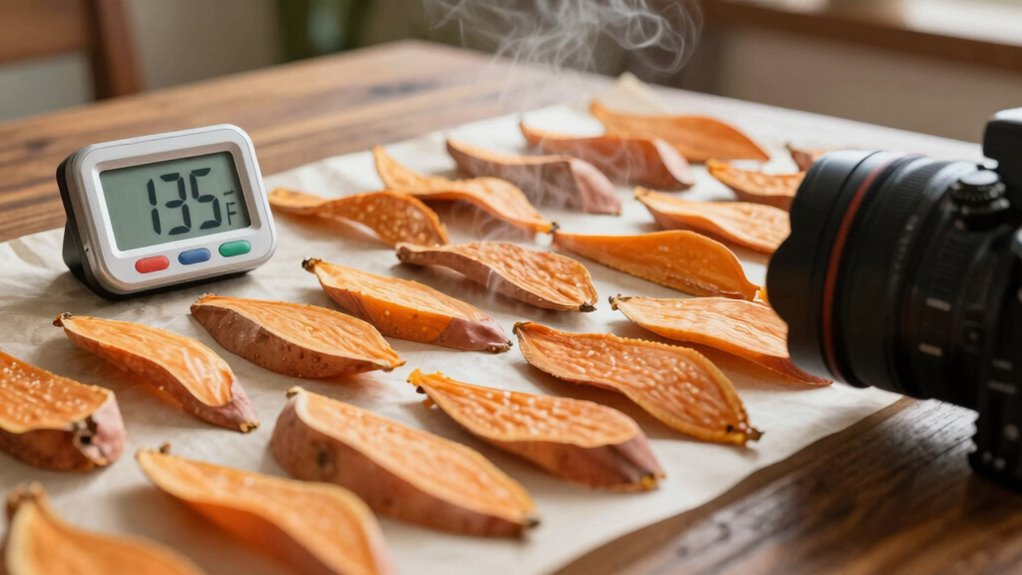

To prevent spoilage when dehydrating dog treats, keep your dehydrator temperature between 130°F and 145°F, as this range removes moisture effectively without cooking the treats. Too low, and residual moisture can foster bacteria and mold; too high, and nutrients may degrade. Use a dehydrator with adjustable settings and monitor it closely. Proper dehydration and storage are essential for safe, long-lasting treats—learn more about ensuring your treats stay fresh and safe.
Key Takeaways
- Dehydrate dog treats at 130°F to 145°F to effectively remove moisture without cooking or nutrient loss.
- Monitor and adjust dehydrator temperatures regularly to ensure consistent drying and prevent spoilage.
- Proper dehydration removes moisture that can promote bacteria and mold growth during storage.
- Fully dried treats stored in airtight, cool, dark conditions stay safe and extend shelf life.
- Using a dehydrator with precise temperature control ensures treats are safe, nutritious, and spoilage-free.
Dehydrating dog treats is an easy and cost-effective way to provide your furry friend with healthy snacks. When you prepare treats at home, you control the ingredients and avoid preservatives or additives commonly found in commercial options. However, to guarantee these treats stay fresh and safe for your dog, paying attention to proper dehydration temperatures and storage is essential. Proper storage tips help prevent spoilage and keep the treats safe to enjoy over time, while ingredient safety ensures you’re not introducing anything harmful to your pet.
Dehydrating treats at home keeps them fresh, safe, and free from harmful additives.
First, focus on drying your treats at the right temperature. Most meats and fruits should be dehydrated at around 130°F to 145°F (54°C to 63°C). Staying within this temperature range effectively removes moisture without cooking the treats, preserving their nutritional value. If the temperature is too low, moisture might not completely evaporate, creating an environment where bacteria and mold can grow. Conversely, excessively high temperatures risk cooking the treats, which can degrade nutrients and affect taste. Using a food dehydrator with adjustable temperature controls helps you maintain this balance easily.
Once your treats are thoroughly dehydrated, proper storage becomes essential. Store your homemade treats in airtight containers or resealable zip-top bags to prevent exposure to air and humidity, both of which can promote spoilage. For long-term storage, consider vacuum-sealing the treats, which removes excess air and extends shelf life. Keep these containers in a cool, dark place like a pantry or cupboard, avoiding direct sunlight and heat sources. Proper storage tips like these help maintain ingredient safety by reducing the risk of bacterial growth, mold, and spoilage, ensuring your dog’s treats remain fresh and safe for consumption.
It’s also vital to pay attention to ingredient safety when dehydrating treats. Use fresh, high-quality ingredients, and wash everything thoroughly before slicing and dehydrating. Remove any excess fat from meats, as fat can turn rancid more quickly and compromise the treats’ safety. When drying fruits or vegetables, check for any signs of spoilage or mold beforehand. Label your treats with the drying date so you can keep track of freshness—generally, dehydrated treats stored properly can last a few months. If you notice any unusual smell, discoloration, or mold, discard the treats immediately.
Frequently Asked Questions
How Long Can Dehydrated Dog Treats Be Stored Safely?
You can store dehydrated dog treats safely for about 2 to 3 weeks at room temperature if kept in an airtight container. For longer storage, refrigerate them up to 3 months or freeze for up to 6 months. Watch for spoilage indicators like mold, bad odor, or a sticky texture. Proper storage duration and monitoring spoilage signs help guarantee your dog’s treats stay fresh and safe.
What Are Signs of Spoilage in Stored Dehydrated Treats?
You’ll know your dehydrated dog treats are spoiled if you see mold, unusual odors, or a slimy texture, which indicate mold prevention has failed. Discoloration or a rancid smell also signal spoilage. Keep an eye on the shelf life, as treats past their expiration date are more prone to mold growth. Regularly inspect your treats to confirm they stay fresh and safe for your pup.
Can Dehydration Kill Bacteria and Parasites?
Dehydration can severely limit bacterial growth and help eliminate parasites, but it can’t guarantee it alone. Think of dehydration as a superhero cape—great for slowing down bacteria and parasites but not invincible. High temperatures and proper drying are essential to truly kill harmful bacteria and parasites. So, while dehydration reduces risks, always ensure your treats reach the right temperature to effectively eliminate those nasty invaders!
Are There Specific Ingredients That Shouldn’T Be Dehydrated?
Yes, certain ingredients shouldn’t be dehydrated due to safety concerns. Avoid dehydrating ingredients like onions, garlic, grapes, and raisins, as they can be toxic to dogs. Always consider ingredient safety and dehydration limitations; some items may not dry properly or could spoil if not handled correctly. Stick to safe, dog-friendly ingredients and follow recommended dehydration guidelines to ensure your treats are both healthy and safe for your pet.
How Does Humidity Affect the Dehydration Process?
Humidity affects your dehydration process by making moisture control more challenging. High humidity levels can hinder evaporation, leading to incomplete drying and potential spoilage. To guarantee proper moisture prevention, you should operate your dehydrator in a low-humidity environment or use dehumidifiers if necessary. This helps your treats dry evenly, prevents mold growth, and keeps them safe for your dog. Proper humidity control is essential for effective dehydration and spoilage prevention.
Conclusion
By mastering the temperature rules for dehydrating dog treats, you become the maestro of their preservation symphony. Think of each perfectly dried treat as a jewel, shining with freshness and importance, untouched by the shadows of spoilage. When you follow these guidelines, you’re weaving a protective shield around your pup’s snacks, ensuring they stay vibrant and safe. With your careful touch, you transform simple ingredients into timeless treasures, a proof of your devotion and culinary artistry.