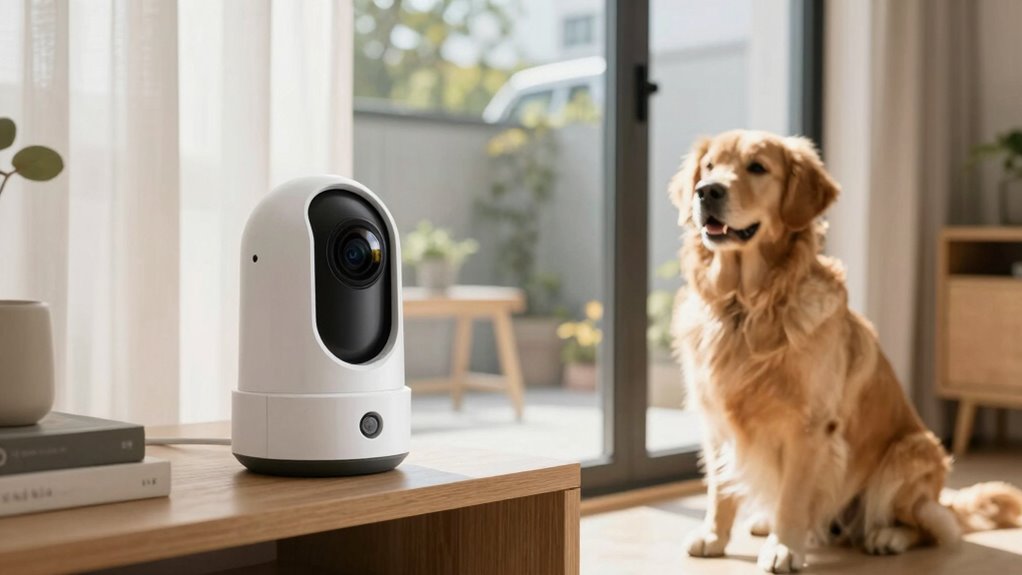

To catch barking triggers, place your pet camera near windows, doors, or outdoor areas where your pet reacts most. Position it at your pet’s eye level for better visibility and avoid obstructions. Indoors, focus on spots like hallways or kitchens where they bark often. Adjust the angle regularly to cover key areas and capture external stimuli like passersby or wildlife. Keep exploring for more tips on optimizing your setup for better insights.
Key Takeaways
- Place cameras near windows, doors, or outdoor areas where external stimuli like passersby or wildlife can trigger barking.
- Position indoor cameras at your pet’s eye level in high-activity zones such as kitchens or hallways for clearer reactions.
- Mount outdoor cameras at appropriate heights to capture external triggers without obstructions or limited visibility.
- Ensure cameras cover both indoor and outdoor spaces where your pet spends time and tends to bark frequently.
- Regularly adjust camera angles and check placement to optimize coverage of key areas and capture relevant barking triggers.
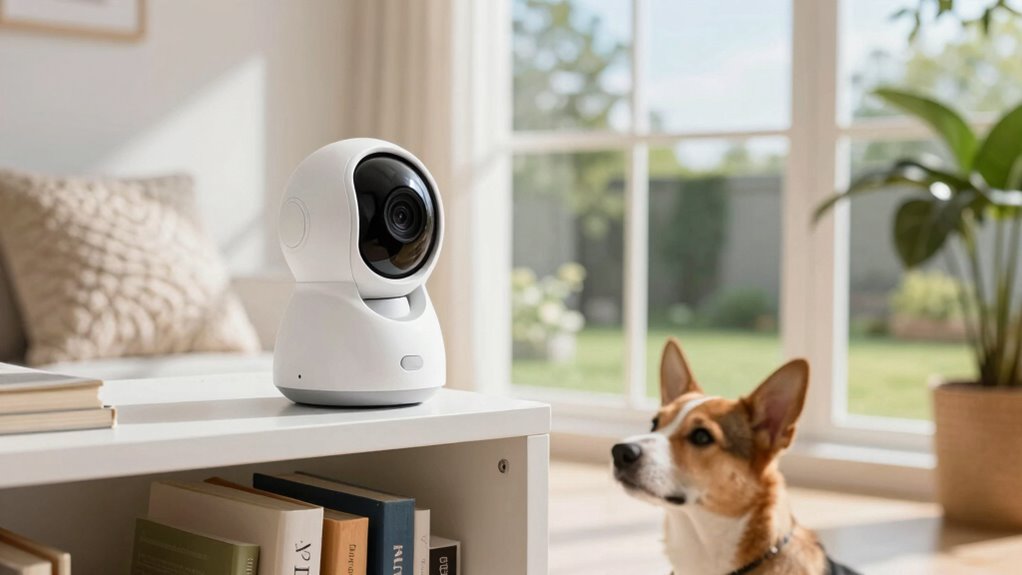
Have you ever wondered what your pet does all day when you’re not around? With pet cameras, you can finally get a glimpse into their daily routine and understand what might be causing their behavior. One of the most common issues pet owners face is excessive barking, often triggered by specific sights, sounds, or activities outside or inside the home. To effectively identify these barking triggers, it’s vital to place your pet camera in the right spot.
Choosing the best placement for your pet camera is key for capturing the moments that set off your dog’s or cat’s barking. Typically, you’ll want to position it where you can observe the areas that get your pet agitated or excited. For example, if your dog barks at passersby, place the camera near a window or front door. This vantage point allows you to see what your pet notices and reacts to when they start barking. If your pet’s barking is triggered by other animals, consider mounting the camera in the backyard or any outdoor vantage point that overlooks neighboring yards or common wildlife areas.
Place your pet camera near windows or doors to catch barking triggers like passersby or outdoor activity.
Inside the home, focus on areas where your pet spends most of its time or where they tend to bark the most. Kitchen windows, living room entrances, or hallways are common spots. Positioning your pet camera at a height similar to your pet’s eye level can give you a better perspective of their reactions and the specific stimuli causing barking. Avoid placing the camera too high or too low, as this can limit visibility and make it difficult to identify barking triggers accurately.
Pay attention to the camera’s field of view and confirm it covers the areas where your pet is most reactive. Some pet cameras come with adjustable angles, which can help you fine-tune the view. The goal is to catch the exact moments when your pet begins barking, so you can analyze what’s happening right before and during their outbursts. This insight can help you determine whether external triggers like passing cars, delivery trucks, or unfamiliar visitors are responsible, or if internal triggers such as noises from other pets or household activities are to blame. Additionally, understanding the horsepower of your pet’s environment, such as nearby traffic or outdoor machinery, can assist in pinpointing external stimuli that contribute to barking episodes.
Frequently Asked Questions
How Do I Adjust the Camera Angle for Optimal Coverage?
To adjust the camera angle for ideal coverage, start with the camera mounting. Loosen the angle adjustment mechanism, then tilt or rotate the camera to cover the area where your pet barks. Make certain the camera captures key spots like doorways or windows. Tighten the adjustment once you find the perfect angle. Regularly check the footage to confirm you’re catching barking triggers effectively, making tweaks as needed.
Can Pet Cameras Detect Specific Triggers for Barking?
Yes, pet cameras can detect specific triggers for barking through behavior monitoring features. To do this effectively, you need proper camera placement, ideally where your pet’s environment reveals potential triggers. Position the camera at eye level and angle it towards common areas like entrances or windows. This way, the camera captures clear footage of your pet’s reactions, helping you identify what causes their barking and enabling targeted behavior management.
What Features Should I Look for in a Pet Camera?
When choosing a pet camera, look for high camera resolution to clearly see your pet’s behavior and surroundings. Night vision is essential for monitoring during low light or nighttime. You should also consider features like two-way audio to communicate with your pet and motion alerts for barking triggers. These features help you stay connected, observe, and respond effectively, ensuring you catch and address barking triggers promptly.
Are There Privacy Concerns With Pet Cameras?
Did you know that 70% of pet owners worry about privacy concerns with cameras? You should be aware that pet cameras can pose privacy concerns and data security risks if not properly managed. Always choose cameras with strong encryption, secure login, and clear privacy policies. Regularly update software and review access permissions to protect your data. Being proactive helps make sure your pet’s moments stay private and secure.
How Can I Prevent False Triggers on My Pet Camera?
To prevent false triggers on your pet camera, focus on strategic camera placement. Position it to avoid areas with frequent movement or background noise, which can cause false alarms. Use features like motion zones or sensitivity settings to reduce unnecessary alerts. Regularly adjust your camera’s angle and settings, ensuring it captures only key areas. This approach helps with false alarm reduction, keeping you informed without constant false notifications.
Conclusion
Now that you know the best spots to place your pet camera, you’ll be better equipped to catch barking triggers and understand your pet’s behavior. Proper placement helps you identify what causes their noise and how to address it effectively. Are you ready to optimize your camera setup and give your furry friend the attention they need? With the right placement, you’ll gain peace of mind and a deeper connection with your pet.